Saturday, August 4, 2007

Riding at Night

I'm dismayed at transit in the bay area. It's convenient, but at a certain time of night on the weekends (midnight) it all shuts down and you need to know the alternate universe owl schedules to use it. BART and the J Church line close down. But why is that? In New York City, trains run all night and people use them. I know that maintenance is performed on BART tracks that late, but how many people drive into the city to drink and drive out drunk as skunks because they have to memorize a bus schedule and a new location?

This doesn't just happen in the bay area though, a writer recently discussed this phenomenon for the Twin Cities.

There really is an issue with the light rail system not staying open until 2:15 or 2:30 am. There were two letters published on July 31 concerned with the "Minding the gap" article. The letters seemed to be arguing against the light rail staying open later and had some very weak points.

First, there were suggestions to take a bus or taxi. But the buses run once every hour or so at that time, so you'd have to wait until 3 a.m. if you leave the bar at 2 a.m. Also, if you've ever been downtown and tried to take a cab at 2 a.m. you'd realize it takes over 20 minutes to finally flag one down -- and when you do it's a very expensive ride home. Most people just want to use the light rail at bar close, get closer to their homes and take a cab from there.

Thursday, August 2, 2007

Planned Streetcar Networks

There has been a lot of talk of streetcar networks lately. Just to share a few of the cities that are discussing not just one line, but a network.

Portland: Obviously their first line has been a success and now they are looking to expand. Citizen planning has already begun and a review of corridors will be underway shortly. They also have a leg up given the United Streetcar folks would make cars for them in town.

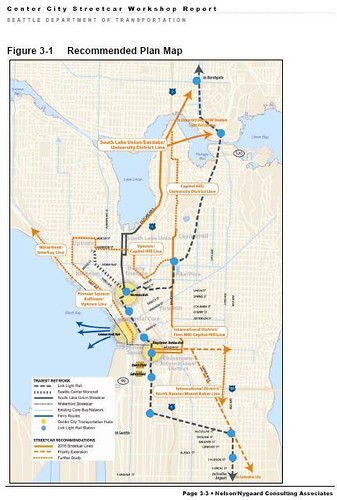
Seattle: Construction on the South Lake Union streetcar line is almost complete and there are plans for a more extensive network. There are maps in this report.

SeattleNetwork

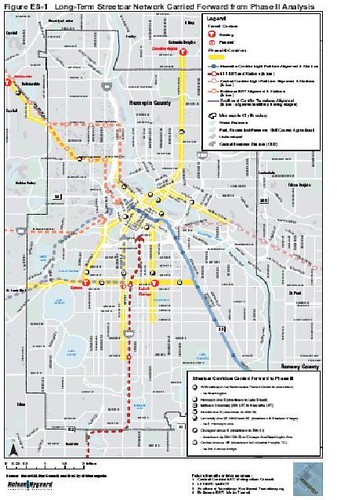
Minneapolis: After the success of the Hiawatha Line, Minneapolis is ready for expansion. They are in the third stage of planning for a streetcar network downtown that would consist of a number of corridors.

MinneapolisNetwork

Washington DC: Plans for a streetcar network are beginning with the Anacostia Streetcar however they have hit a snag with some overhead wire rules that have been discussed earlier in the blog. But that hasn't stopped them from planning corridors or having the first streetcars tested.


Some cities such as Baltimore are hopeful, but haven't gotten into the planning stages yet.

I think its important to think big. As i've said before, one line does not a transit system make, and its important to have a network so people can go more places. Streetcars serve a certain short hop circulation service in street and can be used for shorter line haul operations but there are some jobs that light rail, commuter rail, heavy rail, or bus can do better. But there's nothing like a good land use plan and a streetcar to rebuild a neighborhood.

(Sorry for the picture quality, but I took screen shots from the linked PDFs)

Wednesday, August 1, 2007

Talking TOD With Peter Calthorpe

Peter Calthorpe is sort of seen as the godfather of modern TOD. His 1992 book, the Next American Metropolis written with Shelley Poticha was the first real guidebook on how TOD should work after data on density was collected by Jeff Zupan and Boris Pushkarev of the RPA in 1977.


Here's a little of what he has to say in a podcast interview with Reconnecting America:

It’s interesting to me that in the age of the streetcar, you had low-density streetcar suburbs that worked just fine. I think that that kind of lifestyle can work, where you can get even moderate densities to be very effective in supporting transit systems. I don’t think we have to correlate high density apartment living with TODs, I think there can be townhouse neighborhoods and even small lot, single-family neighborhoods with transit systems. Once again, it’s the mix.
I think that's a really important point. TOD doesn't need to be super dense everywhere to be effective. There is a general fear out there that planners are trying to change neighborhoods into 100 unit per acre condo towers. But that is simply not bearable in the Market.

Anyways, check out the interview.

Saturday, July 28, 2007

Portland Blogging

Hey all. Sorry it's been a few days since my last post but I've been in Portland Oregon for a streetcar workshop. Below are some of the highlights. The best is what happens when you tear down a freeway, create a park, and then throw a huge brewfest party in the post below this one...

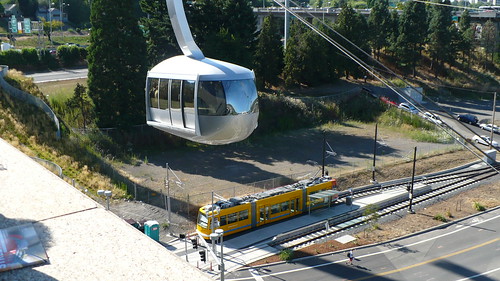
Aerial Tram

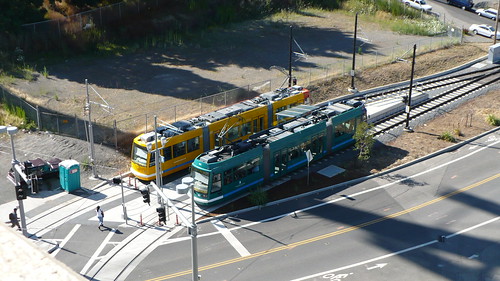
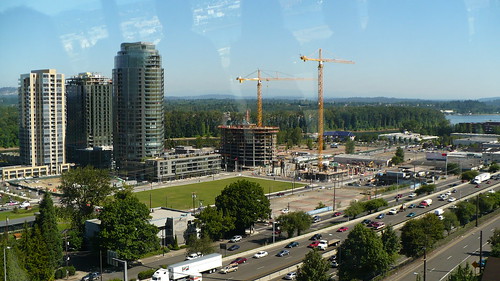
Streetcars from OHSU Building

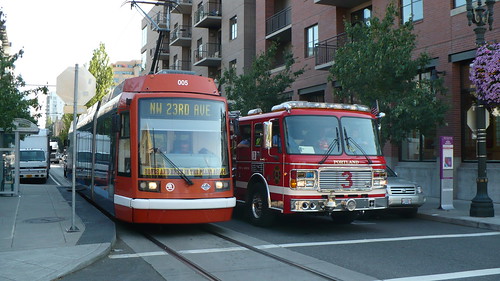
Firetruck Streetcar

Here is a picture of a firetruck and a streetcar. It was pretty cool and they stayed there for a sec while I took a picture. I'm not sure if it was for me, but if it was, thanks!

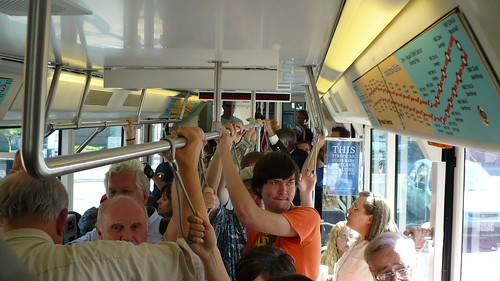
Crush Load Streetcar

As with the F-Line, it was a crush load on a lot of the cars I saw. In fact it's so full during the afternoon that it's hard for some folks to get on. They need more operating funding so cars can run more often, because every 12 minutes doesn't quite cut it.

Aerial Tram Mt. Hood

We went on the tram and got a testimonial from a doctor that was a skeptic before she started riding it. She said she wondered why they were spending so much money on it, but now she gets it. Instead of 30 minutes during rush hour to get between patient visits in the South Waterfront and OHSU campus, it now takes her 7. It's no surprise that its won her over. It's apparently won over folks who wanted to bike, but didn't like the hill.

South Waterfront Redevelopment

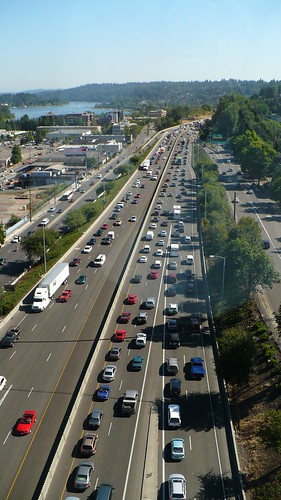
Traffic on Freeway Portland Tram

Here is traffic to Lake Oswego, better get that rapid streetcar sooner than later.

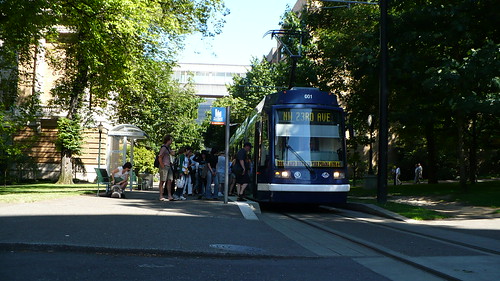
Streetcar in the Park

And here is a streetcar in the park for good measure. I'll update later as I upload more photos. Enjoy!!!

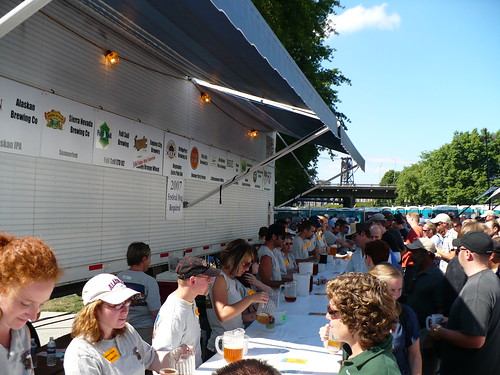
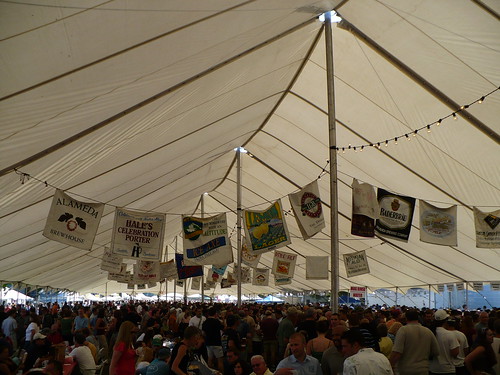
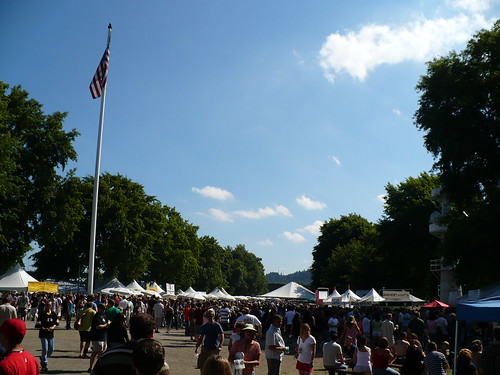
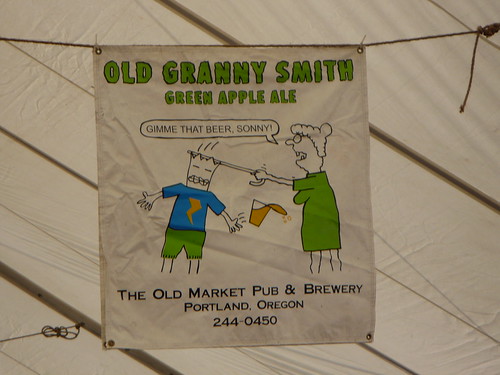
Freeway? No. Beerfest!

Portland used to have a freeway on it's waterfront, but decided in the 1960's to make a park instead. Well you can only fit so many cars on a road, but how many beer drinkers can you fit in a park that used to be a freeway? A lot!

P1000126

P1000121

Beerfest 207

Beer Fest 2007 Portland

World's Scariest Train Wrecks

Just Watch. Quite Ridiculous. But Funny.


Thanks Andrew for the Link.

Wednesday, July 25, 2007

Go Electric Young Man!

RTD has done the right thing in going with electric over diesel for two of their commuter lines. From the Rocky Mountain News:

But faced with staff research that showed the upfront savings would be overwhelmed by the higher operating costs of a diesel system, the few board members left who supported going diesel joined their colleagues in voting 13-0 to stick with the current arrangement. The DIA line is expected to be completed in 2014; the Arvada line in 2015.

If that wasn’t enough, 26 speakers led of by Denver Mayor John Hickenlooper unanimously urged the board to back the communities’ choices. No one spoke up for using diesel cars; many of the speakers demanded RTD abandon current plans to use diesel power on two other FasTracks lines, Northwest Rail to Boulder and Longmont, and North Metro to Commerce City and Thornton.


The other two lines should be electric as well. With rising fuel prices causing many of the nation's transit agencies to raise fares, there is no reason to think that this won't continue to happen when they choose diesel. Hopefully what they have learned from these two lines shows up in the other two. They are also going to be saving money on the Union Station by digging a trench for the lines instead of having a subway tunnel.

Monday, July 23, 2007

Banning Cars from Boulevards

There was an article in the Los Angeles Times on banning cars from Wilshire Avenue and bringing the Subway to the surface. There are tons of cross streets meaning that there would have to be a lot of over or underpasses if it was going to be grade separated. Maybe this can be achieved by tunneling under the major intersections and not allowing cross traffic on the smaller ones. Although everyone would be pretty mad about the construction. I really like the idea of subways though. Mostly because they can go in straighter lines and you won't have the ugly under and overpass issues. They also integrate into the landscape better since people don't have to cross streets. The New York Subways were an investment made over 100 years ago, why can't LA make that investment for the lifetime of that city?

Sunday, July 22, 2007

Caltrain Ridership Record

And the hits keep coming. Caltrain, with the introduction of the Baby Bullet in 2004, has been rocking up ever since. The press release says ridership is up 8.2% from the previous year. The average weekday has been around 35,000. Now they just need to electrify it and get EMUs. Then the service would be faster and more energy efficient.

Update: Sounder is getting some good ridership as well. Check out Seattle Transit Blog.