This perception fits the landscape. As Juno is driving to meet Vanessa and Mark, we see her drive through her run-down neighborhood of eclectic single family homes and enter into the wealthier, cookie-cutter sprawl of large, well adorned ones inhabited in St. Cloud, Minnesota.From the looks of the neighborhood, Juno probably lived in a Streetcar Suburb.
This sets up a cinematically and artistically visual contrast. It turns out Juno’s family, living in the decidedly less affluent neighborhood (albeit early 20th century sprawl), is far more stable, loving, and grounded than the picture perfect couple in the wealthier contemporary suburb.
Monday, April 21, 2008
Juno & Planning
There's not much that I agree with Sam Staley on, but i thought this post on Planetizen captured some of what I was thinking when I watched the film Juno.

No Party Like a Tram Party
What if we had enough rail lines and vehicles to run a party vehicle once in a while? Well you'd be doing it just like Prague.
Travelers waiting for one of Prague’s traditional trams will occasionally see something strange pull up to the station: a streetcar with a full-bore dance party taking place inside, complete with high-energy music, disco lighting and bartenders.
Sunday, April 20, 2008
Negative Externalities & Congestion Pricing By Insurance Rates
While Randal O'Toole keeps trying to wedge his foot in the door before it shuts, the evidence against the autopia of Futurama gets worse. The New York Times blog goes into detail:
Which of these externalities is the most costly to U.S. society? According to current estimates, carbon emissions from driving impose a societal cost of about $20 billion a year. That sounds like an awful lot until you consider congestion: a Texas Transportation Institute study found that wasted fuel and lost productivity due to congestion cost us $78 billion a year. The damage to people and property from auto accidents, meanwhile, is by far the worst.Basically they are setting up an argument for Pay as You Go Insurance or PAY D. Man would I love this type of pricing. First off, I only drive once a week. I really don't even need to drive that but it can be a bit hard on some days to get to my Gramma's house out in the East Bay. But driving about 40 miles a week is much less than the 90 I used to run in college. And it should cost me less than it does now. But the bad economic balance is not lost on the authors of this article:
In a 2006 paper, the economists Aaron Edlin and Pinar Karaca-Mandic argued that accidents impose a true unpaid cost of about $220 billion a year. (And that’s even though the accident rate has fallen significantly over the past 10 years, from 2.72 accidents per million miles driven to 1.98 per million; overall miles driven, however, keep rising.) So, with roughly three trillion miles driven each year producing more than $300 billion in externality costs, drivers should probably be taxed at least an extra 10 cents per mile if we want them to pay the full societal cost of their driving.
This brings us to automobile insurance. While economists may argue that gas is poorly priced, that imbalance can’t compare with how poorly insurance is priced. Imagine that Arthur and Zelda live in the same city and occupy the same insurance risk pool but that Arthur drives 30,000 miles a year while Zelda drives just 3,000. Under the current system, Zelda probably pays the same amount for insurance as Arthur.Is this perhaps a way to get to the mileage tax as well? Everyone has to get car insurance, so what if the mileage was reported to the government like capital gains and sent to you in a 1099 type format. Then it becomes part of your tax return. This could also be coupled with your income quite nicely and lower income folks could get tax breaks. It could possibly make pricing more progressive and might also be a way to recover the true cost of driving, or perhaps provide more incentives to reduce VMT, walk, and use transit. This one market based tool has the possibility of reshaping our urban landscape, likely for the better.
Saturday, April 19, 2008
Two Views of CO2
Wired has two maps on CO2 emissions. One is the per capita emissions map that shows cities are actually better at dealing with CO2 than exurban areas. The other is the total CO2 map which shows cities as the main culprits when it comes to CO2 emissions. What is interesting is that they point out the west is much worse off due to its sprawlyness.

There's a lot of information you could mine from these maps, but one thing stood out to me: the West, for all of our hippie do-gooders, isn't doing well (as a whole) from a per-capita emissions perspective. We simply don't live in dense enough situations to benefit from the efficiency gains created by urban living. Lots of infrastructure serving only a few people generates high per-capita emissions.This comes after CNT put out the same types of maps a few years ago for Chicago. Guess where the CO2 emissions are per capita, not along the Metra lines or in the transit rich core. Interesting.

A National Infrastructure Plan
Speaker Pelosi has issued a challenge. Let's rebuild and renew America. It's a really long article basically covering her speech to the awesome Regional Plan Association which has some of my favorite researchers working for them including the awesome Jeff Zupan and Bob Yaro. Here are a few highlights:
"Rebuilding America is a national security issue. 90% of our oil imports are used for transportation. With investments in public transportation, more efficient roadways, and a broadband backbone that removes commuters from roads, we can reduce our dependence on foreign oil and reduce its implications on our foreign policy."Rebuilding America is an economic issue. By improving our efficiency, we improve our competitiveness and create the next generation of good-paying jobs.
"Rebuilding America is an equality issue. Earlier this month, when I held an Infrastructure Forum in the Capitol, Darren Walker of the Rockefeller Foundation spoke eloquently to us about transportation as a matter of basic fairness. As he said, the civil rights movement in America was sparked by one brave woman, and one public bus. Transportation is the road to opportunity.
"Rebuilding America is an environmental issue. Making greener choices will bring us cleaner air and water, reduce sprawl and congestion, and cut greenhouse gases, to the benefit of the American people and our planet.
"Preserving our planet for future generations is our most urgent challenge.
...
"With the economy slowing down and job losses accelerating, we must also look for opportunities to take advantage of the stimulative effect of investing in infrastructure.
"In conversations with the White House, leaders in Congress have placed a number of proposals on the table, including funding for infrastructure projects - clean water, passenger rail, transit, highways - where dirt will fly and people will be put to work that simply lack the funds to begin now.
"We will explore these options in addition to all the regular order transportation and appropriations bills which give us built-in opportunities to be innovative and creative.
"Right now, both the House and Senate are at work on legislation that has the greatest potential to address climate change yet: a cap-and-trade system, which will not only limit emissions, but also generate revenue through the sale of greenhouse gas permits. Some of these revenues could be used for public transit or other infrastructure that further reduce greenhouse gas emissions.
"In order to renew and rebuild our nation, we need to engage the public in our 21st century vision.
"Once again, Congressman Blumenauer is leading the way, with legislation for a new national commission that would involve the public, members of Congress, and stakeholders all around the country to determine our priorities and look at all the dimensions of this challenge together.
Thursday, April 17, 2008
Clay Chastain Keeps Attaching Conditions
Ok, let's repeat a few phrases.
Streetcars are a subset of light rail.
Streetcars are a subset of light rail.
Streetcars are a subset of light rail.
Streetcars can be coupled.
Streetcars can be coupled.
Streetcars can be coupled.
Streetcars can run in their own lane.
Streetcars can run in their own lane.
Streetcars can run in their own lane.
So with that out of the way, it seems dumb that the only way you'll accept a transit plan for a city is if you're so rigid that you limited the plan to one technology. And by limiting the plan to one technology, he's ignoring that there is a way to get what he wants with streetcars if that is a more workable alternative. This is what made Clay Chastain's plan for Kansas City Light Rail unworkable in the first place. He mandated that the line include building an Aerial Tramway over a park and that it had the electric system of Bordeaux France without an overhead wire even though the proprietors of the technology have said they weren't bringing it over anytime soon. But putting it exactly the way he thought it should be on the ballot without doing any engineering was what killed it.
But I guess the whole point of this post was to say you can configure these transit technologies to do whatever they need to do. Just saying "I don't want light rail" or "I don't want streetcars" is silly. The things that matter are what the right of way is like and the capacity needed on the line. I can understand when folks say "I don't want it in mixed traffic." But don't write it in stone so that you can't have a small section on the line that might only have that option if the ROW in the corridor is too narrow.
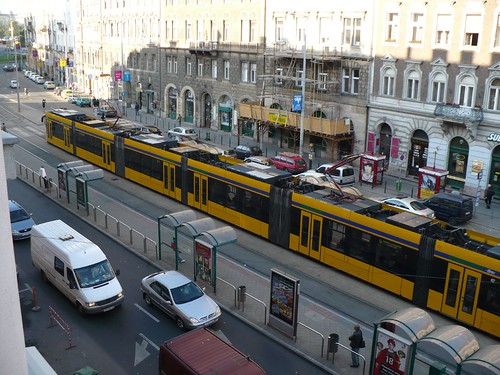
Europeans laugh at us. They call them all trams.
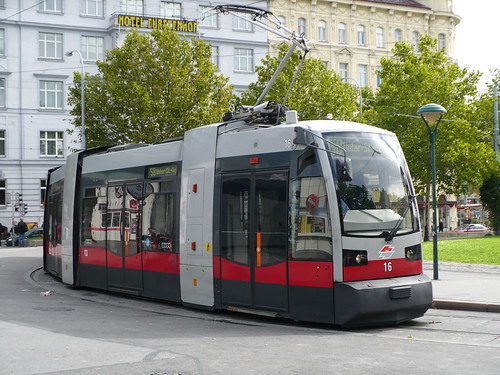
Streetcars are a subset of light rail.
Streetcars are a subset of light rail.
Streetcars are a subset of light rail.
Streetcars can be coupled.
Streetcars can be coupled.
Streetcars can be coupled.
Streetcars can run in their own lane.
Streetcars can run in their own lane.
Streetcars can run in their own lane.
So with that out of the way, it seems dumb that the only way you'll accept a transit plan for a city is if you're so rigid that you limited the plan to one technology. And by limiting the plan to one technology, he's ignoring that there is a way to get what he wants with streetcars if that is a more workable alternative. This is what made Clay Chastain's plan for Kansas City Light Rail unworkable in the first place. He mandated that the line include building an Aerial Tramway over a park and that it had the electric system of Bordeaux France without an overhead wire even though the proprietors of the technology have said they weren't bringing it over anytime soon. But putting it exactly the way he thought it should be on the ballot without doing any engineering was what killed it.
Sigh. No wonder no one wants to work with him, he keeps attaching conditions. At the same time, the Mayor is looking to lay the groundwork for a regional rail system. He seems to be starting to look at it the right way, with a starter line. The other cities that have gotten networks started have built a small starter line first; Houston, Denver, Salt Lake City, and Minneapolis. Now they are all expanding, some albeit faster than others.On further reflection however, Chastain has come up with a possible compromise.
“This is an idea that should electrify the entire city and end the cold war between me and the city,” he says. “If there is a settlement between the parties, and the city wants me to support their light-rail plan in November, I will do so.”
Under certain conditions.
“I will do so only if the transit technology for the main spine is conventional light rail and not streetcars,” Chastain says. “And if there is a direct connection to Union Station, and if the city agrees to put on the same November ballot an ordinance in which the voters can choose whether or not to do away with Section 704 of the City Charter allowing the City Council to repeal or amend voter-initiated ordinances.”
But I guess the whole point of this post was to say you can configure these transit technologies to do whatever they need to do. Just saying "I don't want light rail" or "I don't want streetcars" is silly. The things that matter are what the right of way is like and the capacity needed on the line. I can understand when folks say "I don't want it in mixed traffic." But don't write it in stone so that you can't have a small section on the line that might only have that option if the ROW in the corridor is too narrow.
Europeans laugh at us. They call them all trams.
Wednesday, April 16, 2008
Socialist Roads Scholars
I'm a huge fan of Alex Marshall. Sometimes he writes at Streetsblog and others in different magazines and journals. Today he's in Governing Magazine saying what everyone was thinking. The Libertarians and Conservatives who hate transit so much and are all about free markets become socialists when it comes to roads. Government intervention? Only for roads.
H/T The Political Environment
Nope, in their minds, if you toll it, they will come. Don't get me wrong. I think congestion pricing has merits in certain instances, but wholesale tolling of roads is dumb. Depending on a single mode of transport is dumb too. Didn't anyone ever tell them when they were kids that they couldn't eat steak all the time but needed bread, milk, fruits, and vegetables?Given all this, I find it exceedingly strange that a group of conservative and libertarian-oriented think tanks — groups that argue for less government — have embraced highways and roads as a solution to traffic congestion and a general boon to living. In the same breath, they usually attack mass-transit spending, particularly on trains. They seem to see a highway as an expression of the free market and of American individualism, and a rail line as an example of government meddling and creeping socialism.
Among the most active of these groups is the Reason Foundation, a self-described libertarian nonprofit organization with a $7 million budget that has its own transportation wing. Some typical highway-oriented papers on Reason's Web site include "How to Build Our Way Out of Congestion" and "Private Tollways: How States Can Leverage Federal Highway Funds." Rail transit is taken on in papers with titles such as "Myths of Light Rail Transit," and "Rethinking Transit 'Dollars & Sense': Unearthing the True Cost of Public Transit." I didn't see any papers about unearthing the true cost of our public highway network.
H/T The Political Environment
Tuesday, April 15, 2008
Help Sacramento Enter the Transit Space Race
Update from comments: Brian also mentions that when the page comes up only scenario A comes up. Hopefully they will remedy this so that folks see all three scenarios from which to choose.
Sactown is looking at scenarios for future transit. In order to build out their network, they will need to build light rail, commuter rail, streetcar circulators and new BRT lines. I think a true network expansion is something that everyone can get behind. Well they are asking for folks opinions. So if you live in Sacramento, give them your ideas.
Scenario A - Limited Funding

Scenario B

Scenario C - Full Funding
 Also, take a visit to the local transit blogs. RT Driver & RT Rider
Thanks to reader Brian Goldner for the heads up.
Sactown is looking at scenarios for future transit. In order to build out their network, they will need to build light rail, commuter rail, streetcar circulators and new BRT lines. I think a true network expansion is something that everyone can get behind. Well they are asking for folks opinions. So if you live in Sacramento, give them your ideas.
Scenario A - Limited Funding
Scenario B
Scenario C - Full Funding
Also, take a visit to the local transit blogs. RT Driver & RT RiderThanks to reader Brian Goldner for the heads up.
Steal an Opportunity for Our Children's Future, Fund Metro!
Senator Tom Coburn doesn't know that highways are subsidized just like transit. Why else would he make a comments like this:
H/T Second Avenue Sagas
But the Davis bill, as it is currently constructed, will likely never make its way past Coburn. “I’m happy to be a roadblock to that bill,” Coburn tells WTOP. “It’s $1.5 billion they want, we (the government) don’t have the money to pay for it, so where are we going to get the money?”Coburn doesn’t think one penny of funding for Metro should come from American taxpayers. “How dare us say we are going to steal opportunity from our children so that we can have a ride on the Metro. I think the vast majority of Americans would disagree with that.Wha?! Is this guy serious? No Tom, they disagree with YOU. Even Republicans disagree with you which is why Tom Davis (R) is trying to get the funding through. I feel bad for progressives in Oklahoma, first the Global Warming denier Inhofe and now Transit denier Coburn. What is it with politicians from non-transit non-urban regions telling dense regions benefiting from transit what to do in terms of transportation policy? Get rid of these bums already. Like its not bad enough that $1.5 B is chump change in an Iraq day.
H/T Second Avenue Sagas
Monday, April 14, 2008
Smart Growth? No, Zev Growth!
Ah good 'ole Zev Y. in LA is up to no good again. For those who don't know, he is one of the good folks that brought us the Orange Line busway because of a law he created that said no subways or rail on that corridor. Well he's at it again saying that LA shouldn't grow denser. That smart growth thing is for sissies. But basically he is just playing politics with the frames. He's all about smart growth, just not density. He also wants to keep parking requirements...nothing says don't drive like an open parking space!
Urged on by some elected officials, city planners have decided that the "smart" and "elegant" way to grow the city's housing stock is to double the allowable size of new buildings,bust through established height limits and reduce parking-space requirements -- effectively rolling back more than two decades of neighborhood-protection laws.What is it with these neighborhood protection folks that they actually want to stunt neighborhood evolution and affordability? It's actually not protection but rather a form of Nimbyism. What annoys me most about these clowns is that they just don't want any growth, it has nothing to do with Smart Growth at all. Here is a perfect example.
But it makes no sense to reflexively boost residential density and building size along every Metro Rapid bus route, as the city's version of the state's density-bonus law allows, when the streets that the buses travel often cross low-density, pedestrian-friendly commercial districts serving some of the city's most charming neighborhoods.Let's not build more density near the high capacity pedestrian friendly transit. That'll make our transit work better! No one is going to go into the center of a single family neighborhood and build a high rise. All of this is just scare tactics to get elected. I for one hope he gets destroyed.
Subscribe to:
Posts (Atom)