From the cool department at Brothers Brick. I like legos, I like trains, and I like them together.
Monday, April 11, 2011

Monday, March 28, 2011
Bay Area TOD Policy Might Work
We've had lots of discussions about freeway running light rail and transit and some folks say its ok as long as the major nodes are connected. I probably subscribe to that version, but when it comes down to it I'd rather have the ends of lines not be parking lots. That's why I was glad to see that the BART to Livermore extension was actually going to end in downtown Livermore, not along the freeway. This was thanks in part I believe to the MTC TOD policy, which states that you need to have a certain amount of housing units to build certain technologies like BART. Now of course that policy in itself isn't as powerful as it should be but at least its a good start.
However that won't stop some folks in Livermore from arguing that they thought the line was going down the freeway median all along. What's the point of building a rapid transit line like BART if you're just going to park cars around the stations?! Apparently some people don't get this.
However that won't stop some folks in Livermore from arguing that they thought the line was going down the freeway median all along. What's the point of building a rapid transit line like BART if you're just going to park cars around the stations?! Apparently some people don't get this.
"I guess the thing that's hardest for me to comprehend is that they're putting this train right down the most populated part (of the city) they could come up with,"Because that's the point! Going to the most populated places so the $3.8 billion line will actually have more riders than parking spaces is the goal. I would personally do it a little differently, but that's just me.
Monday, February 21, 2011
Density Lobby Uncovered!
So according to Joel Kotkin (only go to the link if you have to), the Density Lobby is made up of the following nefarious groups:
I'm also a member of the density lobby as are many other amazing bloggers and activists out there who share a love of density. Perhaps these mayors, construction firms and urban land owners would like to become card carrying members.

Also, this article mentions boondoggle for the third article today (see post below). This must be one of the talking points sent out by the RNC this weekend along with the "Obama is so out of touch he wants to spend money on trains" meme that showed up on the weekend talk shows and in various seemingly random articles this weekend.
Then there’s what might be called the “density lobby” — big city mayors, construction firms and the urban land owners.Even Tom Rubin, a self proclaimed train lover and "transit expert" who has never recommended a train in his Reason Foundation consulting history, gets in on the action.
“High speed rail is not really about efficient transport,” notes California transit expert and accountant Tom Rubin. “It’s all about shaping cities for a certain agenda.”Why would Mayors of big cities surrounded by suburbs ever want to promote density or a (gasp!) agenda!? I mean San Francisco has so much room to grow. The Pacific Ocean is endless! Also, damn those "urban" land owners for wanting to make money. As opposed to the angel pure "suburban" land owners and road construction firms. Seriously Joel? Is Siemens wanting to build more trains not as bad as Ford wanting to build more cars?
I'm also a member of the density lobby as are many other amazing bloggers and activists out there who share a love of density. Perhaps these mayors, construction firms and urban land owners would like to become card carrying members.
Also, this article mentions boondoggle for the third article today (see post below). This must be one of the talking points sent out by the RNC this weekend along with the "Obama is so out of touch he wants to spend money on trains" meme that showed up on the weekend talk shows and in various seemingly random articles this weekend.
This is a Boondoggle
This is a boondoggle. It's a craft project that we used to do in Boy Scouts so that we had something to put our keys on.
 via Etsy Crap
Now, the overuse of the term boondoggle to describe projects that may or may not be bad but rather the writer doesn't like because its a hefty investment is epic. I find that its mostly writers and columnists who also use the phrases:
Streetcar Named Desire - Seriously. Stop it. It wasn't cool the first time you thought of it for an article headline, what makes you think its original the millionth time? Searching for an article on streetcars shouldn't bring me every mom and pop production of a a Tennessee Williams play.
19th Century Technology - So was the car. Karl Benz is the originator of the four stroke engine we know today in 1885. Frank Sprague made electric traction (electric railways) usable en masse in 1887. Also Portland Cement that we use in concrete was from the 1840's.
Driving pays for itself - I'm not going to waste time typing what people that read this blog already know.
If anyone has any other terms that the opposition uses that drive you nuts because of their truthiness, please use the comment section below. I saw boondoggle for the umpteenth time today while reading some articles, and it kinda made me want to hurl. But I wrote this to vent instead.
 via Etsy Crap
Now, the overuse of the term boondoggle to describe projects that may or may not be bad but rather the writer doesn't like because its a hefty investment is epic. I find that its mostly writers and columnists who also use the phrases:
Streetcar Named Desire - Seriously. Stop it. It wasn't cool the first time you thought of it for an article headline, what makes you think its original the millionth time? Searching for an article on streetcars shouldn't bring me every mom and pop production of a a Tennessee Williams play.
19th Century Technology - So was the car. Karl Benz is the originator of the four stroke engine we know today in 1885. Frank Sprague made electric traction (electric railways) usable en masse in 1887. Also Portland Cement that we use in concrete was from the 1840's.
Driving pays for itself - I'm not going to waste time typing what people that read this blog already know.
If anyone has any other terms that the opposition uses that drive you nuts because of their truthiness, please use the comment section below. I saw boondoggle for the umpteenth time today while reading some articles, and it kinda made me want to hurl. But I wrote this to vent instead.
Thursday, February 3, 2011
Thursday Night Notes
Some notes for the weekend...
If road projects like this one had to go through new starts they would never get built. This road like all other ring roads is about development. But you're not allowed to build a transit line and let ridership grow. It has to be on target! Double standard.
~~~
Ed Glaeser floats the "We should invest in NE Corridor for HSR only" meme that's going around. See post below. Also, how can you say we shouldn't be building major city pairs for places that do already have the density? I never understand the idea that we should just wait until conditions are just right everywhere. That's just a stall tactic.
~~~
If transit were all designed to look this good maybe more people would ride.
~~~
THIS is the reason for my skeptical nature on BRT. People in Berkley or in West LA are going to screw the whole plan to make it worthless. You spent all that time to get what? A red bus that skips a few stops?
If road projects like this one had to go through new starts they would never get built. This road like all other ring roads is about development. But you're not allowed to build a transit line and let ridership grow. It has to be on target! Double standard.
~~~
Ed Glaeser floats the "We should invest in NE Corridor for HSR only" meme that's going around. See post below. Also, how can you say we shouldn't be building major city pairs for places that do already have the density? I never understand the idea that we should just wait until conditions are just right everywhere. That's just a stall tactic.
~~~
If transit were all designed to look this good maybe more people would ride.
~~~
THIS is the reason for my skeptical nature on BRT. People in Berkley or in West LA are going to screw the whole plan to make it worthless. You spent all that time to get what? A red bus that skips a few stops?
Tuesday, February 1, 2011
Northeast Corridor Rulez!
I appreciate the Northeast Corridor and would love for us to spend more money there. But don't screw over California or other mega regions to do it. Last week Mayor Bloomberg was talking about the national investments in HSR (from Second Ave Sagas) and it seems like he's taking the attitude that investing anywhere else is silly because the NE Corridor is where its at.
Also, just adding up from Wikipedia CSAs and MSAs not in CSAs, along the California HSR corridor we get the following:
Los Angeles CSA - 17,786,419
SF-San Jose-Oak CSA - 7,427,757
San Diego MSA - 3,053,793
Sacramento CSA - 2,436,109
Fresno CSA - 1,063,899
Bakersfield MSA - 807,407
Stockton MSA - 674,860
Modesto MSA - 446,997
Visalia MSA - 429,668
Merced MSA - 245,321
Then there are a bunch under 200,000. But that is ~34.4 million or 11-12% of the United States population. Compare that with the NE Corridor numbers from the New Republic blog post on Mega Regions. From the graphic we can add up to about ~44.2 or 14-15% along the NE Corridor. I left out Springfield and Poughkeepsie.
 In any event, I hope these loosely added numbers put some things into perspective. I wasn't quite sure what I was going to get out of it but felt like it was close. I'm guessing that the Midwest Hub HSR network probably puts together city pairs that add up to a lot of population as well. The difference between the NE Corridor and other regions though, is that the NE Corridor exists, Amtrak from San Diego to Sacramento or San Francisco does not. Again, I'm not saying don't invest in the Northeast Corridor, or that medium speed rail is a great idea (that's a whole other post) but also let's not pretend like the Northeast Corridor is the only place where HSR can exist. It is not the center of the Universe. That is the Planet Nieuw-Vennep.
With projects in Florida, California and the Midwest garnering headlines, the Northeast Corridor has taken a backseat in Washington with only one percent of federal HSR funds coming our way. “That simply just doesn’t make any sense,” he said.Sure it makes sense, but not in the way that he wants it to. I would LOVE if we doled out money based on merit which we're starting to do with TIGER and HUD grants but then those people that are elected called politicians in places that don't have a lot of population concentrated don't want their money all sent to the Northeast Corridor. Not to mention that sometimes I feel like people don't understand geography or population of the rest of the country (not readers of this blog of course). I can't tell you how many times people say they'll be able to hop up from San Diego to visit San Francisco. When I ask them if they like 8 hour drives they say "WHAT?!"
Also, just adding up from Wikipedia CSAs and MSAs not in CSAs, along the California HSR corridor we get the following:
Los Angeles CSA - 17,786,419
SF-San Jose-Oak CSA - 7,427,757
San Diego MSA - 3,053,793
Sacramento CSA - 2,436,109
Fresno CSA - 1,063,899
Bakersfield MSA - 807,407
Stockton MSA - 674,860
Modesto MSA - 446,997
Visalia MSA - 429,668
Merced MSA - 245,321
Then there are a bunch under 200,000. But that is ~34.4 million or 11-12% of the United States population. Compare that with the NE Corridor numbers from the New Republic blog post on Mega Regions. From the graphic we can add up to about ~44.2 or 14-15% along the NE Corridor. I left out Springfield and Poughkeepsie.
 In any event, I hope these loosely added numbers put some things into perspective. I wasn't quite sure what I was going to get out of it but felt like it was close. I'm guessing that the Midwest Hub HSR network probably puts together city pairs that add up to a lot of population as well. The difference between the NE Corridor and other regions though, is that the NE Corridor exists, Amtrak from San Diego to Sacramento or San Francisco does not. Again, I'm not saying don't invest in the Northeast Corridor, or that medium speed rail is a great idea (that's a whole other post) but also let's not pretend like the Northeast Corridor is the only place where HSR can exist. It is not the center of the Universe. That is the Planet Nieuw-Vennep.
Tuesday, January 25, 2011
Unconventional Thinking On Charlotte
A lot of times I'll see an article or a piece that I want to comment on but hold off to see if more of a complete picture comes through. I'm glad I did this time because I've waffled back and forth on the idea of Light Rail on Charlotte's Independence Boulevard. When the debate raged between BRT and LRT on this corridor back in 2005-2006 I felt like BRT would have given the corridor a raw deal. Partly because frequencies and vehicle capacity would mean much more in operating costs even if the capital costs were lower.
At that point there was a lot of support from local mayors (like former Matthews Mayor Lee Myers) and communities for the light rail line but as usual no money. So the decision to pick a locally preferred alternative was shelved for a later date several years down the road when there might be money available.
However recently Mary Newsom at the Charlotte Observer tweeted then blogged about a ULI session that suggested that Independence should be HOV lanes and a Streetcar should be run up Monroe Road. Yonah has a good graphic for this over on the Transport Politic. Initially when I saw the tweet I thought that was a really dumb idea. I had seen the fight between LRT and BRT before and the current suggestions were for the line to be a rapid bus line in the HOV lane and a streetcar on Monroe Road.
While still rapid transit, all that type of transit would do is reward people living further and further away from the city without changing any of the land use patterns closer to the city center. The streetcar might do it but I'm starting to wonder whether line haul streetcars are a great idea for places that would rather have more rapid transit options. Just as Yonah points out, you aren't really going to be getting anywhere fast.
But then I started to warm up to the idea of HOV lanes considering that freeway alignments don't really work well for TOD considering most of the really good property is taken up by the size of the road. Especially if the road is going to be the size of a freeway at some point ceasing to be an actual boulevard. But that is the rub.
The problem here is the same problem that's happening when TTI releases its urban mobility report based on a travel time index. All the engineers at the state DOT care about at this moment are making the trip from a place outside of the Loop into downtown faster. They want to widen this road and make it a full fledged freeway. But that decision alone goes against the centers and corridors plan that Charlotte developed after they voted for the half cent sales tax initially and revamped in 2010.

The TTI travel time index is the wrong measure, especially if it is going to push infrastructure investment that drives the vicious cycle of speed to further away parts of the region. We know now rather that access is a more important measure. CEO's for Cities laid it out in their Driven Apart study, showing that travel time skews the data towards travel flow rather than closer access to work or other destinations.
What this means for Independence Boulevard is that if the NCDOT gets a hold of it and upgrades the outer sections to a grade separated highway, then the ability to change those patterns for better access to an employment node is lost forever. One of the commenters on Yonah's post noted that the outermost piece of Independence is actually a boulevard instead of a highway. Not a boulevard in the sense of a grand boulevard but it is still not a grade separated highway.
The one problem with changing it to a grand boulevard is that urban development patterns that people like are harder to realize further from the downtown or major employment cores. Because of land values and other market forces, the further you get out from major gravity centers like downtown Charlotte or the University, the harder it gets to realize new urban style development. In fact, the South Corridor already shows that development further out is harder to realize. The map below shows development projects from 2007 and before on the South Corridor. The basic distance from downtown before development starts to wane is approximately 3.5 miles. Basically, the strong market of downtown seems to be extended with access provided by the transit line. This is about a 13-15 minute trip to downtown.
 Source: Realizing the Potential One Year Later
Part of the reason for this is the travel time people are willing to endure to get downtown. It's not likely that people will take the streetcar from the outer edges of Monroe Road or Central Avenue unless they have no other options. Additionally, this is why an Independence Light Rail line gets a bit tricky. But we need to start thinking of Independence not as a corridor feeding downtown but rather as a future mass that will have its own gravity. And I believe that gravity can be achieved with a strategic investment in the road to make it an urbanism changing Boulevard.
Considering the section of Independence that is already most like a freeway is within the 3.5 mile radius, its hard to imagine much happening in the short term along the Boulevard. Below shows the ~3.5 mile radius. The yellow shows the part most like a freeway already. The red shows the Boulevard and the light blue is the railroad corridor that is parallel to Independence. The Orange is the Central Streetcar.

This means that a Monroe Streetcar would be good for the inner 3.5 miles but two different service types will be needed further out for shorter and longer types of trips. This also leaves an opportunity for a Grand Boulevard that can attract business and development over time if the road is done right and parcels are slowly transformed into gridded and walkable areas. The approximately 120 feet of right of way are more than enough to build a road that would be friendly to transit, bikes, pedestrians as well as autos.

This corridor specifically could pull offices out to 7.5 miles, creating a new employment corridor which could bring land values up and with it densities over time. Creating a new center should be the goal, not making it another pass through on the way to downtown with HOV lanes for buses that are going to get 5000 riders a day at best. Additionally, by creating two centers with a rapid transit line and streetcar between, the market between the two centers gets stronger, allowing it to support the types of urban development people always draw on their maps at public meetings.
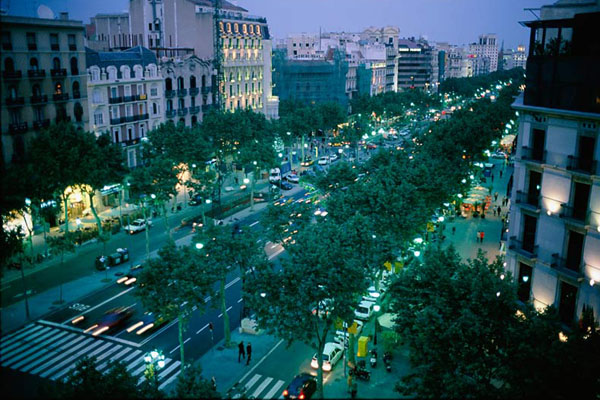 Photo via Hugeasscity
I realize this might be a bit too forward thinking for some people but ultimately we have to change our mindset about what is possible in urban places if we are to give people opportunities to choose different housing and mobility types. Yes this corridor is going to be auto dominated for the near future but that doesn't mean we have to doom it to freewaydom and forever feed sprawling development patterns further and further out. In fact, it's possible to create a new center that attracts new transit trips from within its own gravitational field.
At that point there was a lot of support from local mayors (like former Matthews Mayor Lee Myers) and communities for the light rail line but as usual no money. So the decision to pick a locally preferred alternative was shelved for a later date several years down the road when there might be money available.
However recently Mary Newsom at the Charlotte Observer tweeted then blogged about a ULI session that suggested that Independence should be HOV lanes and a Streetcar should be run up Monroe Road. Yonah has a good graphic for this over on the Transport Politic. Initially when I saw the tweet I thought that was a really dumb idea. I had seen the fight between LRT and BRT before and the current suggestions were for the line to be a rapid bus line in the HOV lane and a streetcar on Monroe Road.
While still rapid transit, all that type of transit would do is reward people living further and further away from the city without changing any of the land use patterns closer to the city center. The streetcar might do it but I'm starting to wonder whether line haul streetcars are a great idea for places that would rather have more rapid transit options. Just as Yonah points out, you aren't really going to be getting anywhere fast.
But then I started to warm up to the idea of HOV lanes considering that freeway alignments don't really work well for TOD considering most of the really good property is taken up by the size of the road. Especially if the road is going to be the size of a freeway at some point ceasing to be an actual boulevard. But that is the rub.
The problem here is the same problem that's happening when TTI releases its urban mobility report based on a travel time index. All the engineers at the state DOT care about at this moment are making the trip from a place outside of the Loop into downtown faster. They want to widen this road and make it a full fledged freeway. But that decision alone goes against the centers and corridors plan that Charlotte developed after they voted for the half cent sales tax initially and revamped in 2010.

The TTI travel time index is the wrong measure, especially if it is going to push infrastructure investment that drives the vicious cycle of speed to further away parts of the region. We know now rather that access is a more important measure. CEO's for Cities laid it out in their Driven Apart study, showing that travel time skews the data towards travel flow rather than closer access to work or other destinations.
What this means for Independence Boulevard is that if the NCDOT gets a hold of it and upgrades the outer sections to a grade separated highway, then the ability to change those patterns for better access to an employment node is lost forever. One of the commenters on Yonah's post noted that the outermost piece of Independence is actually a boulevard instead of a highway. Not a boulevard in the sense of a grand boulevard but it is still not a grade separated highway.
The one problem with changing it to a grand boulevard is that urban development patterns that people like are harder to realize further from the downtown or major employment cores. Because of land values and other market forces, the further you get out from major gravity centers like downtown Charlotte or the University, the harder it gets to realize new urban style development. In fact, the South Corridor already shows that development further out is harder to realize. The map below shows development projects from 2007 and before on the South Corridor. The basic distance from downtown before development starts to wane is approximately 3.5 miles. Basically, the strong market of downtown seems to be extended with access provided by the transit line. This is about a 13-15 minute trip to downtown.
 Source: Realizing the Potential One Year Later
Part of the reason for this is the travel time people are willing to endure to get downtown. It's not likely that people will take the streetcar from the outer edges of Monroe Road or Central Avenue unless they have no other options. Additionally, this is why an Independence Light Rail line gets a bit tricky. But we need to start thinking of Independence not as a corridor feeding downtown but rather as a future mass that will have its own gravity. And I believe that gravity can be achieved with a strategic investment in the road to make it an urbanism changing Boulevard.
Considering the section of Independence that is already most like a freeway is within the 3.5 mile radius, its hard to imagine much happening in the short term along the Boulevard. Below shows the ~3.5 mile radius. The yellow shows the part most like a freeway already. The red shows the Boulevard and the light blue is the railroad corridor that is parallel to Independence. The Orange is the Central Streetcar.

This means that a Monroe Streetcar would be good for the inner 3.5 miles but two different service types will be needed further out for shorter and longer types of trips. This also leaves an opportunity for a Grand Boulevard that can attract business and development over time if the road is done right and parcels are slowly transformed into gridded and walkable areas. The approximately 120 feet of right of way are more than enough to build a road that would be friendly to transit, bikes, pedestrians as well as autos.

This corridor specifically could pull offices out to 7.5 miles, creating a new employment corridor which could bring land values up and with it densities over time. Creating a new center should be the goal, not making it another pass through on the way to downtown with HOV lanes for buses that are going to get 5000 riders a day at best. Additionally, by creating two centers with a rapid transit line and streetcar between, the market between the two centers gets stronger, allowing it to support the types of urban development people always draw on their maps at public meetings.
Photo via Hugeasscity I realize this might be a bit too forward thinking for some people but ultimately we have to change our mindset about what is possible in urban places if we are to give people opportunities to choose different housing and mobility types. Yes this corridor is going to be auto dominated for the near future but that doesn't mean we have to doom it to freewaydom and forever feed sprawling development patterns further and further out. In fact, it's possible to create a new center that attracts new transit trips from within its own gravitational field.
Monday, January 10, 2011
OT Running: Interview With Me Not About Transit
For those who have followed this blog a while, you know that before I liked talking about transit I ran a lot. A friend of mine from college recently interviewed me about my days as a runner and allowed me to give some tips for beginners. So if you're interested, head on over to her site to check it out. (There's a part 2 as well)
Thursday, January 6, 2011
Indianapolis Follows The Wrong Footsteps
In November an Indianapolis group called Indy Connect released their long range vision for transit in the region. It's chock full of all the stuff transit geeks love including lines on maps. I'm not going to go into the details of the plan as Yonah at Transport Politic has already got that angle. Additionally, the locals at Urban Indy have done a good job getting the initial reactions from folks on the ground.
But I definitely approve of bringing down the bus headways to real levels that would start to make ridership equal that of other regions of similar size. Places like Austin, Columbus, and Charlotte are similar size with daily ridership much higher.
Austin - 108,300
Columbus - 58,400
Charlotte - 103,500
Indianapolis - 29,700
But that's not really the issue I wanted to address. Also in the plan are several commuter rail lines, light rail, and BRT that isn't really RT due to its lack of dedicated lanes in the plan. The light rail has been pushed back I'm assuming based on cost and the first rail corridor they want to build is the Northeast Line. While this looks like the deal of the century, they should really take advantage of the fact that they are late to the Transit Space Race by looking at what other regions have done and the consequences of their actions.
Politically it looks like a short term winner with a long term loser. Build the commuter rail line on an existing freight rail ROW on the cheap to get voters in suburban jurisdictions to buy into the plan. They'll vote for it because its cheap and the voters of the main jurisdiction will think they are getting a rail line because that's what you're selling with pictures of commuter lines in Chicago and Philadelphia and Austin. But the people that really want it will just get bus lines for their trouble.
Curious that last city I listed. Because they went first, Austin tested the waters with this type of plan. Back in 2000 there was a light rail election that lost by less than 2,000 votes because George Bush was on the ballot among other reasons. That line would have hit all the employment centers and gotten about 37,000 riders, more than all of Indianapolis' transit does now. But it lost, so in 2004 Austin got the politically palatable solution that is now a commuter rail line taking about 800 riders a day from Leander to the North to the outskirts of downtown Austin. Take a look at these cities aerial photos and let me know if you see something familiar.
Indianapolis - Left Yellow is the University, Middle Yellow is Downtown, State Capital and the red line is the commuter rail.

Austin - Top Yellow is University of Texas, Bottom Yellow is State Capital and Downtown


See a resemblance? Both lines skirt places people want to go. Austin's line gets around 800 riders a day. For the last 6 years Austin has been discussing urban rail to go places where the commuter rail line did not go. However the plan keeps getting pushed back for a number of different reasons that are mostly political. But if they would have done the right line first, neighborhoods all over the city would be begging for extensions to a current system. The politics would be a no brainer but as it currently stands, people are still a little hesitant to put their money where their mouth is in terms of an actual urban rail plan in Austin. That's not to say they aren't working on it, but it's a very uphill battle.
That's the political price that Indy is going to pay if they build the NE Corridor first. Forget all the good will of increased headways and higher ridership for the rest of the system. Charlotte has shown that people won't remember you for your increased ridership. I'm guessing that before the 1998 sales tax increase, Charlotte was in a similar place as Indianapolis is now. But the opposition picked apart the half cent mercilessly and focused on the train. Luckily the train was a success and Charlotte saved their half cent sales tax from repeal, but the attack was on right away. So in a place like Indy where people are much more afraid of taxes for these types of expenditures, if you're going to build a line, do it right or that cheap victory is going to end up being an expensive long term defeat.
But where should the line go? Well let's look at Austin's 37,000 expected ridership year 2000 alignment or Houston's line that passes 290,000+ jobs or even Phoenix which hits the major downtown corridor and Arizona State. It's about the job connections. These lines connected jobs to people. So where are Indy's jobs?
Looking at LEHD data from On the Map, we can see that employment is clustered around the CBD and State complex. The University is a major employer as well to the west of the downtown cluster with the big red dot. (Red = 10k jobs)

But take a look at where the Red line goes, which is the Northeast Corridor. The yellow line is my idea of where a transit corridor should be. And while there are is a fake BRT corridor that goes where the Yellow line is on the map above, it won't get the same type of TOD investment and revitalization they are hoping for unless they rig the headways really high to 5-10 minutes for Rapid service all day or build dedicated lanes for rail or bus.
But the other reason I think that Yellow line is key is because if you look at where the downtown workers actually live at densities that might warrant transit capacity like that, it's not on that red line but up the yellow one. Again LEHD data:
 You could also make a strong case for the light rail line if it were a bit north on the West side and crossed downtown and hit the University. While the commuter rail line might be a good idea for a mature transit system, it's future political suicide for expansion prospects. The reason being is that the region is not going to get any worthwhile excitement in terms of sheer ridership numbers for a starter rail line. Houston got ~40,000 riders to start. Charlotte got ~16,000 riders to start and Phoenix is at ~35,000 by connecting major destinations on the corridors. If this line is like Austin and so far its looking like that is the case, I'm going to bet on an anemic 500-2000 riders at most.
Again that is a short term win looking for a long term loss. If I were Indy, I would start pushing hard to have that North BRT line dedicated ROW, or do a tram-train to Noblesville. The tram-train is likely to get killer ridership and suburban support. There is the benefit of learning from those who have gone before and made the mistakes. No need to make them again so that you're hamstrung into the future. I'm all for trains as people who have read this site over the years know, but do it right, or don't do it at all.
But I definitely approve of bringing down the bus headways to real levels that would start to make ridership equal that of other regions of similar size. Places like Austin, Columbus, and Charlotte are similar size with daily ridership much higher.
Austin - 108,300
Columbus - 58,400
Charlotte - 103,500
Indianapolis - 29,700
But that's not really the issue I wanted to address. Also in the plan are several commuter rail lines, light rail, and BRT that isn't really RT due to its lack of dedicated lanes in the plan. The light rail has been pushed back I'm assuming based on cost and the first rail corridor they want to build is the Northeast Line. While this looks like the deal of the century, they should really take advantage of the fact that they are late to the Transit Space Race by looking at what other regions have done and the consequences of their actions.
Politically it looks like a short term winner with a long term loser. Build the commuter rail line on an existing freight rail ROW on the cheap to get voters in suburban jurisdictions to buy into the plan. They'll vote for it because its cheap and the voters of the main jurisdiction will think they are getting a rail line because that's what you're selling with pictures of commuter lines in Chicago and Philadelphia and Austin. But the people that really want it will just get bus lines for their trouble.
Curious that last city I listed. Because they went first, Austin tested the waters with this type of plan. Back in 2000 there was a light rail election that lost by less than 2,000 votes because George Bush was on the ballot among other reasons. That line would have hit all the employment centers and gotten about 37,000 riders, more than all of Indianapolis' transit does now. But it lost, so in 2004 Austin got the politically palatable solution that is now a commuter rail line taking about 800 riders a day from Leander to the North to the outskirts of downtown Austin. Take a look at these cities aerial photos and let me know if you see something familiar.
Indianapolis - Left Yellow is the University, Middle Yellow is Downtown, State Capital and the red line is the commuter rail.

Austin - Top Yellow is University of Texas, Bottom Yellow is State Capital and Downtown

See a resemblance? Both lines skirt places people want to go. Austin's line gets around 800 riders a day. For the last 6 years Austin has been discussing urban rail to go places where the commuter rail line did not go. However the plan keeps getting pushed back for a number of different reasons that are mostly political. But if they would have done the right line first, neighborhoods all over the city would be begging for extensions to a current system. The politics would be a no brainer but as it currently stands, people are still a little hesitant to put their money where their mouth is in terms of an actual urban rail plan in Austin. That's not to say they aren't working on it, but it's a very uphill battle.
That's the political price that Indy is going to pay if they build the NE Corridor first. Forget all the good will of increased headways and higher ridership for the rest of the system. Charlotte has shown that people won't remember you for your increased ridership. I'm guessing that before the 1998 sales tax increase, Charlotte was in a similar place as Indianapolis is now. But the opposition picked apart the half cent mercilessly and focused on the train. Luckily the train was a success and Charlotte saved their half cent sales tax from repeal, but the attack was on right away. So in a place like Indy where people are much more afraid of taxes for these types of expenditures, if you're going to build a line, do it right or that cheap victory is going to end up being an expensive long term defeat.
But where should the line go? Well let's look at Austin's 37,000 expected ridership year 2000 alignment or Houston's line that passes 290,000+ jobs or even Phoenix which hits the major downtown corridor and Arizona State. It's about the job connections. These lines connected jobs to people. So where are Indy's jobs?
Looking at LEHD data from On the Map, we can see that employment is clustered around the CBD and State complex. The University is a major employer as well to the west of the downtown cluster with the big red dot. (Red = 10k jobs)

But take a look at where the Red line goes, which is the Northeast Corridor. The yellow line is my idea of where a transit corridor should be. And while there are is a fake BRT corridor that goes where the Yellow line is on the map above, it won't get the same type of TOD investment and revitalization they are hoping for unless they rig the headways really high to 5-10 minutes for Rapid service all day or build dedicated lanes for rail or bus.
But the other reason I think that Yellow line is key is because if you look at where the downtown workers actually live at densities that might warrant transit capacity like that, it's not on that red line but up the yellow one. Again LEHD data:
 You could also make a strong case for the light rail line if it were a bit north on the West side and crossed downtown and hit the University. While the commuter rail line might be a good idea for a mature transit system, it's future political suicide for expansion prospects. The reason being is that the region is not going to get any worthwhile excitement in terms of sheer ridership numbers for a starter rail line. Houston got ~40,000 riders to start. Charlotte got ~16,000 riders to start and Phoenix is at ~35,000 by connecting major destinations on the corridors. If this line is like Austin and so far its looking like that is the case, I'm going to bet on an anemic 500-2000 riders at most.
Again that is a short term win looking for a long term loss. If I were Indy, I would start pushing hard to have that North BRT line dedicated ROW, or do a tram-train to Noblesville. The tram-train is likely to get killer ridership and suburban support. There is the benefit of learning from those who have gone before and made the mistakes. No need to make them again so that you're hamstrung into the future. I'm all for trains as people who have read this site over the years know, but do it right, or don't do it at all.
Sunday, November 21, 2010
Making Stuff Up
I know that Robert and everyone else is going to take a hammer to this one, but it's really annoying when people like Megan McArdle just make things up or toss out random numbers to make her feelings on a subject seem right. Here's the immediate culprit that made me want to post.
Finally, there are other high speed rail lines that were built WITH regard to environmental issues and have greater similarities to the possible US system. I think a comparison to France, Spain, or Netherlands/Germany would have been more apt in this circumstance.
Anyway, posts like this are why I get annoyed at general commentators taking stabs into my area of specialty. I've also mentioned before that if they are this bad at my subject, how are they in other people's areas? The focus of blogs like Human Transit, the Urbanophile, or the Transport Politic are always going to be much more informative than most of Megan's posts. But we push back on her because more people read her blog.
San Francisco-LA, the route my fellow journalist wanted to travel, isn't even on this map; the Bay Area MSA only has about 4 million people in it. By contrast, the smallest city on the Chinese map has a population over 5 million, and that's considerably understated, because I used just the population of the city, not the outlying areas that might conceivably drive in to use the HSR.I know that blogs are blogs, but where is the sourcing for the numbers? If I use numbers I'm always trying to cite them. Why is she using MSA of San Francisco and Oakland instead of the Bay Area CSA? The Bay Area CSA is actually 7.4 million, not 4 million. That's a HUGE difference. Not to mention that she's talking about SF to LA, wherein LA's CSA is 17.8 million people! And then where's the link to Chinese cities? A simple wikipedia search would help even a little.
Finally, there are other high speed rail lines that were built WITH regard to environmental issues and have greater similarities to the possible US system. I think a comparison to France, Spain, or Netherlands/Germany would have been more apt in this circumstance.
Anyway, posts like this are why I get annoyed at general commentators taking stabs into my area of specialty. I've also mentioned before that if they are this bad at my subject, how are they in other people's areas? The focus of blogs like Human Transit, the Urbanophile, or the Transport Politic are always going to be much more informative than most of Megan's posts. But we push back on her because more people read her blog.
Wednesday, November 3, 2010
Replay 6.11.2008: A Very Moving Speech By Robert Caro
Note: Tonight for some reason I was watching Charlie Rose on PBS (I don't have cable and my netflix ran out) and he had Chris Matthews and David Brooks on talking about what the Democrats did wrong. Chris made the comment as I've mentioned here before that President Obama needs to do what Eisenhower did with the interstate and what happened with Lincoln signing the 1862 Railway Act. I agree with that, but I don't agree with what he said after. He said that people will accept liberalism if it means Robert Moses. Anyone who says that does not understand the pain that Moses caused in New York. They don't understand the destruction that happened in cities around the country due to the interstate highways ripping up city neighborhoods whole sale.
In any event, that made me think of Robert Caro's speech at CNU Austin in 2008. For anyone that doesn't know what Moses did, watch, and you will now know why Robert Moses should never be repeated.
Thanks to Lawrence and Jon. Here is the Caro speech from CNU in Austin. It might make you cry, but it explains how damaging Robert Moses was to the City of New York and this Country.
In any event, that made me think of Robert Caro's speech at CNU Austin in 2008. For anyone that doesn't know what Moses did, watch, and you will now know why Robert Moses should never be repeated.
Thanks to Lawrence and Jon. Here is the Caro speech from CNU in Austin. It might make you cry, but it explains how damaging Robert Moses was to the City of New York and this Country.
Tuesday, November 2, 2010
Transit Election Central 2010
Hey everyone. This post is going to be a liveblog this evening when the results are coming in. Key things around the country include Tampa Light Rail and Governors races that could make or break HSR. If you want a preview, check CFTE. We did this in 2008 and had a blast. Join us later this evening.
Check below for a local transport issue
6:58pm PT - O'Malley Wins Maryland Governorship, Purple line safe
7:49pm PT - John Hickenlooper wins Colorado, Good for transit
7:52pm PT - Scott Walker wins Wisconsin, good thing feds signed HSR agreements
8:17pm PT - Pretty official, Tampa Light Rail dies almost 60-40
8:53pm PT - Tenafly non-binding rail measure loses
9:18pm PT - Clayton County non-binding resolution for MARTA will pass
12:34am PT - Jerry Brown wins governors race, HSR is a go
I'll fill in more of these tomorrow as I get time, kind of a disappointing day but there will be other big wins in the future.
~~~~~~~~~~~~~~~~
California --
Prop 22 - Keeps the state from raiding local taxes including transportation
36% Reporting - 63% For 37% Against
________________
Lots of $10 registration fees, covering high transit percentage only
San Francisco Prop AA - $10 registration fee for roads, transit and ped improvements
60% Yes 40% No
________________
San Mateo Measure M - $10 registration fee for roads, transit, safe routes to school
________________
Sonoma Measure W - $10 registration fee, 60% for transit service
________________
~~~~~~~~~~~~~~~~~~~~~~~
Florida --
Polk County - (Loss) Half Cent Sales Tax for Transit
87% Reporting - 38% Yes 62% No
92% Reporting - 38% Yes 62% No
95% Reporting - 38% Yes 62% No
97% Reporting - 38% Yes 62% No
________________
Hillsboro County (Loss) - Half Cent Sales Tax for Light Rail, Roads
43% Reporting - 40% For 60% Against
68% Reporting - 41% For 59% Against
82% Reporting - 41% For 59% Against
86% Reporting - 41% For 59% Against
94% Reporting - 41% For 59% Against
________________
~~~~~~~~~~~~~~~~~~~~~~~
Clayton County GA (Win) - Nonbinding - Asking if Voters Want to Join MARTA
46% Reporting - 67% Yes 33% No
67% Reporting - 68.6% Yes 31.4% No
77% Reporting - 69% Yes 31% No
93% Reporting - 70% Yes 30% No
100% Reporting - 70% Yes 30% No
~~~~~~~~~~~~~~~~~~~~~~~
Oahu Hawaii - Question 1 - Would establish a transit agency to oversee rail construction
~~~~~~~~~~~~~~~~~~~~~~~
Tenefly, NJ (Loss) - Nonbinding Question #1 Should Tenefly Rail Service be Restored
Rejected - local news reports many upset that it would not provide a one seat ride to Manhattan thus voted against the line
~~~~~~~~~~~~~~~~~~~~~~~
Toledo, Ohio - (Win) Property Tax Renewal to Support Transit
1% Reporting - 54% For 46% Against
30% Reporting -54% For 46% Against
75% Reporting - 54% For 46% Against
84% Reporting - 54% For 46% Against
~~~~~~~~~~~~~~~~~~~~~~~
Portland, Oregon - $125M in bonding ability for Tri-Met
55% Reporting - 46% Yes 54% No
~~~~~~~~~~~~~~~~~~~~~~~
Texas
Austin - Prop 1, $90M in infrastructure
10% Reporting 56% Yes 44% No
37% Reporting 56% Yes 44% No
68% Reporting 56.6% Yes 43.4% No
92% Reporting 57% Yes 43% No
________________
Richland Hills - (Loss?) Asking voters if they want to leave the Fort Worth Transit Authority
Early Voting - 59% For 41% Against
12% Reporting - 61% For 39% Against
38% Reporting - 61% For 39% Against
100% Reporting 61.7 % For 31.3% Against
________________
~~~~~~~~~~~~~~~~~~~~~~~
Wisconsin
Dane County/Madison Asking for a half cent sales tax to fund a Dane County RTA
Note- Really hard to decipher results here given only advisory vote.
Check below for a local transport issue
6:58pm PT - O'Malley Wins Maryland Governorship, Purple line safe
7:49pm PT - John Hickenlooper wins Colorado, Good for transit
7:52pm PT - Scott Walker wins Wisconsin, good thing feds signed HSR agreements
8:17pm PT - Pretty official, Tampa Light Rail dies almost 60-40
8:53pm PT - Tenafly non-binding rail measure loses
9:18pm PT - Clayton County non-binding resolution for MARTA will pass
12:34am PT - Jerry Brown wins governors race, HSR is a go
I'll fill in more of these tomorrow as I get time, kind of a disappointing day but there will be other big wins in the future.
~~~~~~~~~~~~~~~~
California --
Prop 22 - Keeps the state from raiding local taxes including transportation
36% Reporting - 63% For 37% Against
________________
Lots of $10 registration fees, covering high transit percentage only
San Francisco Prop AA - $10 registration fee for roads, transit and ped improvements
60% Yes 40% No
________________
San Mateo Measure M - $10 registration fee for roads, transit, safe routes to school
________________
Sonoma Measure W - $10 registration fee, 60% for transit service
________________
~~~~~~~~~~~~~~~~~~~~~~~
Florida --
Polk County - (Loss) Half Cent Sales Tax for Transit
87% Reporting - 38% Yes 62% No
92% Reporting - 38% Yes 62% No
95% Reporting - 38% Yes 62% No
97% Reporting - 38% Yes 62% No
________________
Hillsboro County (Loss) - Half Cent Sales Tax for Light Rail, Roads
43% Reporting - 40% For 60% Against
68% Reporting - 41% For 59% Against
82% Reporting - 41% For 59% Against
86% Reporting - 41% For 59% Against
94% Reporting - 41% For 59% Against
________________
~~~~~~~~~~~~~~~~~~~~~~~
Clayton County GA (Win) - Nonbinding - Asking if Voters Want to Join MARTA
46% Reporting - 67% Yes 33% No
67% Reporting - 68.6% Yes 31.4% No
77% Reporting - 69% Yes 31% No
93% Reporting - 70% Yes 30% No
100% Reporting - 70% Yes 30% No
~~~~~~~~~~~~~~~~~~~~~~~
Oahu Hawaii - Question 1 - Would establish a transit agency to oversee rail construction
~~~~~~~~~~~~~~~~~~~~~~~
Tenefly, NJ (Loss) - Nonbinding Question #1 Should Tenefly Rail Service be Restored
Rejected - local news reports many upset that it would not provide a one seat ride to Manhattan thus voted against the line
~~~~~~~~~~~~~~~~~~~~~~~
Toledo, Ohio - (Win) Property Tax Renewal to Support Transit
1% Reporting - 54% For 46% Against
30% Reporting -54% For 46% Against
75% Reporting - 54% For 46% Against
84% Reporting - 54% For 46% Against
~~~~~~~~~~~~~~~~~~~~~~~
Portland, Oregon - $125M in bonding ability for Tri-Met
55% Reporting - 46% Yes 54% No
~~~~~~~~~~~~~~~~~~~~~~~
Texas
Austin - Prop 1, $90M in infrastructure
10% Reporting 56% Yes 44% No
37% Reporting 56% Yes 44% No
68% Reporting 56.6% Yes 43.4% No
92% Reporting 57% Yes 43% No
________________
Richland Hills - (Loss?) Asking voters if they want to leave the Fort Worth Transit Authority
Early Voting - 59% For 41% Against
12% Reporting - 61% For 39% Against
38% Reporting - 61% For 39% Against
100% Reporting 61.7 % For 31.3% Against
________________
~~~~~~~~~~~~~~~~~~~~~~~
Wisconsin
Dane County/Madison Asking for a half cent sales tax to fund a Dane County RTA
Note- Really hard to decipher results here given only advisory vote.
Sunday, October 31, 2010
Tight Spaces
I think it might be a bit tough to live in such a small space, but if you had to, this is quite an interesting way to go. via Americablog
Friday, October 8, 2010
Music Friday - Take the Light Rail
"If your cars too spendy and your bike is too slow, it will take you anywhere you want to go"
Tuesday, October 5, 2010
Why Not Rent?
(Once again, a guest post from Ed, kindly invited by notorious density lobbyist P. Trolleypole.)
Despite the collapse of the housing market, homeownership is still out of reach for many Greater Boston residents, according to a new study by the Urban Land Institute.
So begins an article from Saturday's Boston Herald. The article spends a lot of time tossing around median home prices in Greater Boston and discussing how out of reach they are for working class households, and then talks a little about an affordable housing program that is on the MA ballot in November. The option of renting never comes up, nor is there any talk about how to make or keep rents affordable.
I'm not opposed to worrying about rising costs of shelter in cities, but the outsized focus on homeownership drives me a little crazy. This fetishization is why we have tons of awful policy in this country:
- Mortgage interest tax deductions, which distort the home market, and the benefits of which go largely to the wealthy:
The deduction is wildly regressive. The tax savings for households earning more than $250,000 is 10 times the tax savings for households earning between $40,000 and $75,000 a year, according to recent research by James Poterba and Todd Sinai.
- Fannie and Freddie, which, for example, had the US taxpayer implicitly (de facto, at this point) guarantee 95% of new mortgages in 2009, and which have a heavy single-family bias, giving sprawl a helping hand
- FHA-subsidized loans, which explicitly put every taxpayer on the hook for tons of mortgages with only 3% down (and low downpayments are a strong predictor of default, especially when prices are falling)
The list goes on.
Meanwhile, this is all in support of a system that encourages households to (1) take on massive debts in order to (2) make a huge and completely undiversified investment in (3) a highly volatile asset. So, when bubbles pop and prices drop 20, 30, 40 percent, you have made sure that a large portion of your population has seen its wealth evaporate. On top of that, being so highly indebted makes households less mobile, and less able to find new opportunities - which is why you see higher unemployment in places with more homeownership - we've encouraged people to weld their escape hatches shut.
All of which is to say - maybe it's time to rethink how we house people. Should one's shelter really be tied to one's investments? Should we be paying more attention to affordable housing policies that help renters? Should we start dismantling all these subsidies, and maybe turning some of that money to causes that help low-income renters? This aspiring density lobbyist thinks so.
Wednesday, September 22, 2010
Giving Up and Release Valves
So it seems as if the Port Authority in Pittsburgh is giving up on a rail trip between the two largest employment centers in the region. Perhaps they'll get real BRT but given that opposition always goes to the lowest common denominator such as in Berkeley, you can bet there will be a fight over dedicating the lanes.
I'm disappointed because I feel like this is a travel corridor that could benefit from a direct link from the existing light rail system. However no one wants to actually invest in transit infrastructure these days. I can hardly blame them, once it gets built they have to fight for every penny to operate the thing. If we're ever going to get a real mode share out of transit, we're going to have to start investing in something real. Not necessarily in big projects, but real headways and dedicated lanes for places that will never have rail.
~~~
I guess I'm in a pessimistic mood tonight. New Jersey is thinking about stopping the ARC tunnel for road projects (blech) and the Twin Cities is thinking about how they are going to serve the suburbs of tomorrow when people can't drive. Newsflash! Peak oil isn't our only problem people. What about those folks who can't drive because they are too old! Paratransit is expensive.
~~~
This article irked me for some reason. In it Mary misses the major point about development and land value around transit and even "urban renewal" lessons. She complains about the high rises around transit close to single family neighborhoods.
This is the problem with our thinking here. We complain about the results of our actions but don't think about the underlying actions themselves. Given that Charlotte is building its system line by line, you'll see development speculation and value increases acting as a release valve on the downtown market. If you built all the lines at once, that pressure gets relieved five or six ways instead of one way.
Right now this is just my theory, but when Denver and Houston open up their lines at relatively the same time, I am going to say that you are going to get a more diverse housing type in new stations than we've seen along corridors that are a first big transit investment in a city. The reason being is that they will meet the actual demand, instead of be a small rock in the pond.
So if regions are feeling for local businesses and the skyrocket land values around transit, the escape valve that creates greater opportunities in places that want to change is to build greater transit networks. More escape valves means greater distribution of different development and less pressure and speculation.
I'm disappointed because I feel like this is a travel corridor that could benefit from a direct link from the existing light rail system. However no one wants to actually invest in transit infrastructure these days. I can hardly blame them, once it gets built they have to fight for every penny to operate the thing. If we're ever going to get a real mode share out of transit, we're going to have to start investing in something real. Not necessarily in big projects, but real headways and dedicated lanes for places that will never have rail.
~~~
I guess I'm in a pessimistic mood tonight. New Jersey is thinking about stopping the ARC tunnel for road projects (blech) and the Twin Cities is thinking about how they are going to serve the suburbs of tomorrow when people can't drive. Newsflash! Peak oil isn't our only problem people. What about those folks who can't drive because they are too old! Paratransit is expensive.
~~~
This article irked me for some reason. In it Mary misses the major point about development and land value around transit and even "urban renewal" lessons. She complains about the high rises around transit close to single family neighborhoods.
That, of course, is precisely the problem with Charlotte's love affair with too-tall transit-oriented development zoning smack next to low-scale, historic Dilworth or - this will come - NoDa. Even if nothing's demolished, making land values so high so swiftly via zoning encourages large, expensive projects that will drive out small-scale enterprises.You want to know why that property becomes so valuable? Because it is scarce! Contrary to popular belief, there is not enough supply of urban housing to meet the demand, so the speculators come in and jack up the prices. I bet you wouldn't have this problem if transit was built out such that neighborhoods didn't gentrify because people wanted the quality locations and access. In places like New York City or Chicago that have extensive transit systems to all kinds of neighborhoods, you see that transit stations are the more diverse income places than the region as a whole.
This is the problem with our thinking here. We complain about the results of our actions but don't think about the underlying actions themselves. Given that Charlotte is building its system line by line, you'll see development speculation and value increases acting as a release valve on the downtown market. If you built all the lines at once, that pressure gets relieved five or six ways instead of one way.
Right now this is just my theory, but when Denver and Houston open up their lines at relatively the same time, I am going to say that you are going to get a more diverse housing type in new stations than we've seen along corridors that are a first big transit investment in a city. The reason being is that they will meet the actual demand, instead of be a small rock in the pond.
So if regions are feeling for local businesses and the skyrocket land values around transit, the escape valve that creates greater opportunities in places that want to change is to build greater transit networks. More escape valves means greater distribution of different development and less pressure and speculation.
Thursday, September 16, 2010
The Final Countdown!
T4 has awesomely put the source code for their transportation bill countdown clock on their website for share. Folks who are interested should pull it down. This is something that shows how lax our government has been on actually doing something they are supposed to do every 6 years. Instead they just put it off. Oh we have too much to do or there is an election coming up are always the big excuses. This is what we pay you for!
Wednesday, August 25, 2010
Hiroshima Trams
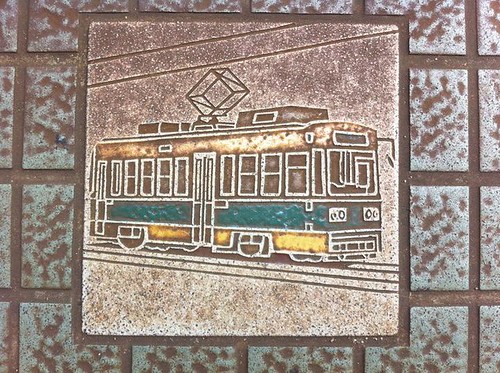
Apparently my friends think of taking pictures of trains/transit for The Overhead Wire when they are abroad. That's pretty awesome. Here's one tiled tram from Hiroshima last week that my friend and newest international correspondent @spicer took. You can check out his blog for more on his trip to Japan and a pretty stunning photo of the city after the bomb was detonated.
Monday, August 23, 2010
Music Monday - I'll Take My Board
You take your car to work, I'll take my board. And when you're out of fuel, I'm still afloat - Weezer
Friday, August 20, 2010
Thursday Night Notes: Fake Trolleys and Blown Up Ridership Estimates
These articles are from a few days ago but I wanted to clear my tabs and get some opinions.
Ogden is going to spend some money on buses that they hope will stimulate streetcar ridership. While I've been impressed with the Broadway Shuttle in Oakland that recently started running given the short headways and fast access to Specialties bakery and Bakesale Betty from City Center, I have to wonder if people honestly think they are going to get a real estimate from these faux trolleys. (Calling them trolleys is a whole other can of worms I could get into in another post) It's understandable to want to know what is going to happen and spending less money to do it. But I'm convinced that given the completely different experience, you're almost dooming any streetcar to death by running the fake trolleys, especially if the headways are limited. Would like to hear more on this from others though.
~~~
I know we have to make ridership estimates for capital projects. Until recently ridership estimates made or broke your ability to build projects. So color me annoyed that Denver finally gets around to updating the regional land use estimates that boost ridership for the Fastracks plan. Should we think this estimate is correct? No. Ridership estimates will always be horrific when done using software built for estimating auto trips. Should Denver have gotten more federal money for the program? Yes. Given they are already underwater paying for it, why didn't they try to fix this earlier and get more than 20% from the Feds? Were they just lazy?
Regions that are doing these massive projects like LA, Seattle, Denver, Houston, and Salt Lake City should get more help from the feds. They have a plan and are moving forward with it. It's likely that these types of network expansions that make up the Transit Space Race will give more bang for the buck than one off single line expansions.
~~~
Here's an interesting article sent in by reader David. I'm always amazed at the different issues that places like Vancouver are dealing with than the majority of the United States in terms of ridership and development pressure along transit lines.
~~~
Finally, there are tons of academic journals out there. They make you pay for their products and don't really care if only a few academics read them. But there's always interesting things to be found. Here are some links to Elsivier journals with a barrel of research on transport issues you all might care about. If you're RSS junkies like me, put them in your reader.
Ogden is going to spend some money on buses that they hope will stimulate streetcar ridership. While I've been impressed with the Broadway Shuttle in Oakland that recently started running given the short headways and fast access to Specialties bakery and Bakesale Betty from City Center, I have to wonder if people honestly think they are going to get a real estimate from these faux trolleys. (Calling them trolleys is a whole other can of worms I could get into in another post) It's understandable to want to know what is going to happen and spending less money to do it. But I'm convinced that given the completely different experience, you're almost dooming any streetcar to death by running the fake trolleys, especially if the headways are limited. Would like to hear more on this from others though.
~~~
I know we have to make ridership estimates for capital projects. Until recently ridership estimates made or broke your ability to build projects. So color me annoyed that Denver finally gets around to updating the regional land use estimates that boost ridership for the Fastracks plan. Should we think this estimate is correct? No. Ridership estimates will always be horrific when done using software built for estimating auto trips. Should Denver have gotten more federal money for the program? Yes. Given they are already underwater paying for it, why didn't they try to fix this earlier and get more than 20% from the Feds? Were they just lazy?
Regions that are doing these massive projects like LA, Seattle, Denver, Houston, and Salt Lake City should get more help from the feds. They have a plan and are moving forward with it. It's likely that these types of network expansions that make up the Transit Space Race will give more bang for the buck than one off single line expansions.
~~~
Here's an interesting article sent in by reader David. I'm always amazed at the different issues that places like Vancouver are dealing with than the majority of the United States in terms of ridership and development pressure along transit lines.
~~~
Finally, there are tons of academic journals out there. They make you pay for their products and don't really care if only a few academics read them. But there's always interesting things to be found. Here are some links to Elsivier journals with a barrel of research on transport issues you all might care about. If you're RSS junkies like me, put them in your reader.
Subscribe to:
Posts (Atom)