Monday, August 31, 2009

On the Subway?

The Bush administration was notorious for hating transit. They hated it so much that at one point they wanted to use new starts money to build HOT lanes on freeways. So funny what happens now:
Southern Methodist University's proximity to DART's rail and bus lines was a key selling point in picking Dallas as home for the library, said Laura Bush, an SMU graduate. She told a Waco TV station in January that the Bush complex would be the only presidential library on a subway stop.
I didn't know being on a subway stop was so important to the Bushes. It's not really a subway stop anyway but light rail in a trench. Apparently the library really won't be on the stop, but instead across a major freeway from Mockingbird Station. They thought about building a bridge but decided against it.

It's a half mile walk from the station using the existing road bridge. If they installed the ped bridge, it would take off .3 miles but would be more exposed to the elements and car traffic on the expressway below. Ultimately it's pretty close to the light rail stop, but why transit matters to a legacy that was down on transit to begin with is beyond me.


Sunday, August 30, 2009

Preservation & Resevations

As a former runner I appreciate trails of all kinds. It's easier on your legs and trails are a good way to get around without having to be in traffic. With that being said, the idea that we should be reserving our right of ways for trails alone instead of trails and transit seems shortsighted. While I applaud the rails to trails folks for what they've been doing, the creation of a trail while the use for rails waits for a project only encourages a permanent trail.

In the case of Whittier, the construction of a trail has likely built up political will and precluded the ROW from ever being used for transit ever again which is a real shame since it would be possible to share. It's also possible that it won't be the best alternative. Eventually though it might come in handy. The trail is on the far right alternative within the city of Whittier.


On a similar note, short term gains should not outweigh long term benefits. In the case of Buffalo, the transit authority is looking to sell some ROW that could be used for long term gain. I understand there are trying times around the country, but these types of decisions that aren't looking at the long term consequences are trouble and it points to the loss of long term thinking in how we make decisions.

Disappointing CAP

I'm a bit disappointed that the Center for American Progress would be pushing natural gas BRT as a strategy instead of electrification with clean energy. They also have the fun generalizations about BRT such as "And construction of BRT systems cost 30 times less than a subway system" and "which operates like a subway system". I believe we've discussed this before in that once you get to the point where you're building real BRT the costs are much much higher than these 30 times claims.

If we're going to assume that BRT is a solution for heavy traveled corridors that aren't dense enough in riders for light rail, there is a case to be made for electrification and trolley buses in terms of public health (particulates) and energy (one power plant vs many). While CNG is much better than diesel, zero particulates should be the goal. We continue to see fossil fuel based solutions when we should be looking even further down the road.

The Politics of Status Quo

Richard Layman covers all of the city races where transportation issues are downing candidates and opposition candidates are making hay of driver unrest and fear of breaking the status quo. Greg Nickels is taken out due to the tunnel and candidates in New York City are already saying Janette Sadik Kahn is out if they are elected. That would be a crime in itself but it shows the fear of change is real.

Friday, August 28, 2009

Wal Mart is Not TOD

Building a supercenter will not anchor TOD. Sorry to say.
Soon, the boarded up store fronts and run down parking lots that make up the mostly vacant Amity Gardens Shopping Center will be torn down to make room for a Wal-Mart Supercenter.

After years of discussions, the mega-chain finalized plans to build along Independence Boulevard Monday night. City leaders hope it will be an economic shot in the arm to the city's East Side.

"I think we have a real opportunity for transit oriented development next door and further out. This will anchor all of those developments," said Nancy Carter, of the Charlotte City Council.

I'm sure Wal Mart would act as a stellar anchor to new real transit oriented development, after it dies a slow gasoline-less supply chain death.

Construction Impacts

One of the complains about new transit is that it will destroy homes and businesses. However with the appropriate strategies the affects are decreased. A new report out states that 85% of businesses were retained along the new LRT line in Seattle. The same won't be said however for some housing in Chandler where a rapid bus line is going in. Not a lot of housing gone, but enough to write a newspaper article about it.

Wednesday, August 26, 2009

Too Full

The Hiawatha Line is chock full of riders. So much so that upgrades to the stations are underway to make them accessible to three car trains. The FTA models predicted that ridership on the line by 2020 would be 24,000. But now we're seeing that its 37,000 on some days. With more three car trains, I wonder if there will be an even greater ridership bump with more room on the trains. Back during the fight for LRT in Minneapolis, people were saying that this was the train to nowhere. Though it must be taking all those people somewhere!

Tuesday, August 25, 2009

Symbolic Gestures

Looks like Charlotte Mayor Pat McCrory vetoed the Charlotte streetcar study. But no matter, it initially passed with a 7 to 4 vote, wherin 7 votes are needed to override a veto. It was a symbolic gesture that might win him some local support from the local libertarian set, but ultimately would hold the city back from planning the line which would likely not be constructed for at least another few years, hopefully when the economy is better. Gotta plan for the future.

Monday, August 24, 2009

Related Comedy

"The toll road of denial is a long and dangerous one. The price? Your soul" - J Peterman

Sunday, August 23, 2009

Sunday Night Notes

Kevin Flynn (Formerly of the Rocky Mountain News) reports that the first Fastracks LRVs have arrived in Denver.
~~~
Some in Portland are worried about gentrification and displacement in neighborhoods that Portland plans to run streetcars through. I wonder though if lots of close in neighborhoods get streetcars they will all gentrify. It seems to me that gentrification occurs due to exclusivity. If you built a bunch of lines at the same time, will there still be the same effect? The same issue could arise in Denver where there will be five new lines. Interested to see what other think.
~~~
Why don't we electrify our freight lines. Even if the lines are powered by a bit dirtier pollution, it will still come from only one power plant away from the population center until alternative energy is put in place. That is better than say every engine pushing pollutants into the neighborhoods that freight lines run through. West Oakland is notorious for this very issue. I also wonder how much of the particulates in say the Port of Oakland are due to switchers. What if we just electrified the rail yards first with electric switchers?
~~~
Developers are waiting before they start developing around the new Purple Line.
~~~
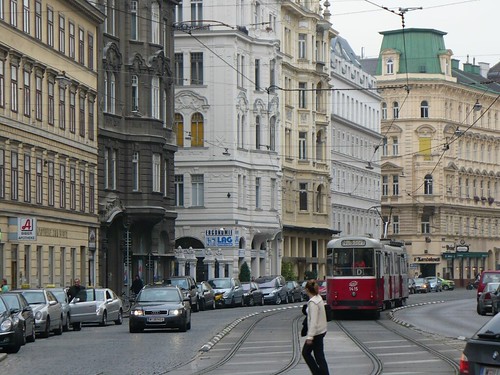
My lungs don't care about aesthetics. Speaking of Wien, I wish I were going back soon. I love that city. Memories...

Vienna_LineD

CA - 10 Special Election + Smart Growth

I was looking through the candidates for the special election to replace Rep. Ellen Tauscher in California's District 10 and was struck by the amount of attention was given to "smart growth and transportation" on almost all of the democratic candidates websites.

John Garamendi has a fairly in depth transportation page that discusses TOD, HOT Lane BRT, eBart expansion (we can talk about whether this is a good idea at all later), and cycling. Anthony Woods has a page that mixes transportation and smart growth even if smart growth is never mentioned in the description. Finally Mark DeSaulnier, who helped write SB375, has large descriptions in separate sections on transportation and smart growth.

It's amazing how far the movement has come but I'm reminded by a post by Kaid Banfield at the NRDC switchboard that there is still a long way to go. Density itself has to be designed well to work, and now that the issue of smart growth is getting greater attention, we need to push the issue even further. While the talk of the above candidates is great, I'm still wondering if they actually get it.

Thursday, August 20, 2009

Heeey!!! Houston Gets a FONSI

Houston gets into the final design phase for two of its five light rail lines and gets development codes changed to promote pedestrian access to the stations. Not bad for the Texas home of oil industry giants.
The council unanimously approved changes in development codes intended to promote dense, urban-style development along the Metropolitan Transit Authority's Main Street rail line and five planned extensions.
Apparently they could have done more. Now if only they can get those parking requirements out of the way and persuade land owners that their property isn't worth as much as they think it is. One of the issues I heard along the line a few years ago is that property owners with vacant land near stations believed their land was worth way more than it really was because of the line, thus stalling development around some midtown stations. An interesting dynamic without "zoning".

On a somewhat related note, the new starts process acronyms that come with the announcement today are numerous and might as well be their own Klingon language. If we were speaking in transit nerd, we would say: "The two Houston corridors passed their NEPA test after they received a FONSI on their FEIS and obtained a ROD from the FTA. This allows them to enter into FD en route to an FFGA." No wonder everyone is so confused over the process. It takes years just to learn all the acronyms.

NEPA: National Environmental Policy Act
FONSI: Finding of No Significant Impact
FEIS: Final Environmental Impact Statement
ROD: Record of Decision
FTA: Federal Transit Administration
FD: Final Design
FFGA: Full Funding Grant Agreement

Wednesday, August 19, 2009

Small Cities Paying for Flights

I'm not really quite sure what to think about this. It seems as if we had a real national rail program that chambers of commerce and cities wouldn't have to be ponying up money to guarantee a certain financial minimum to the airline industry.
With airlines cutting back service in a weak economy, some cities that are too big to qualify for federal help but too small to keep the planes flying in have stepped up with ways to hang on: paying the airlines, either directly or indirectly.
Places like Duluth should have a faster connection to Minneapolis and the airport there. It doesn't really make sense to keep a slush fund that the airline can raid when the economics don't work out for them. There are many even smaller cities out there that depend on Amtrak for their carless connections out of the area. These smaller cities should be on the forefront of regional rail service to larger metro areas with major airports and service.

Sunday, August 16, 2009

Sunday Night Linkfest

A Democratic Gubernatorial candidate from Georgia doesn't get how transit interacts with land use:
“I think that what we have to do is to elevate light rail over the interstate highways where we already have the right-of-ways. And every so many bridges, you retrofit the bridges to be stations above.”
No, you don't build light rail on freeways anymore. Someone needs to give folks a crash course in what works and what doesn't at stimulating land use change. It's not transit in freeways.
~~~
Matt Yglesias thinks about what the next big thing could be to spur the economy such as IT did in the late 90's or the railroad boom did in the 1800s. If we're going to spend a lot of money on an industrial policy, shouldn't we do it with something that we know works. Obviously I agree with his thoughts that building high speed rail and metro subways in the densest parts of cities would be a good start. It's also proven to work, so it seems like a no brainer.
~~~
A plan to raise the rails in Houston through the medical center gets a writeup in the Chronicle. It seems to me that the stray current issue has been lots of fear mongering from the opponents of light rail. Also, isn't there something better to spend around $300 million dollars of fixed guideway modernization dollars than on a viaduct for a line that would only be 7 years old? Seems to me there is a $50B backlog that should be addressed first.
~~~
O'Toole ghostwrites an editorial page at the Denver Post that has so many holes it might as well be swiss cheese. So tired of beating back stupid.
That's right. Unless we change energy sources or greatly increase light-rail ridership, we should just drive our cars to work instead.
Really? Maybe people should just not use electricity at all and read by the moonlight. It will be much cleaner. What will they come up with next?
~~~
An interesting idea to get rail to Marin from San Francisco. Extend the Central Subway to Sausalito. How much would an anchored tube cost from end to end? It would certainly be cheaper than tunneling that whole way. But as Rafael says, you have to contend with the freakishly strong currents.
Friday, August 14, 2009

Building Something of Meaning

Mayor McCrory of Charlotte has been complaining about the stimulus for a while. Most of his argument revolves around the fact that its ridiculously hard to build anything of long term meaning. I tend to agree with him on this point and think that if we're going to spend the money, it might as well be on things that are long lasting.
Under the stimulus, there is limited ability to build transit systems or major power generating facilities, upgrade water systems, or undertake significant environmental cleanups. While President Roosevelt built dams and President Eisenhower built an interstate highway system, President Obama's stimulus fills pot holes.

Extended Chicago

Chicago is looking to extend their Red, Orange, and Yellow El lines at their ends. I'm not going to say that I know Chicago as well as some other cities but I'm wondering if 9 miles of rapid transit on the outside edges for $1.7 billion is a higher and better use than greater capacity in the core? Especially with the Olympics coming up.

Considering the North South deficit of rapid transit on the Western edges of the El network, would North-South LRT/Rapid Streetcar lines and dedicated bus lanes be a better use of money? What do you all think?

Thursday, August 13, 2009

Shameless Plug

So at work we're starting a blog. The basic premise is best practices and information on Transit Oriented Development including hopefully posts from experts from around the country and more information about the work we do. I don't mention work here much because well I'd rather this blog stay my own opinion and not drag work into it. But in this instance, I thought folks would be interested in what is going on over there. So check it out if you get a chance.

Think Different

I think Atrios has the right idea:
I'm not saying travel time is not an issue at all, but fundamentally such projects are about reducing car dependency and changing land use patterns. We generally don't talk about them like that, and the Feds mostly don't think about them like that, but that's really what they're about. Simply speeding people from point A to point B isn't the purpose, the purpose is to provide a different way to get around and eventually a different environment in which to get around. If travel time is too important, then basic utility might be sacrificed by, for example, reducing the number of stops.
The feds put way too much emphasis on travel time savings. There is no way that 3A and 3C are going to have the same ridership contrary to what the models say. By skipping one of the densest neighborhoods in Minneapolis, you're reducing the ability of the line to serve more people for more trips as well as change the land use patterns even more. Yonah also makes an important point:
As a result, transit networks are encouraged to extend out into the suburbs, rather than be densified and reinforced downtown. This policy encourages sprawl; though more suburbanites may find themselves taking transit to work, they won’t be using it to go shopping or out on the weekend.
But there's another aspect as well. I believe you have to connect major destinations in a region and this is something the Southwest LRT is doing. Connecting Eden Prarie to Downtown is an important goal, and doing it quickly is important as well. However there is a trade off between the goal of speed and the goal of actually connecting destinations and origins. If there is a corridor that might be a little slower, but ultimately connect many more people, it shouldn't be discounted based on speed, but should increase the value based on access. This is something that is currently lacking in the New Starts process and something that needs to change if we're ever going to build meaningful transit lines that connect people with where they want to go.

Southwest Airlines CEO Fires First Shot

And so it begins. the Southwest Airlines CEO believes that the federal government shouldn't give it a competitive advantage.

After his speech, I asked Kelly whether his company would likely oppose high-speed passenger rail, given how precious every dollar has become to the airlines. Southwest's opposition years ago was a key reason a previous effort to build a high-speed line linking Dallas, Austin and Houston died. (Trains are seen by many as likely to compete with and in some cases perhaps eliminate short-haul flights.)

He said it's too early to oppose any particular plan, but said federal support for bullet trains shouldn't put airlines like his at a competitive disadvantage.

Perhaps if you can't beat them, you should join them. But airlines aren't looking that far ahead yet. Perhaps they'll start screaming when gas prices go back up again. I don't quite understand why they can't see the future in which higher oil prices make life for airlines hard. If last summer wasn't a wake up call, they'll be getting water splashed in their face soon.

Tuesday, August 11, 2009

Doubling Down - Town

The New York Times has an article about the railyards in Sacramento changing into a new neighborhood. While the market is somewhat down from mid-decade, it seems as if industrial areas adjacent to downtown are still a hot commodity.
When completed, the old Union Pacific property will become an extension of the downtown, effectively doubling its size...

Although it is playing up the history of the site, Thomas Enterprises plans to make new and old buildings harmonize through the use of similar materials, notably brick and glass.“This will not be ‘suburban urban,’ ” said Mr. Rich, alluding to the faux-historical style of many recent outdoor shopping centers. The Railyards, he said, will be “gritty, like a city.”

This will also be the pass through for the DNA line phase 1.