Wednesday, May 6, 2009

2015 Rail Deadline for Orange Line?

I was reading some comments on Curbed LA about the Orange line extension and came across this comment:

Thankfully, Metro had the foresight and built the Orange line to Light Rail Spec, so that in the future it will be relatively easy to convert it from bus to rail. All we need is the support of the people in the valley and its done.

I also believe Metro used state funds earmarked for rail projects when constructing the orange line, and there is a mandate that the corridor must be converted to rail by 2015 or metro must pay back the funds. We might see the conversion start within the next couple years, especially with Valleyites being choked in traffic and their envy of trendy urban/suburban communities like Culver City and Santa Monica getting rail and them being snuffed by metro.

I thought to myself, this seems a little strange. Can't be true. But check out Kimberleigh Richards post and got to her page on Prop 108.

Specifically, §2701.06 reads (again, emphasis mine): The money in the fund, upon appropriation by the Legislature, shall be available, without regard to fiscal years, for acquisition of rights-of-way, capital expenditures, and acquisition of rolling stock for intercity rail, passenger rail, and urban rail transit and for capital improvements which directly support rail transportation, including exclusive busways which are converted within 10 years after completion of construction into rail lines, grade separations to enhance rail passenger service, and multimodal terminals.
Part of the deal seems to be that the MTA needs to pay back money to the state that was used to buy the ROW if its not rail in 10 years. How much is this?

This obligation was acknowledged by then-CEO Franklin White in his October 21, 1994 memo to the MTA board of directors in which he responded to questions raised at the October 13 Planning and Programming Committee meeting:

Question: Does the MTA incur any financial loss if it does not build a rail project along this line?
Response: MTA ... has an obligation to pay the State of California $44.8 million in the event that it does not proceed with a passenger rail project on the SP right-of-way, unless CTC agrees to waive such repayment.


As of the end of 2007, the "then-present value" of the original $44.8 million was $67.4 million; if the inflation rate remains approximately the same, by October 30, 2015 (the tenth anniversary of the Orange Line beginning passenger service) it will be $83.1 million. While no one can say for certain whether or not the CTC would waive the repayment (which would presumably come due on that date, based on the Prop 108 language), the state's budget problems in the intervening years seems to predict that they would.

Very interesting. I wonder if this would actually happen or if its just a law that is not enforceable. I'm assuming that they would not make MTA pay it back. But who knows. Anyone know more about this?

Tram Trains

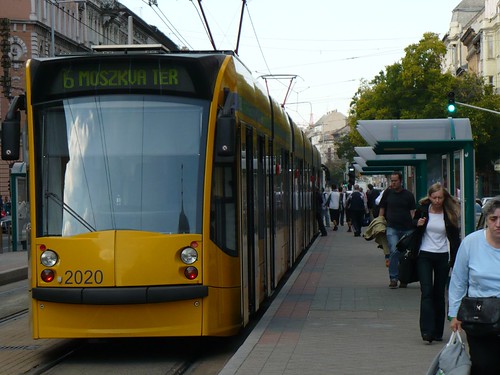
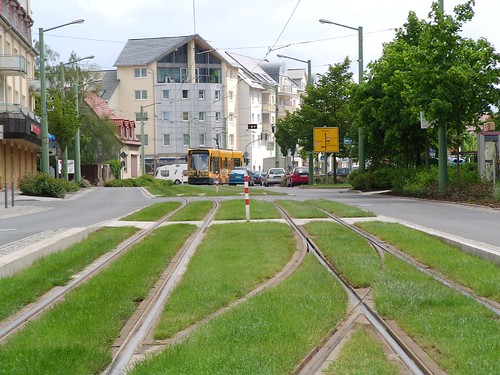
This is something I'd like to see more thought on in the United States. The Tram Train:
Netherlands has been building a intercity light rail network for the past years, reusing previous sections of tram lines, metros and heavy rail and extending them with new sections of elevated rail and tunnels. The RandstadRail currently operates on the southern region of the “round city”, namely connecting the Hague to its suburbs and Rotterdam.
Check out the photos at the link. I think it's a great idea to have regional railways that turn more into light rail in city centers. This is what Austin would have had to a certain degree with the first light rail proposal in 2000. A light rail line with limited stops in the burbs with greater connectivity in the center city.

Unofficial Gas Tax

This is what you're paying for in other cities around the world:

Prepared by the Emirate’s Department of Transport, with assistance from Mott MacDonald and Steer Davis Gleave, the master plan aims to create a comprehensive public transport network connecting Abu Dhabi island and the international airport with the UAE’s planned new capital city. The main proposals include:

  • 590 km of regional high speed railway linking Abu Dhabi with neighbouring emirates and countries;
  • 130 km of metro lines linking key areas in Abu Dhabi, including the airport, the new capital city, Yas Island and the central business zone;
  • 30 tram projects in Abu Dhabi and Al Ain totalling 340 km;
  • highway improvements totalling 1 560 route-km;
  • demand management measures to support the infrastructure, including parking management and possible congestion charges.
Your "tax" dollars at work. Why can't we keep it at home?

Tuesday, May 5, 2009

Local Commercial "Prescribing Public Transit"

"You need PT" I feel like we can do a lot better than this. If we need to change people's public opinion, this doesn't seem like the way to do it. I guess its a start.


I still like this commercial from Madrid much more... if you're trying to sell a lifestyle, this seems to be a better way.

Monday, May 4, 2009

Silver Lie Continues

People still aren't happy with the Silver Line BRT in Boston. They want the replacement for the rapid transit line they were promised.
“Why not invest in the light rail system as the community has been asking for 20 years,” said Robert Terrell, a member of the Washington Street Corridor Coalition, a group of organizations that have been fighting to replace a segment of the Orange Line that was removed in the 1980s.
Sound familiar San Francisco??? Oh yes. The Geary Subway that was promised after the B Geary line was ripped out is going to be a BRT line now as well. Will we ever learn?

Wee Hours Linkage

I'm kind of a night owl and its sometimes nice because the next days news comes out right before I go to bed. It's also bad because the next days news comes out right before I want to go to bed :)

~~~
Apparently the TA really likes BRT on Geary. Whatever. After riding the bus on the HOV/BRT lane from LAX to Union Station I realized why the rubber tires just don't cut it. I couldn't read the news on my Iphone without getting seriously ill. I feel bad for the people who will have to ride that bouncefest in from the Richmond every morning. Sure it will be a faster bouncefest, but a bouncefest nonetheless.

The next sick part though, the completely ridiculous cost estimate of $5 billion dollars for surface subway. If it really does cost $100 million a mile and it's a ~6.5 mile line with ~2 miles of subway, why the hell would 2 miles cost $4+ billion dollars???!!! And why does it cost $100 million a mile on the surface? It's not like the T-Third with drawbridge retrofits. Someone at the TA is a little too close to those medical hash dispensaries. Plz to have new engineers!!!

I guess it really doesn't matter. The Richmond is never going to get a Metro, BART or otherwise. I'm sorry guys, you've been deemed second class citizens to the TA and Muni. Well maybe third class, because everyone who rides Muni is already second class.
~~~
And we wonder why a ton of suburban roads get built?
The city of Charlotte has 75 percent of Mecklenburg's population, but only has 1 of 9 voting members on the MTC.
~~~
I think we need new engineers in the bay area. All these cost estimates are insane. The airport connector is just another example of it. If there is one place I would like to see intelligent design, it's here. And 80 foot buses? Come on Transform, you know thats not possible. The Orange line had to get special permission from Caltrans to run 65 footers, just five feet longer than the usual artics.
~~~
If Microsoft wants a light rail extension so bad, why can't they pay for it. It's thier own fault that they located so far away from the center of the region. Job sprawl has consequences, one of them being high capital cost for extensions. Papa Gates should foot the bill for this one.
~~
Does the Peninsula want to pay for a tunnel? I'd be interested in seeing a poll on the issue of a tunnel. I wonder if the NIMBY's would get rejected for thier high cost plans.

Sunday, May 3, 2009

Sunday Night Photo Dump III

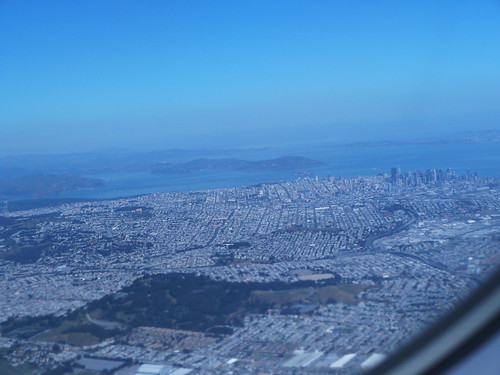
Here are some more San Francisco Aerials. I love looking at the city you live in from up high.

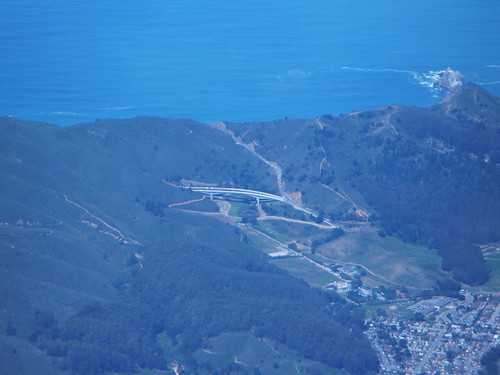
Here's the new Devil's Slide bypass:

New Devil's Slide Bypass

A shot of the Outer Parts of the City looking North Northwest:

Outer San Francisco Aerial Photo

Towards downtown over the Mission:

San Francisco Aerial Photo

Kind of strange downtown shot. The light in all of these is a bit on the blue side.

Downtown San Francisco Aerial

Sunday Night Photo Dump II

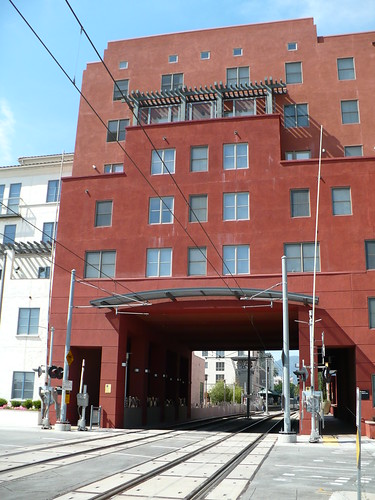
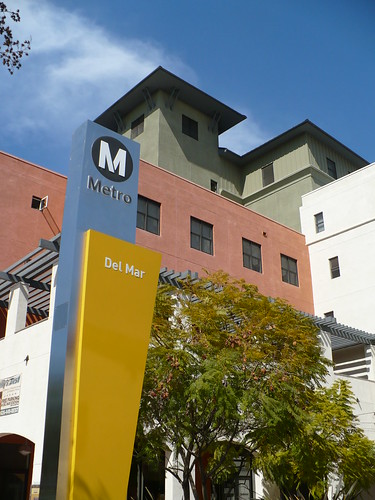
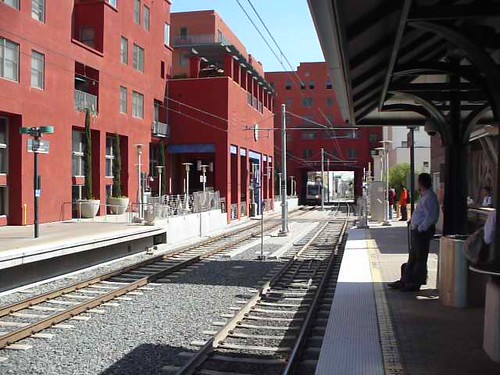
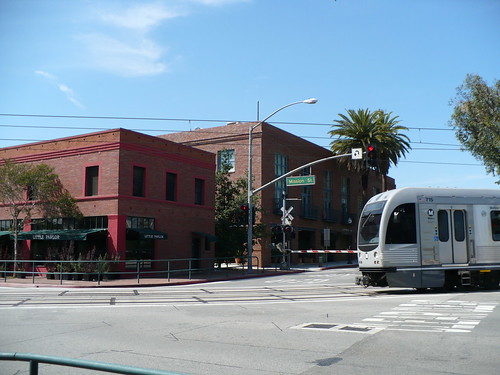
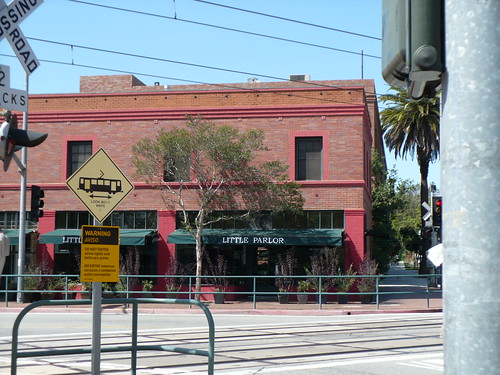
Los Angeles TOD along the Gold Line at Mission Meridian and Del Mar Stations. It was a pretty hot day and I needed to catch an airplane but here's what I got...

Del Mar Station is the one where the train goes underneath the Apartments designed by Moule Polyzoides.

Pasadena Del Mar Station TOD

Pasadena Del Mar Station TOD

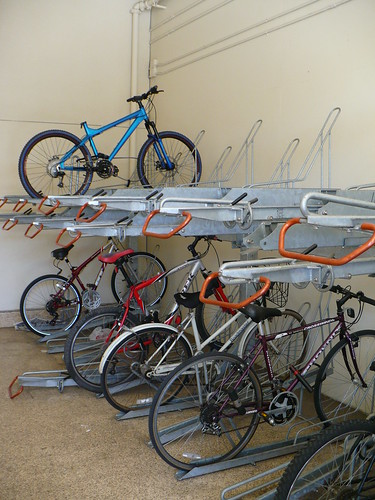
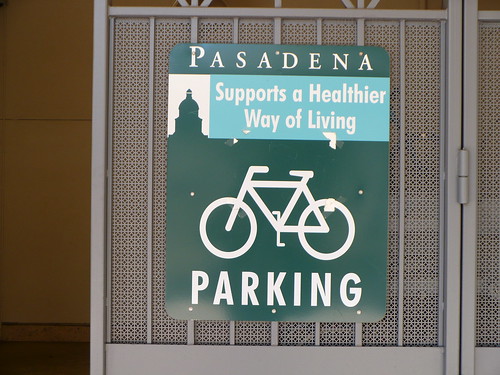
Bike Parking!

Del Mar Bike Station

Pasadena Cares about Alternative Transportation and Health

Del Mar Bike Station

Pasadena Del Mar Station TOD

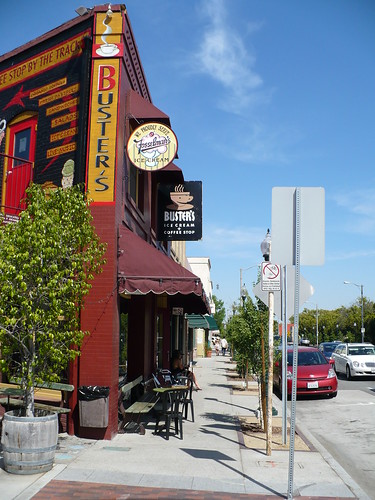
Hot Day at Mission Meridian Station, could have used some Ice Cream from this place:

Mission Meridian TOD

Mission Meridian TOD

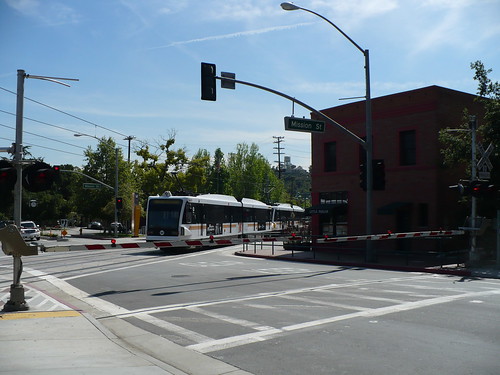
Connectivity to the bus is key...

Mission Meridian TOD

Mission Meridian TOD

Mission Meridian TOD

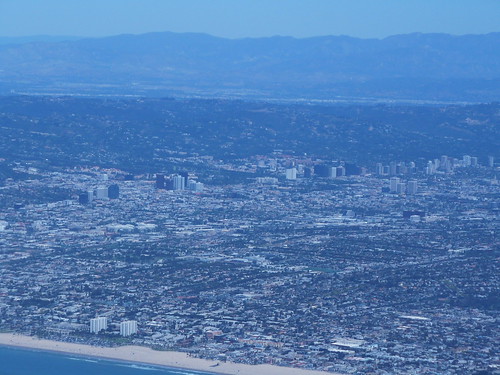
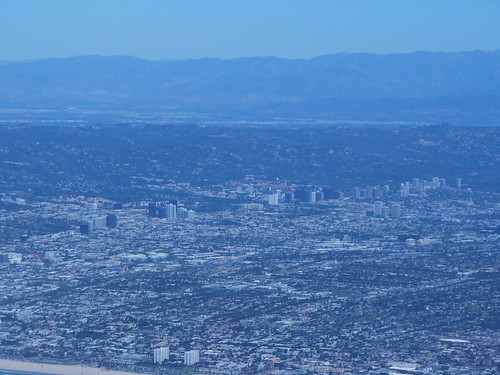
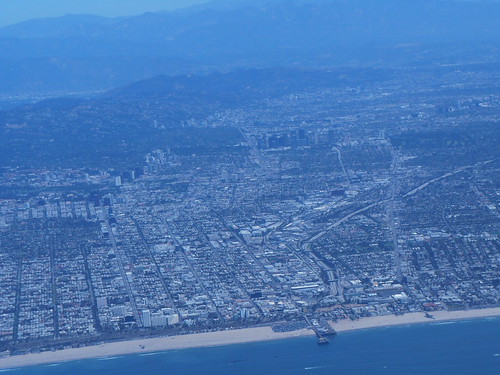
Anyone wonder why they need a subway on Wilshire?

Los Angeles Aerial Photos

Los Angeles Aerial Photos

Los Angeles Aerial Photos

Finally, there are a few videos. Two from Del Mar and one from the Police car that they kept running while they were checking tickets on the Mission Station Platform. What a waste of taxpayer dollars!!!


Sunday Night Photo Dump I

I'm sorry that I haven't been able to share photos and videos that I've taken with you all. In the last month I've been to Minneapolis and Los Angeles taking some mad photos of some great TOD and some airplane shots that should spark some conversation.

Every time I go somewhere I'll try to get out and visit people and places. In this instance, I took out in Downtown Minneapolis and along the Gold Line in LA. Here's some highlights. If you want to check out all the pictures, go to the flickr feed for Transit Nerds.

First here are some shots in Minneapolis:

Dental Offices on the Light Rail Line seem to appreciate that fact.

Minneapolis for APA

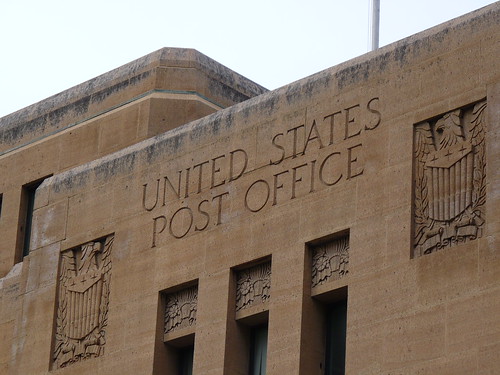
The Post Office was Art Deco, and very photogenic. Yes that's me in the reflection. Cool huh?

Minneapolis for APA

Minneapolis for APA

The New I-35 Bridge

Minneapolis for APA

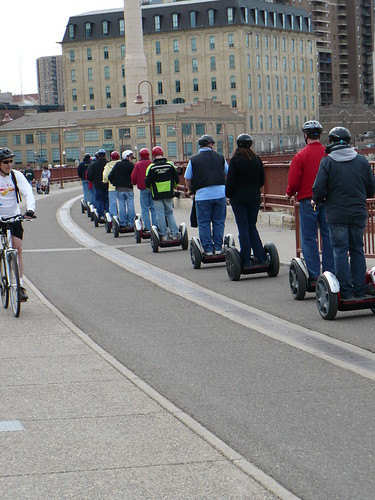
Segway Tours...

Minneapolis for APA

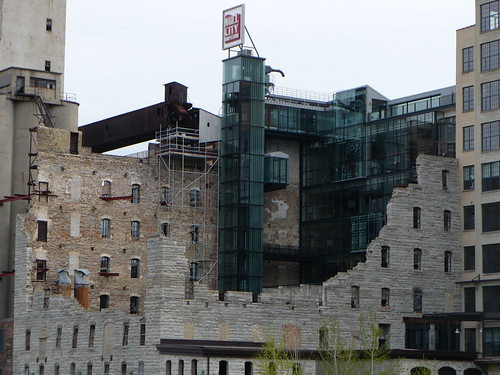
Mill City Development with cool exterior elevator

Minneapolis for APA

Obligatory LRV photo

Minneapolis for APA

The next posts will be Los Angeles and Aerials.

Elections Do Matter

Even in the transit world...
But supporters of the Portland expansion as well as transit advocates nationally said that making the announcement so early in the new administration and allowing the Portland project to leap over other projects sends an unmistakable message of federal support for transit.
...

Wyden and DeFazio, both Democrats, were more direct.

"The real answer is, elections matter," Wyden said. "The priorities are different now, and they are very much more in tune with the needs of the people of Portland."

DeFazio agreed. "The Bush administration had set up a black box test that no streetcar proposal would have ever been able to pass," he said. "They were not following the law, and this administration is."

It's interesting to see how the cost-effectiveness measure will be used by the Obama FTA. Considering the problem is that there isn't enough money for all projects, there will have to be a way to figure out which projects deserve funding and which don't. Will it be now the lack of livability planning with transit?

Creative Bus Stops

Here's some great bus stops from around the world. If all were this iconic or neighborhood related, we might get more interest in riding the bus.

Via DTO on Twitter.

Thursday, April 30, 2009

Why Not the Gas Tax?

Why isn't raising the gas tax the answer? It's not like gas prices aren't going to go up $2 at some point. It's silly to say we're not going to raise gas taxes 10 cents when two dollars will happen in a summer. If there is such a pressing need for transportation money, this should be a viable alternative. The money is going to leave your pocket in either tolls or gas tax money or mileage tax money. Why not leave all options on the table?

Cost Crash?

I wonder how many costs such as Fastracks in Denver are wildly overestimated in this current fiscal environment. The estimates of late from BART are encouraging even if their line is a skeptical investment.
...here's the latest. BART estimated it would cost nearly $250 million to begin construction this summer on the Fremont-to-Warm Springs extension. The low bid came in at $137 million, or 45 percent below the projected cost. The Bay Area Rapid Transit District still has to evaluate this bid before awarding a contract, so it's not a done deal. But the five next lowest bids are within $7 million of the low offer.
For more commentary on cost overruns, check out Orphan Road.

Wednesday, April 29, 2009

Mid Week Linkfest

This sure would have been a lot easier if we had some money for a Dunbarton rail bridge no?
~~~
Growing up instead of sprawling out in Melbourne.

The report says just 10 per cent of the existing urban area could be used to accommodate projected growth in Melbourne's population from about 4 million to 5 million by 2030. About 34,000 sites on major corridors could be suitable for multi-level development, it says. These include more than 12,400 sites along tram lines and 22,000 along priority bus routes such as Johnston Street. The sites could accommodate about 500,000 new dwellings in total.

~~~
There's also two big elevated freeways on that side of town.
If you had doubts that air pollution from nearby industries exacerbated asthma in children, this map may quell them.
~~~
I've been harsh on LaHood. Maybe I should give him some slack since he's a runner! Just like me a long time ago.
~~~
I think they need both Smart and Streetcars. Though I still think that ignoring downtown Novato is a dumb move.
~~~
I guess Blago wasn't the only one who likes to block transit in Chicago.

Not Just the Work Trip

Ben Ross of the Action Committee for Transit testified before a House panel to discuss cuts to the Metro system. His testimony was good, but what most interested me was the move towards non-work trips in the ridership department.
In Washington, the trend toward transit goes back ten years. Metrorail ridership started to go up in 1998 after a decade of little change. Since then it has grown at breakneck speed. Average weekday ridership rose from 528,000 in May 1998 to 752,000 in May 2008 – an increase of 42% in just 10 years. That far exceeds population growth. Despite the worsening economy and falling gas prices, ridership in recent months has continued to be significantly higher than a year earlier.

We can better understand what is happening by looking at these data in more detail. The biggest growth in transit use is not for traditional commuting trips, but for non-work travel. A fundamental shift in lifestyle is occurring as people no longer organize their lives around the automobile. Between 1999 and 2007, Metrorail boardings during the morning rush hour – a good measure of commuting travel – increased 33.5%. But ridership increased 47% on Saturdays and 57% on Sundays.
It's become cooler to save money, walk more to your destinations and take transit. But this was also because Washington gave the option. You see, it isn't so cut and dry as the sprawlagists would like you to believe. Give people the choice to drive or take transit, some will choose transit and some will choose to drive. Give them one choice and well they will drive. It's pretty simple actually. Invest in transit service and it will give people a reason to use it. Especially if you have a good subway system like Metro tied to frequent buses, commuter rail, and Amtrak.

Imagine KC

A very cool video from Kansas City. Explains it all well.


Imagine KC from Jonathan Arnold on Vimeo.

Amercan Dream

Says Case of the infamous Case-Shilller home price index:
Case response when asked about the so-called "American Dream of Homeownership"?
"It's largely bulls---." He went on to say, "Rental is better for a lot of people (unless they bought during a boom)."

John King, urban design writer for the San Francisco Chronicle: What about all the starter-home suburbs? Case: I don't know. They're going to stagnate.

Texas Senator Wants to Secede from DOT

Imagine if all the money for transit that is provided by the federal government was gone and states had control. That's something that Kay Bailey Hutchinson thinks is a great idea. While in theory it would keep money from places like Alaska, in practice the State DOT (read road building) would likely keep it all for itself. Personally, this smells of the same secession talk that Gov Hair discussed only a week ago.

Tuesday, April 28, 2009

Charlotte Leaders Want Money for More Roads

Ughh. Don't they have enough roads already? It's really upsetting to see that knowing what they saw happen along the south corridor, they are still looking to build more roads. What about sidewalks? What about bike lanes? What about real expanded transit. Charlotte itself knows what happens when you invest more in service. You get more riders! But never give a single family developer (who is the chair of this group) an inch, or a few miles of highway, cause they'll take it. From the Transport Politic:
The argument goes something like this: Charlotte approved a 1/2¢ sales tax for transit back in 1998, and the business community helped work successfully against a repeal vote in 2007. Now, though, whatever the needs of the transit system, roads need to be better funded, because the region’s highways are not keeping up with demand. The development community - focused mostly on building single-family houses and office parks entirely designed for the auto-dependent - is adamant in its push for more roads.

A Hearty Congratulations

Congratulations to my colleagues and friends at the Center for Neighborhood Technology. They have won the prestigious MacArthur award for Creative and Effective Institutions. They deserve it and if you're not familiar with their work, you might want to check them out. They are the ones who brought you the affordability index, car sharing before it was cool, and some nifty energy initiatives.

Train Operators Have Mental Boundaries Too

The people commit suicide via train are selfish and a**holes. They do it to Caltrain operators here in the bay area all the time. If you feel your life is so awful that you want to end it, do it on your own and don't get anyone else's mind involved. Really it should never be that bad but that is another topic of discussion. I really feel for the drivers that can do nothing but watch. It's sickening and there should be a campaign against it so that people who do contemplate it might think about the people they are hurting while trying to end thier own pain.

Monday, April 27, 2009

Austin's Transportation Race

Apparently people want more commuter rail. It's really annoying that the poll wasn't more specific asking about more urban rail types proving that the conversation in Austin is far behind what it could and should be. What is interesting though is the crosstabs of the mayors race with questions about issues and specifically commuter rail.

If you look at the gender breakdown in the details, you'll see that the transportation issue is mostly a male one in the mayoral race but more women would vote for more commuter rail. But its also more of an important issue for the youngest age set. The good news it seems is that the two leading candidates have the votes of people who care the more about transportation.

Now here is the kicker I'm sure M1ek and AC will post on. The part of the city that wants commuter rail the most is central. My hunch is that people in central Austin weren't thinking about more commuter rail lines when they said yes to this question which is why the questioning of urban rail or streetcar or light rail would have been much better. Will the candidates get this out of the polling? Probably not. Perhaps they have done thier own polling on the issue but I imagine not. I could be wrong.

One Car, Two Car, Three Car, Blue Car

When you have access to transit, you use it. I'm looking at maps and doing GIS analysis on American Cities for most of my day. So I'm really interested in looking at these types of maps in cities outside of the US. In this instance, this is a map of car ownership and transit ridership in Melbourne, one of the cities that kept its streetcars. What is fascinating is the amount of single car ownership along the transit lines. Now it isn't controlled for income levels, self selection or the size of the household, but it would be interesting to take a look at the household costs for living near the lines vs. living away from them. Anyways, check it out at Transport Textbook.

Cars, Short Version

San Francisco:
With cars, you can go where you want to go when you want to go. But they also have the most environmental impacts, the most social impacts and the greatest cost to our system - to park it, to enforce it, to run it, to import the oil.

Quote of the Day

Edmonton:
With luck, when Edmontonians look back on April 25, 2009, they will mark it as the day public transit reached a sort-of critical mass, after which further expansion and improvement was driven by growth in ridership and by clamour in unserved communities, rather than by the fond hopes of politicians and advocates of different, denser kinds of cities.

Still Not Getting It

States are still pushing for an 80-20 funding split for highways and transit. If we keep going down this route, nothing will change. LaHood talks a big game, but I'm still waiting to see proof. I think people have been a little too easy on him of late. Yeah he says nice things but what have we seen happen so far? States are still calling for 80-20, which to me is a failure to communicate how important livable communities and alternative transportation really are. It doesn't take a rocket scientist to realize that highways do not = livable communities. Look what we got from that over the last 60 years. What does ASHTO think they are going to spend that 80% on? If its all highway money, that is a lot of expansion.

Sunday, April 26, 2009

Designing Oakland Streets for Streetcars

They were built for Streetcars, why not bring them back?

Image courtesy of Greg Thompson.

Hiding the Good Stuff

More like you weren't paying attention. Peter King of Sports Illustrated writes about the secret sauce, no not that stuff...

It's the new green me.

It's not like I'm going to be surrendering my car now than I'm a city guy, but being without it is increasingly enjoyable. Check out this 28-hour experience that began Thursday morning:

Walk 10 minutes to the Back Bay train station to catch a train to New York. Take the train to New York. Take a cab to visit buddy Jack Bowers in the hospital after surgery. Take a cab to SI in midtown Manhattan for an afternoon of meetings.

Take the subway to Queens for Mets-Padres. Take the subway to Manhattan after the game. Walk to Penn Station. Take the train back to Boston. Walk the 10 minutes home. Not an unpleasant trip on any of the legs. You people in cities have been hiding how great it is to get along without a car.

H/T Nick C

Sorry for the lack of posts. I'm tweeting small stuff from the apa conference. Www.Twitter.com/theoverheadwire

Thursday, April 23, 2009

Thursday Linkfest

H Street Streetcar tracks going in ???
~~~
It looks like some electrification will make the difference between Zurich and Munich. About an hours difference. That's a lot of time.
~~~
Some twists to the NAACP vs the Streetcar story in Cincinnati.
~~~
Certainly the repeal folks in Charlotte would have given up by now. They got shellacked 70% to 30% in the last repeal try but gosh why not come back for more pain. Anyone want to explain why these folks get a voice at all after such a drubbing? Especially when the highway overruns were far worse than the LRT line that is performing beyond expectations.

But I did find out why it will cost so much:

The Lynx extension's 50 percent cost escalation from the 2006 estimate is largely because it's become more complicated. The original plan called for 10 bridges to separate the train line from roads. The plan now calls for 16 grade separations, including burying 36th Street under rail lines in NoDa. Despite the higher costs, the success of the Lynx Blue Line (between uptown and south Charlotte, along South Boulevard) still makes the project viable, CATS said.

In other words, the improved ridership from the South Corridor allowed the line to enjoy a "rail bias" in the ridership model that was demonstrated by the first line. Also, 16 grade separations is really going to bust any budget, though I still don't think $100 million per mile is low enough.
~~~
Sign of the times: Edinburgh won't move forward with a tram spur due to the economy.

How About Something Besides Cars?

Quotes like these kill me.
"If you're late for work, and you might get fired if you're late one more time, it might be worth the (toll)," said Scott Haggerty, an Alameda County supervisor and commission chairman.
How about creating a transportation system that can get everyone to work at the same time every day?? I bet that would help more than paying a single toll because you're perpetually late.

Guestimate

Why must they cost so much!!!??!!! Surely this is just the result of the engineers throwing in the cost of reconstructing Tryon, the sensitive nature of some wetlands near the University, and some crazy aerial structure that doesn't really need to be built. Also when was this estimate performed? Not when stimulus projects were coming in 30% under budget right?

No one will ever build light rail if it continues to cost this much. It's ridiculous that people aren't asking harder questions to the engineers, such as do we really need that overpass there? Can we single track it here with room for double if needed later? Can we hop on another agencies train order? etc etc etc. Cut out the gold plating!

Aww Can Not Get Your Ship Out

I live in Noe Valley and I lost my grocery store for a few months. It's annoying but I soldier on taking Muni to the Safeway at Market and Church on my way home after work so I don't have to drive. Is it just me or are people just incredibly lazy??

Parking in "da Noe" is easier than many other parts of the city and really if you live here, its not like you even need to drive. I don't think I have ever seen a time when there isn't a meter available or a spot in that lot across from Martha Bros. Mr. Shoup would be proud.

Today's Heros

That would be the North Carolina House.
In a 77-40 vote Tuesday, the House gave preliminary approval to a local-option sales tax for bus and rail transit service, after turning back a move to let some of the money be spent for roads.
Turning back the tide is hard, but things like this begin to send a message.

Tuesday, April 21, 2009

Streetcars in New York? Ask JSK

A visit to exchange ideas could possibly spark the New York Streetcar renaissance. Janette Sadik-Kahn will visit the city to talk about bikes and the big changes in New York but might come away excited about streetcars, something Toronto never left behind.
Janette Sadik-Khan, Commissioner of Transportation of the City of New York, is in Toronto tomorrow to celebrate Earth Day and to see a Toronto icon that she wants to bring back to the Big Apple: the streetcar. “I’m very jazzed about my visit,” Ms. Sadik-Khan said today from her New York office. “The streetcar program is something that I’m looking at here. We threw away our streetcars, and you kept them. I think it’s a great economic development tool.”
I don't think that New York should adopt the streetcar model of Toronto exactly. For one thing the single cars are more like buses instead of the sleeker more comfortable european trams that can be of greater size due to modular designs. You would lose out on some of the benefits of greater capacity and energy usage. Toronto is currently looking to replace the existing vehicles so we'll probably see them make the switch soon as well. Also it's likely that a dedicated lane for streetcars will be necessary to make the lines even more efficient, something Toronto is starting to do.

Perhaps we'll see some sort of study soon. And perhaps New York can look to some of Scott Bernstein's ideas on using funding from electric companies to bring them to scale. Not everywhere, but on a few key routes that could use the capacity.

A Compelling Argument for Conservatives & Livability

After the passing of Paul Weyrich, I was wondering if there would be anyone to take up the mantle of conservatives and livable communities. While I'm not sure anyone would have the power or influence on the movement that Paul did, there are certain a few folks filling the void. This commentary by a former researcher at the Center for Neighborhood Technology tries to get at livable communities and their association to social conservatism. I think it puts together a lot of the things many of us in the movement believe in, whether on the left right or in the center. David Alpert expands the argument, and rightfully so to bikes as well. Check it out.

Increasing Capacity Without a New Tube

I thought this was an interesting post from a recently opened local blog Switching Modes. It also could fit well with Transbay's recent post on how to fix the central freeway by making a BART connection in the inner Mission neighborhoods. I still think we need another transbay tube but not just for BART but for standard guage trains and high speed rail to Oakland. That would allow trains like the Capital Corridor a direct shot into San Francisco.

Fox Earth Day Campaign Pushes Transit

I saw this commercial on Fox tonight. It went on in the middle of American Idol which is pretty amazing given there are millions of people who watch the show. If only they told the news wing about the environment.

So Much to Read!

I've been away for a couple of days in LA and haven't been able to keep up with the feeds. It gets a little disconcerting when you take a day off and your feed reader shows 600 articles to dash through. Here are a few gems from those days. I can't comment in depth on all of them but hopefully I'll be back to full speed tomorrow. Also, if anyone is in Minneapolis for APA next weekend, let me know as I'll be there too!

Wall Street Journal - Spain has a rockin HSR system. I had heard before that the Basque separatists (ETA) aren't happy about a possible extension to their neck of the woods. Very interesting article.
~~~
I guess history doesn't matter as much as making money. Give them some time to get some samples out of the ground. I don't see why the dig can't be a part of the development plan. Themes!
~~~
Trees vs. Sidewalks!
~~~
What Pedestrianist said... and Mayor Tom Bates is beating the Emerald Aristocracy at the green game. Now if we could only get his wife to find this thing called the Capital Corridor.
~~~
MTC pushing back hard because well, they like bad plans.
~~~
Suburban demographics are changing. Any surprise there is a market for not suburbia?
~~~
Relating transit to your road network.

Within two to three decades, 90 percent of Wasatch Front homes should be within a mile of a major rail or express bus stop, said Mike Allegra, UTA's assistant general manager.

He describes the end result the same way one would Utah's network of roads and highways. The streetcars will act like neighborhood collector roads that move traffic to TRAX or rapid buses, which run in their own lanes, whisking people the way a major highway does. From there, passengers can transfer to FrontRunner, the rail system's limited-access freeway. "Each mode feeds the other," Allegra said.

~~~
NIMBYs!
Opponents of a proposed commuter rail line from southwest Fort Worth to Grapevine say they will file a petition today in Colleyville saying increased train traffic would clog intersections and lower property values.
I've said this before and I'll say it again. Don't move near a rail line if you don't want to hear trains. Is that really so hard to get? This is pretty comical though. I hardly think a train every 15 minutes is going to jam up intersections. Perhaps they are thinking freight trains? Who knows.

Monday, April 20, 2009

Build Near Tram Lines, Cut Sprawl

So says an article in the Age.
A Greater Melbourne Authority could take control of the city's public transport and help push through multi-storey buildings along tram and train corridors, in a bid to stop the suburbs sprawling further.
I wonder if the only thing that can really stop the suburbs is people getting fed up with paying too much for transportation. Anyone know how Toronto and Melbourne compare to American cities the same size? Seems like we can get at least a little glimpse of what we messed up when we ripped our trams out of the ground.

H/T NJH

Saturday, April 18, 2009

Linkfest: Quotes Edition

I wanted to try something a little different, so I'm just going to link a quote from the articles I'm posting today.

~~~
DC: "Some residents of the District cling to a suburban mentality."
~~~
National: "Americans travel by car twice as much per year as Germans and use transit only a sixth as much."
~~~
Texas: "This isn’t a transportation funding crisis," said Keener, whose Austin group promotes low taxes and small government. "It’s a funding priority crisis."
~~~
Las Vegas: "The zoning provides incentives, such as bonus density, for developers who build projects that combine residential, professional and commercial space and encourage residents to use the mass transit line."

Thursday, April 16, 2009

Industrial Tipping Points

Richard calls for a separate tax classification for industrial land because its too easy to change when the demand is high for other uses. It's interesting because I've been thinking a lot about the near downtown industrial districts ripe for redevelopment with streetcars and light rail. While industrial land is usually easiest for redevelopment, it can also be tricky when some or all of that land is viable for industrial uses. Areas like the Pearl in Portland, South Lake Union in Seattle, Channelside in Tampa, and the South End in Charlotte were once industrial districts that have since been redeveloped because of increased transit accessibility and proximity to downtown.

However other areas such as parts of West Oakland have been deemed off limits to developers even when the proximity to downtown is just enough that a streetcar or light rail line would explode the potential in the area. This is because the industrial land is still viable as such and city council saw value in keeping the jobs and land available in the area. I can't say that I disagree with this assessment but what is the point where industrial properties anywhere are too valuable to tax base?

For the most part, many of the easy pickings in downtowns around America have been taken back in the form of downtown adjacent former brick industrial buildings that have formed a base for a loft district fairly close to downtowns. But there are still spots waiting for a rail line that have good bones and would be great spots for the new streetcar suburbs. Is there an area in your cities that have dwindling industrial uses and is within a two mile radius of downtown?

Transit Lobby Strong Like Ox

I almost spit out my drink when I saw this comment from our favorite O'Toole.
Second, Congress could increase the share of funds dedicated to transit. The transit lobby is powerful and the highway lobby is weak, but the latter probably still has enough power to stop that idea.
Bwahahaha. I wonder if Randall was out teabagging today.

Combino Cracks

Looks like the Combino is having more problems. In 2004, there were issues with car bodies slightly cracking.
On March 12, 2004, Siemens admitted to problems concerning the stability of the car bodies and, as a precautionary measure, instructed all public transportation services to take all Combinos with a service distance of more than 120,000 kilometres (74,565 mi) out of service. Torsion forces generated in S-curves were much higher than anticipated, leading to cracks around the articulations between the car modules. Subsequently, hairline cracks were found in the joints of the aluminium bodies, which could cause the roof to collapse in the case of an accident.
The Caterpillars of Budapest had issues and were delayed due to door issues in 06. While not as bad as the issues the European versions had, Melbourne is going to make fixes due to the fractures that have occurred on their trainsets. I've heard that subsequent redesigns have fixed the problem on the current model.

Budapest_CombinaSupra3

Wednesday, April 15, 2009

Quick Sprawling Plug

My buddy Tim at Planetizen co-wrote the kid's book on planning. I think it's doing pretty well except for that demon looking picture in the New York Times. Sorry bud, had to call it out. :)

Now they have put together a DVD on sprawl that features some famous names talking about how it all went wrong. Check out the lineup and watch some previews at Planetizen.

Tuesday, April 14, 2009

Locating Stations is Hard

Where does the station go? Novato has chosen to tell SMART not to put a station in their downtown. After looking at the map, it seems a bit silly to me.
But Eklund and other council members were concerned about the lack of parking for those who would take the train and the relatively small job centers. Councilwoman Jeanne MacLeamy said she expected as many as 1,500 new jobs to come to the Atherton area in the coming years on top of the 1,500 already there. There are about 500 jobs near the proposed downtown station.
Why not have a policy to push more jobs onto the urban grid that exists downtown. It's also the most connected to the residential neighborhoods meaning it will be easier for people to get to the station without cars. Stop designing for cars!!!

The top is a close up of the two stations under consideration. The downtown station was ruled out which with the experience of Caltrain seems a bit silly. The yellow box shows the jobs they are talking about which have a huge parking lot outside of the building. Why not develop the downtown more and create a reason for people to live in downtown Novato and take the train to other cities?


Guest Post: Remove the Wire Noose

George Barsky is a frequent commenter on one of my transit listserves. In a recent email, he asked that Washington D.C. be freed from its wire noose, ie the prohibition of wires in the federal city. Here are his comments he gave me permission to post and some photos of what he believes wires would look like in the district:

It's high time Congress allowed the District of Columbia to operate clean, green, efficient, electric surface mass transit on any of its streets.

Streetcars and light rail are making a strong comeback in cities all across the USA. Obviously, that form of mass transit is being recognized more and more as a worthwhile public investment to move lots of people. And there is a new transportation infrastructure recognition by the Obama Administration.

Until more reliable forms of power become available, the best system for more than 100 years to power streetcars is from a simple almost invisible overhead wire. This is how more than 400 other electric surface transit systems operate around the world and within other US cities. However, Congress banned overhead wires in parts of D.C. more than 100 years ago stifling electric surface transit progress and ultimately killing it almost 50 years ago.

It's time for Congress to take a leadership role and change that law to allow streetcars to use single simple, non-polluting almost invisible wire above their tracks and return to all of D.C. When the law was passed more than 100 years ago it was well intended to remove masses of utility wire from city streets. Utilities can bury their wires but transit cannot. The old underground conduit system used by the now abandoned D.C. streetcar network is too expensive and difficult to maintain or reinstall and not at all desirable.

I am not recommending a sky full of wires. A small single simple nearly invisible overhead wire supported by decorative lampposts or nearby buildings can be extremely architecturally effective and easy to maintain without destroying the visual landscape of D.C. There are thousands of examples worldwide in cities just as beautiful or more so than D.C. They are not harmed or defaced by them and their beauty is enhanced by modern healthful environmentally friendly electric surface transit.

Discussions abound about clean energy, CO2 reductions and global warming, but Congress has turned a blind eye in their own backyard by continuing to impose the antiquarian overhead wire ban for surface transit. Everyday Al Gore and other officials call for change and reform in terms of energy and environment but Congress does nothing to encourage D.C. to modernize its surface transport making it green and more inviting to use. The beauty of D.C. will not be marred by this minute change and will enable it to eliminate many noxious and polluting buses from its streets. It's time to CHANGE how D.C. does surface transit.

Congress has to get this message and take reasonable action by eliminating the overhead wire ban for surface transit within all of D.C and let D.C. decide where and how to institute its transit needs.

By comparison to other recent problems this may seem trivial. Basically it is, except that a change in the law requires an act of Congress. I doubt that many Congressmen and staffs today are even aware that giving D.C. this benefit lies within their jurisdiction. Many of them now have modern light rail in their own districts. It's one of those niche items buried in ancient D.C. history but is quite important to the District of Columbia and all who use or want to benefit from good surface transit therein. Allowing D.C. to resurrect electric streetcar service in all parts of D.C. by means of a simple almost invisible overhead wire will showcase an example to the nation and the world that Congress gets it. All that is required is a single simple nearly invisible overhead wire.

Best of all, no funds are required for this enabling act.

It is time for new outside the box thinking regarding green electric surface transit within all of D.C. and remove the ancient wire noose from around the District's neck. If an overhead wire is OK for the new Anacostia streetcar line than it should be OK in all parts of D.C. The residents will applaud such new vital action.

Conduit at Union Station

With Overhead Wires

George Barsky
Germantown, MD

Houston Light Rail Sims

I always find these simulations interesting. Watch the development that changes in the last few frames from a large industrial property to a large big box development. It's somewhat obvious from the simulation that urbanism was left out of consideration.


Houston METRO Light Rail from NC3D.com on Vimeo.

H/T George B.

Grass Track on the T Willie?

This post got me thinking, what if they would have put in a grass track on the T-Willie? Could we do it on Geary?

Flickr Photo by SFCityscape

Vs.


Photo from Mellow Monk.

Some of my favorites from Tram photog Neitech in Nordbrand Germany.


Via CNU

Monday, April 13, 2009

A Different View

It's generally known that places like San Francisco, New York City, and Europe draw the ire of conservatives for their "liberal" tendencies. But do they really hate those places? Or is it a reflexive action based on the views projected from a southern base?

It would seem to me that this views of these places also translates to modes of transportation that are seen as "european" or basically foreign as well such as light rail. Which to me makes it all the more amazing that Charlotte has been able to move itself towards transit expansion that is seen as the cutting edge in cities around the south, even those that have existing systems such as Atlanta. The amazing thing there is the changing political will towards a more transit centered, urbanism. I would argue that Charlotte in particular is a function of outsiders from the Northeast. The Urbanophile has laid out why outsiders have a way of making changes to a community because they can see something different.
Outsiders are willing to imagine things being different in the first place since they already experienced and indeed grew up in an environment that is different. It's sort of like visiting a foreign country for the first time. We notice how all sorts of little things are different, prompting four reactions. The first is, "Hey, things are different here." That can be a revelation itself. When we grow up and experience only one way of doing things, we tend to think everybody must do it that way or that there is only one way to do it.
A possible function of the Southern feeling towards San Francisco or Europe is that they haven't been there before and their impressions are based on what they are told rather than what they experience. How many people do you know have changed their view of their own places after seeing a foreign country? I also have to wonder how much of the south is bigger cities as well and how much the lack of cities might lead to a similar feeling.

I remember visiting my parents from college when they lived in Rotterdam for a year and being amazed at the different transportation types, streets for people instead of just cars, and the fact that my dad could just walk to work. I was amazed and I believe it was one part of how my views changed towards the ones that I have now. Before that, I just hadn't been exposed to anything like it and didn't know it existed.

It's not that they aren't open to the experience, they just haven't had it. Not sure how that could be fixed, but it might explain some of the reasons for the San Francisco and New York bashing from the South. We're generally afraid of what we don't know. What do you all think?