I'm going to copy John here, forgive me but this is basically question and answer via youtube:
Money Pundits are shocked when told that oil isn't in a bubble.
Al Gore has the answer... Alternative energy in 10 years.
I've been hoping someone would make this challenge. Less carbon, fresh air, better transit options and WE CAN KEEP OUR MONEY!
Thursday, July 17, 2008

Bombardier's Toronto Streetcar Bid Implodes
Because of technical specifications where the vehicles wouldn't be able to take some of the tight turns on the Toronto system, the bids have all been thrown out and will be put out again.
Steve Munroe will have more.
Part of the problem is Toronto uses a wider gauge. One of the rumors is that using standard gauge would have allowed locomotives into the city center but they would not have been able to negotiate the curves that caused the failure of Bombardier to comply with the technical standards.Bombardier, the presumed front-runner to supply new low-floor streetcars for Toronto, has failed to prove its vehicles can handle some of the tight turns on the city’s narrow tracks, the Toronto Transit Commission announced late yesterday.
As a result, the Montreal-based company’s proposal for the $1.25-billion project has been rejected and the bid process to find a company to build an accessible fleet of new streetcars has collapsed.
Steve Munroe will have more.
Walk Score 2 is Out
The new walk score is out. I tend to agree with Richard that it needs a transit component. My score is a 91, but I also have a half block to the J Church Muni Metro and a half mile to BART. That should increase the score even more in neighborhoods that might not be as well connected.
Democratic Convention Misses Opportunity
Update 7.17.08 7:30PT: In the comments, Toast tells us that credential holders will be allowed to take light rail to the Pepsi Center, but not Union Station. Still bad for locals.
This is another case showing that most of the time, no one cares about transit or transportation from any political party. Sure democrats talk all nice about transit but this is super dumb. A few years ago when Al Gore won an Oscar for an inconvenient truth, the subway stop below the venue was closed because of the Oscars event. Say what?! All those stars that are now touting their green cred but where were they then. And it's happening again.
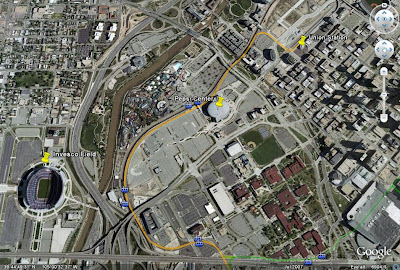
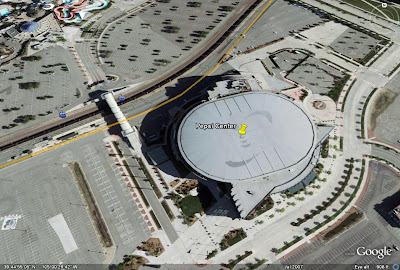
Now for the democratic convention in Denver, they are going to close the light rail stops at the Pepsi Center and Union Station. Visitors will have to walk from the mile high stop. It's not that half a mile is that far, but people should at least see the trains and how they transport people. And the best visibility is from the outside of the arena.
Security. Why? I don't get it at all. People that get off the train are just as dangerous as people walking from Union Station if people are dangerous at all. Isn't this why they screen people at the doors. I mean if we're this worried about the station, we shouldn't ever leave our houses.
Anyone else want to pound the DNC over the head for this? A lot of talk and no action, even symbolic ones.
This is another case showing that most of the time, no one cares about transit or transportation from any political party. Sure democrats talk all nice about transit but this is super dumb. A few years ago when Al Gore won an Oscar for an inconvenient truth, the subway stop below the venue was closed because of the Oscars event. Say what?! All those stars that are now touting their green cred but where were they then. And it's happening again.
Now for the democratic convention in Denver, they are going to close the light rail stops at the Pepsi Center and Union Station. Visitors will have to walk from the mile high stop. It's not that half a mile is that far, but people should at least see the trains and how they transport people. And the best visibility is from the outside of the arena.
Security. Why? I don't get it at all. People that get off the train are just as dangerous as people walking from Union Station if people are dangerous at all. Isn't this why they screen people at the doors. I mean if we're this worried about the station, we shouldn't ever leave our houses.


Anyone else want to pound the DNC over the head for this? A lot of talk and no action, even symbolic ones.
Wednesday, July 16, 2008
Because Everyone Wants to Live in Houston
Right? I grew up there, but don't think I'm moving back any time soon. (Sorry Mom + Dad) Sure its much less expensive, but its really hot and I would have to start using my car again. I've gotten used to my minimal car lifestyle and what I remember most about Houston is that I often had to train at midnight in order to get my mileage up in the summer because it was so hot. Even then I would get back from my run and use the garden hose to cool off even though I was already drenched. (I really like Golf Courses at midnight better than in the day though)
Ed Glaeser says its a middle class paradise when it comes to costs. What do you think? I feel like there is something missing. Isn't giving up something a cost? Isn't there a cost in a primarily car oriented lifestyle which seems to cause Houston to have somewhat of an obesity problem? I know there are a lot of people in New York or even here in San Francisco who would rather be lower on the totem pole than rich in Houston. Would San Francisco be the same place if we reduced regulations? Probably not. I don't know the overall answer to any of this, I just know that pitting one city against another is hard to do because they are such different places. So many different variables.
Ed Glaeser says its a middle class paradise when it comes to costs. What do you think? I feel like there is something missing. Isn't giving up something a cost? Isn't there a cost in a primarily car oriented lifestyle which seems to cause Houston to have somewhat of an obesity problem? I know there are a lot of people in New York or even here in San Francisco who would rather be lower on the totem pole than rich in Houston. Would San Francisco be the same place if we reduced regulations? Probably not. I don't know the overall answer to any of this, I just know that pitting one city against another is hard to do because they are such different places. So many different variables.
Where You Live, and What It Costs
CEO for Cities made a nifty little movie showing the difference between two neighborhoods in Chicago and why people spend so much on transportation. How much money do you transfer to oil companies?
Tuesday, July 15, 2008
News Clicks, Obesity and $8.50 Gas
Wired Autopia wonders if gas prices rising will contribute to lowering obesity.
His number-crunching suggests a permanent $1 increase in gasoline prices could cut the obesity rate by 10 percent within seven years. The number of Americans who are overweight, but not obese, could fall by 7 percent in that time, he says, as people shun cars in favor of walking, biking or taking mass transit.The Christian Science Monitor covers the way Europeans are dealing with gas at $8.50 a gallon. It's certainly much better than we would.
Granted, you don't burn many calories sitting on the bus, but you burn quite a few walking to and from the bus stop, he says. People also tend to eat out less frequently, opting instead to cook their own meals. "These results suggest that the recent spike in gas prices may have the 'silver lining' of reducing obesity in the coming years," he writes in the paper.
Gasoline prices in Europe are even higher, roughly 1.5 euros per liter for regular in the French countryside last month or about $8.50 a gallon. But petrol, as it's called, has always cost a lot more in Europe, in large part because of much higher taxes at the pump.
And even as protest strikes rippled across Spain and edged into France, Europeans had taken conservation measures that in the long haul leave them better-prepared than Americans to deal with the energy crunch ahead.
For Real?
Who would have guessed that the bus system in Milwaukee is declining after the County Executive keeps trying to drown it in a bathtub Grover Norquist style.
With a veto override attempt coming up next week on a sales tax referendum, a recent state audit is echoing calls to boost funding for the Milwaukee County Transit System.
The independent audit, required by state law, depicts the bus system as a cost-effective operation with declining service. Auditors recommended more state and local funding, in the form of a dedicated revenue stream.
Monday, July 14, 2008
Could TOD be Limited by the World Trade Organization?
It's possible if this column in Planetizen is true:
It might also mean the end to local only store preference in places like San Francisco that keep out chains:
It seems to me that the world trade organization shouldn't have jurisdiction over local planning processes such as design standards, zoning, or building regulation. However if what these folks say is true, a large corporation could challenge any building restrictions and regulations. This means that if a a Wal Mart wanted to move into a light rail station area and challenged the regulations that go along with it, they might get away with their usual junk.The proposed WTO restrictions will apply to “measures relating to” licensing and qualification requirements and procedures and technical standards. Therefore, not only are the actual requirements and standards covered but as well any government measure related to requirements and standards. Thus, Council decisions around the issuance of contracts, the licensing of businesses (in general, as well as specific licenses for taxi’s, food vendors, and other specialized services) and more is at stake. But more dramatic still is the possibility that licensing could also include all aspects of the development process. The US delegation has expressed concern that such a broad definition of licenses could cover “permits related to construction [and] the operation or use of facilities…”
The development of standards and guidelines are the hallmark of much innovative municipal policy. Yet under the proposed disciplines, the notion of standard is so broad as to include everything from zoning bylaws (a form of land-use standard relating to the permitted uses and characteristics of development on a given site), sustainable and “green” building standards, design guidelines and more.
As an antidote to the current level of open-endedness, GATS negotiators could work to protect municipal regulatory authority to limit the definitions of what the disciplines cover. So far, this hasn’t happened. Another way could be to make an exception for zoning and hours of operation regulations, as one GATS proponent has recommended. Again, this sort of amendment has yet to appear.
It might also mean the end to local only store preference in places like San Francisco that keep out chains:
Municipal regulations or procedures that “discriminate” against foreign companies by either directly or indirectly favouring local business (e.g. through a local procurement, or economic development policy) can already be challenged under the GATS. Now, however, the proposed disciplines would create grounds for challenge to the much broader category of “non-discriminatory” regulations, which includes the majority of the tools of city government. Non-discriminatory regulations include things like zoning and building-related bylaws, sewage bylaws, health bylaws and regulations that set development charges. For municipalities, this will be the first time that their most elementary forms of regulations and procedures could be disciplined in an enforceable way by an international institution.Kind of scary that they would have this kind of power and regulatory authority over local government.
Sunday, July 13, 2008
Sunday Photo Dump: San Francisco
So I was out and about today around the N Judah and took a few photos. I also took a few on the 4th of July that I didn't get to post. I really like capturing what's going on around me and I always have my camera in my bag in case something inspires me to capture it. In any event, some of these are transit related but it's mostly about great cities, which are an essential part of the transit-oriented lifestyle.
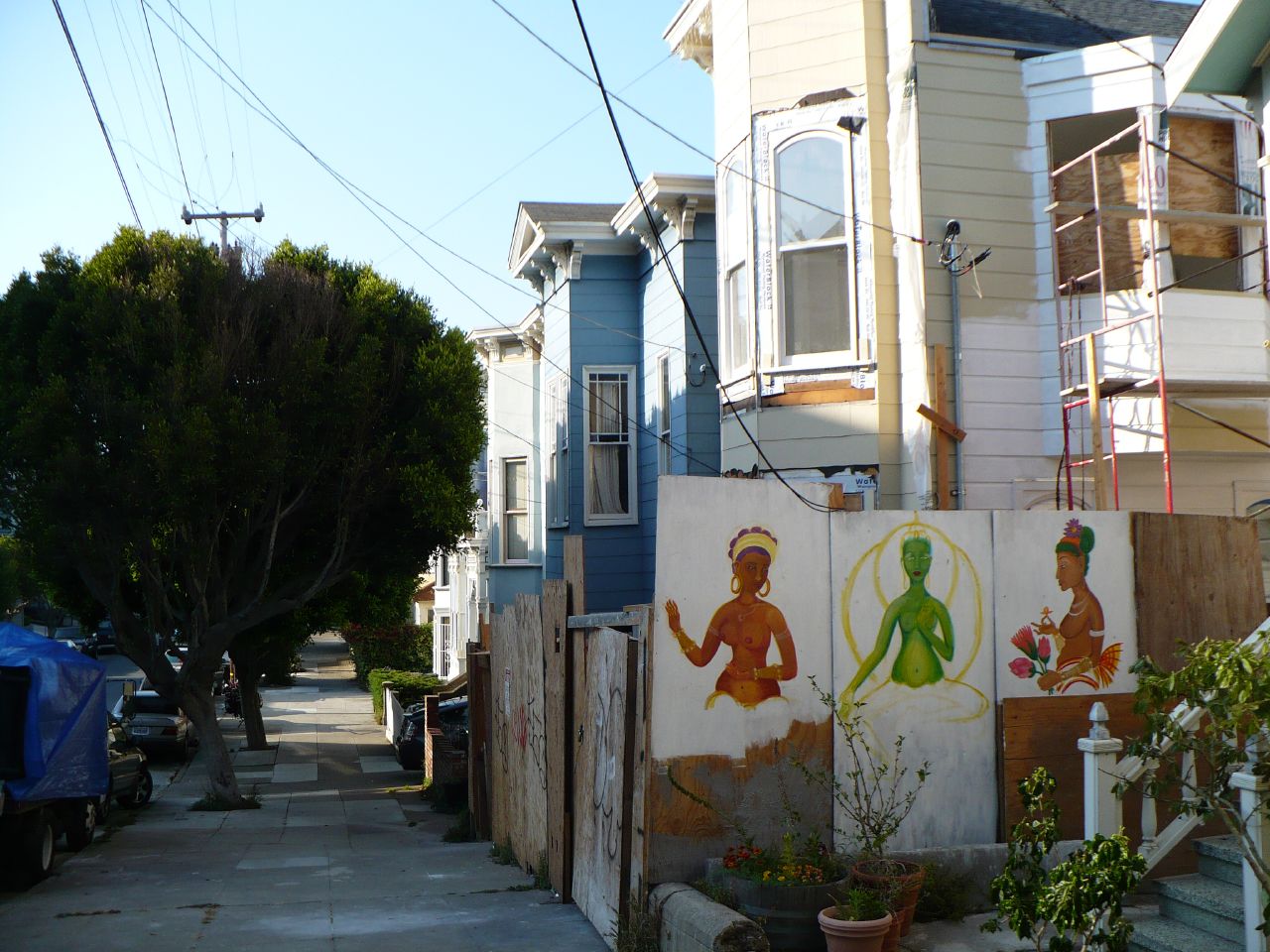
This is a mural on some plywood on my street. This house has been under construction for about 2 years and the neighbors got tired of it. They told me that when the house is done, they are going to use these as their back fence. It's kind of sad because no one will get to see them. I kind of enjoy seeing something new on them each day I come home from work. It's a very cool evolution.

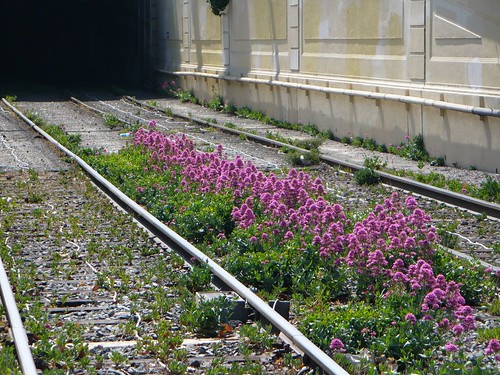
 Over at the East Portal of the Muni Sunset Tunnel, made famous by numerous cars that drive in there thinking its a throughway even though its clearly for rail cars, purple flowers grow between the tracks.


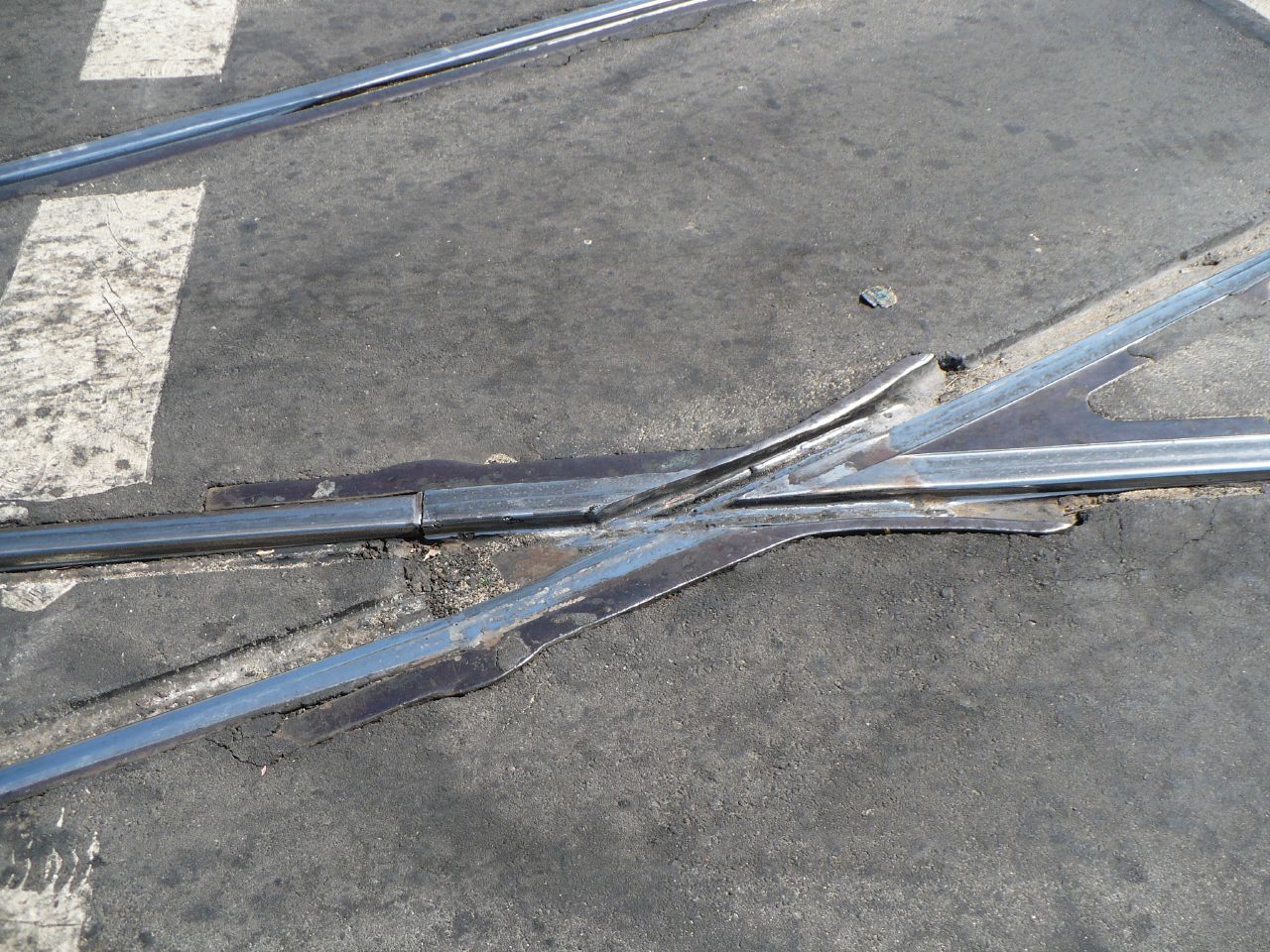
Fixes for the entrance for the Market Street Subway for the N and J tracks are much needed. I hear they are coming soon. But here's the condition now. This is why speeds of 5 mph are used in this section of track.


This was a look at the Bay towards the Golden Gate bridge from Fillmore street on the 4th of July. It's quite a regular occurrence to have this much fog on the 4th. It's bad because it blocks out the fireworks show.
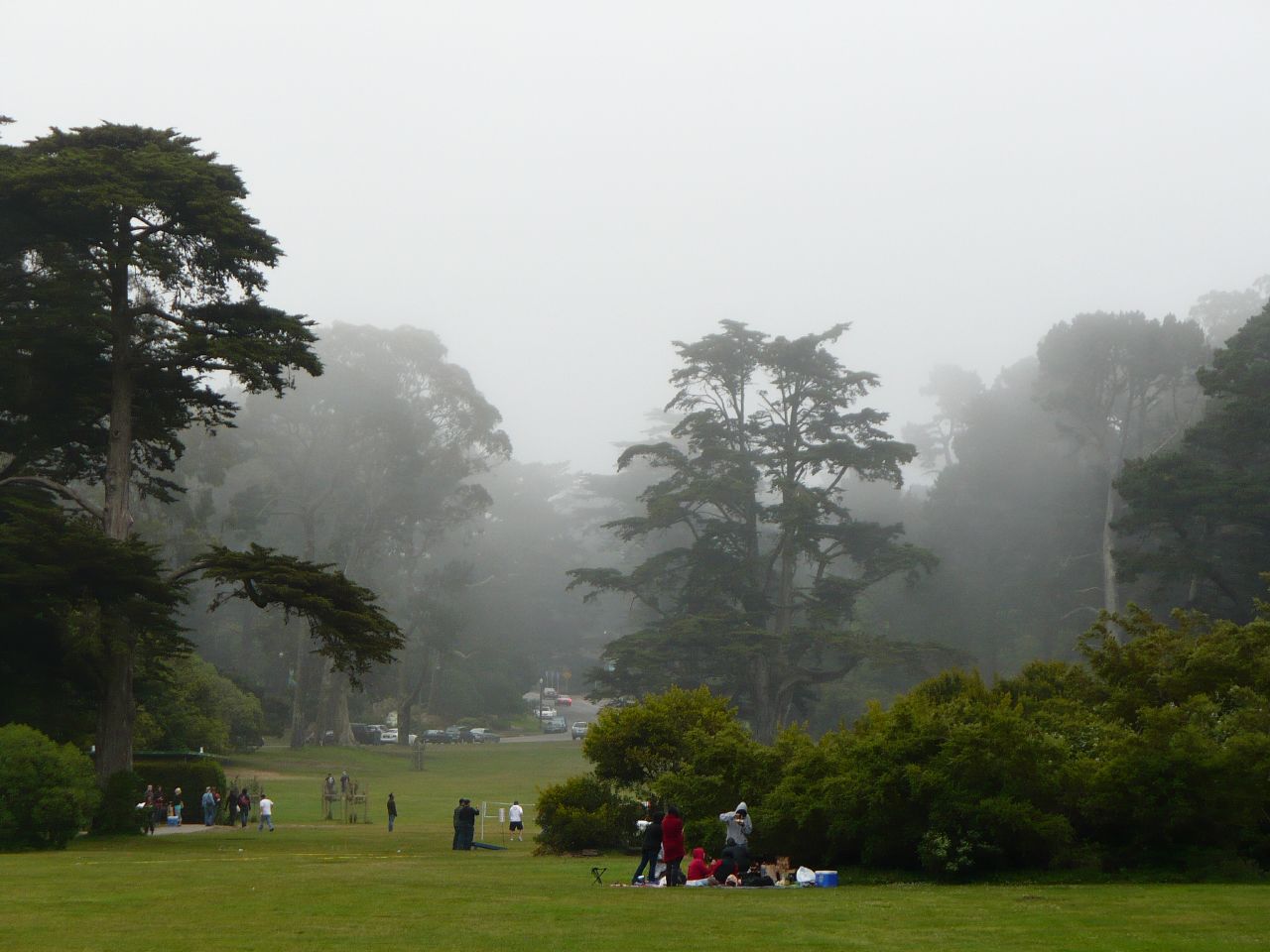
 Here's golden gate park on the 4th. San Francisco fog style.
 I've been seeing a lot more of these as well...
 And while this might look ugly to some, it's music to my lungs. I would take visual pollution over air pollution any day. Usually you don't even notice, but it hurts more to breathe diesel exhaust than it does to see these.

This is a mural on some plywood on my street. This house has been under construction for about 2 years and the neighbors got tired of it. They told me that when the house is done, they are going to use these as their back fence. It's kind of sad because no one will get to see them. I kind of enjoy seeing something new on them each day I come home from work. It's a very cool evolution.
 Over at the East Portal of the Muni Sunset Tunnel, made famous by numerous cars that drive in there thinking its a throughway even though its clearly for rail cars, purple flowers grow between the tracks.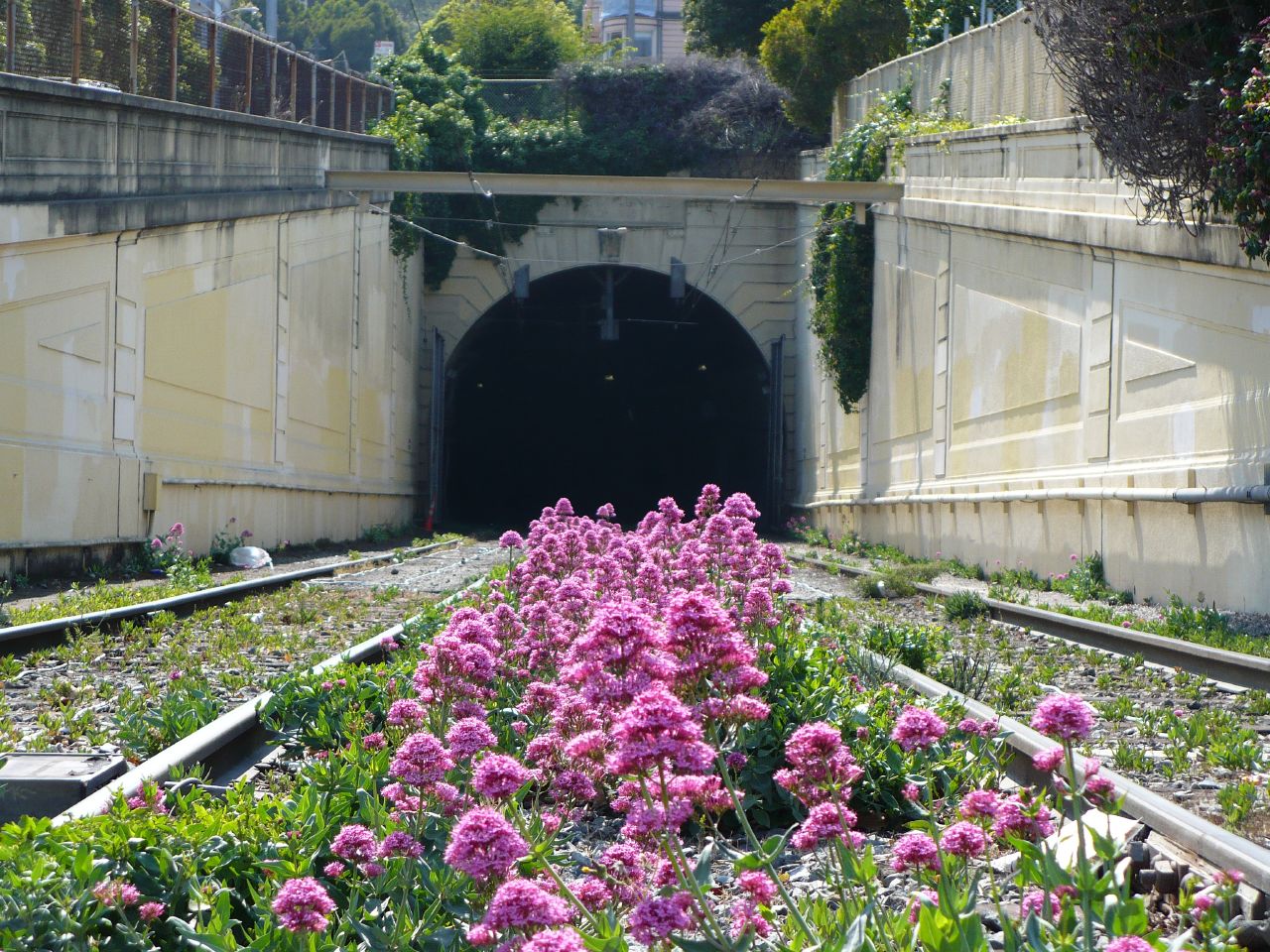
Fixes for the entrance for the Market Street Subway for the N and J tracks are much needed. I hear they are coming soon. But here's the condition now. This is why speeds of 5 mph are used in this section of track.

This was a look at the Bay towards the Golden Gate bridge from Fillmore street on the 4th of July. It's quite a regular occurrence to have this much fog on the 4th. It's bad because it blocks out the fireworks show.
 Here's golden gate park on the 4th. San Francisco fog style.
 I've been seeing a lot more of these as well...
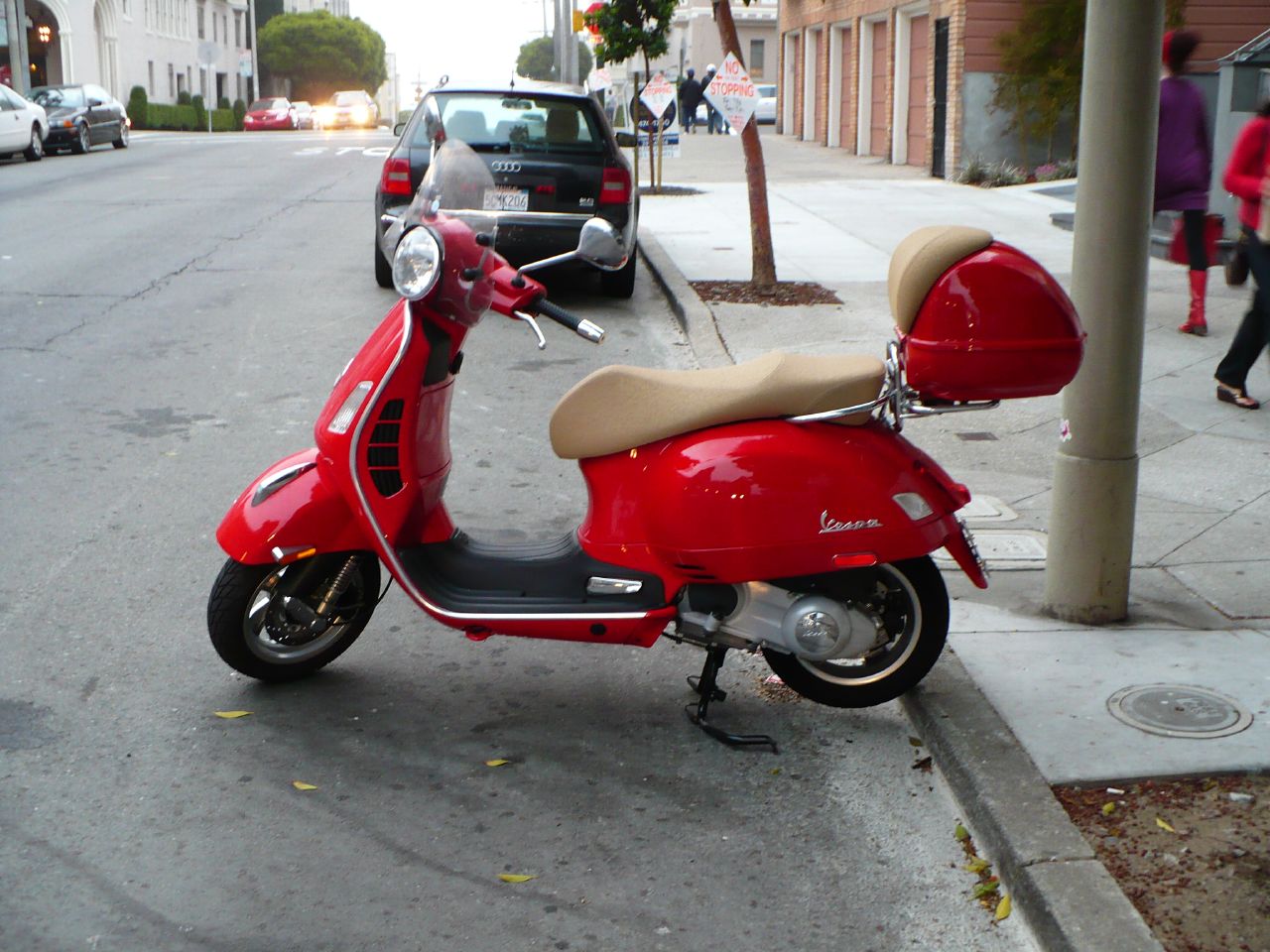 And while this might look ugly to some, it's music to my lungs. I would take visual pollution over air pollution any day. Usually you don't even notice, but it hurts more to breathe diesel exhaust than it does to see these.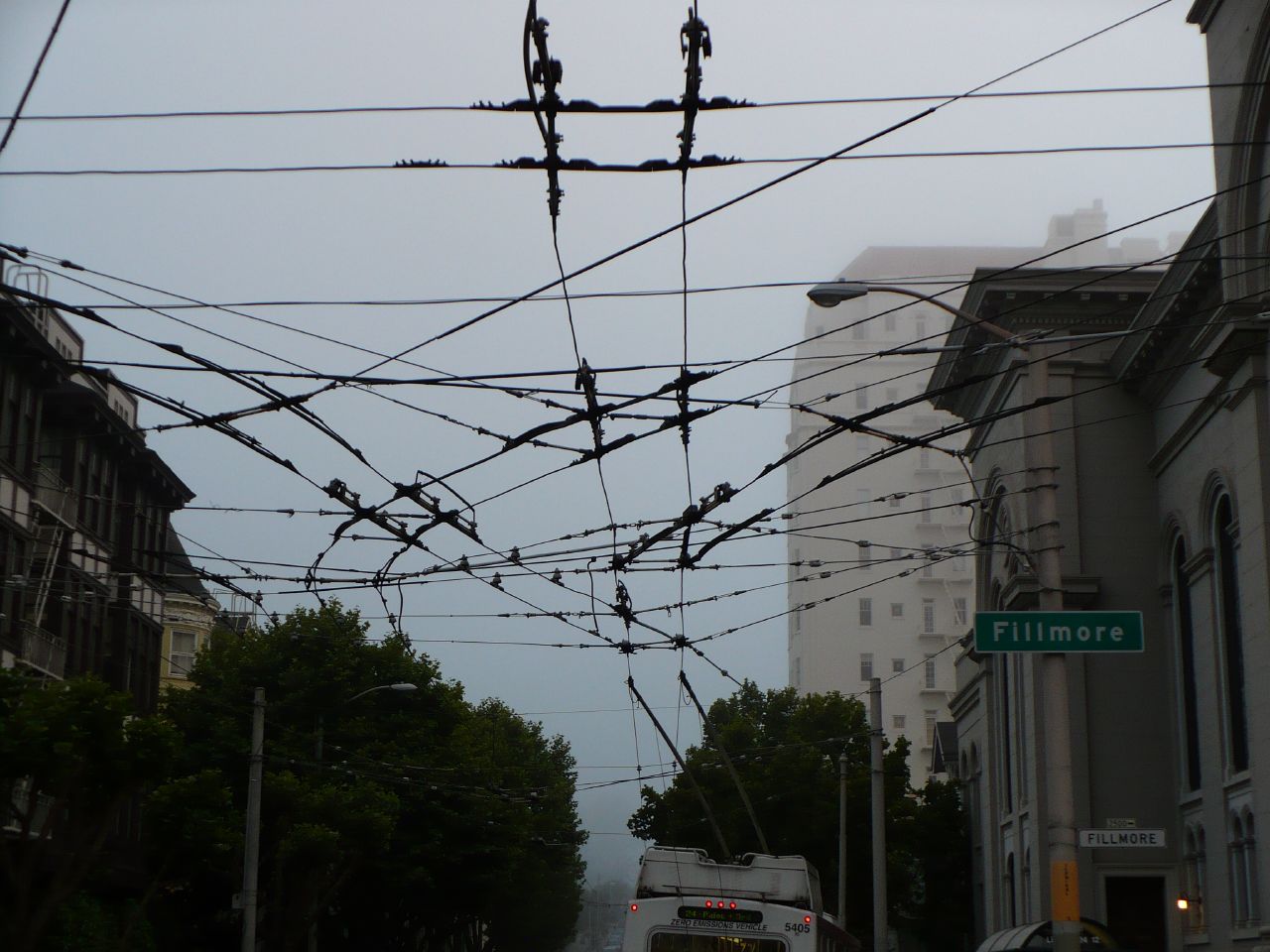
Subscribe to:
Posts (Atom)