
Monday, November 24, 2008
Streetfighter!
Now that's the framing I like. I don't know if JSK is up on the list for Transportation Secretary, but she should be. I'd love to see her and Ma Peters in a match too. I suggest the read even if Dana Goldstein doesn't know what high speed rail is.

Portland Adding Service!
Tri Met in Portland seems to be the only agency in the country that is adding service. That was a breath of fresh air to me.
Pay No Attention to the GHGs Behind the Curtain
Is it just me, or is it really short sighted to use stimulus money on expanding roads?
How Long Does It Take to Build a Road?
Apparently more than 7 years. Give me a break. What is wrong with this picture? It's not just BRT, it's all transit. I guaranty that if this were a road without a bus on it, it would be done next year. Why is it so hard? It's not like they haven't been working on it for years already.
Meanwhile, AC Transit officials have released a proposed timeline that has completion of the Environmental Impact Report process by the 3rd quarter of 2010, final design for BRT by the 1st quarter of 2011, beginning of construction by the 2nd quarter of 2012, with completion of the project tentatively scheduled for the spring of 2015. But the project still has to complete a complicated approval process involving winning federal funding grants, approval by city councils in Berkeley, San Leandro, and Oakland as and final project approval by the AC Transit board.
Sunday, November 23, 2008
A Shrinking Market Not Suitable for Rail Investment?
A lot of discussion about the auto bailout is out there by people much smarter than me so I'll leave that to them. But in a discussion about Detroit and its possible shrinking city status because of a drawn down auto industry, the Urbanophile states that transit expansion or initial construction of light rail doesn't really make sense in a low or no growth market. In the case of Detroit, he believes that a shrinkage strategy should be employed and money should not be wasted on movement and economic strategies such as light rail.
After San Diego, the class of the late 80's light rail included Portland, Sacramento, San Jose, and Buffalo. All of these lines have been successes in some ways and failures in others. San Jose for instance runs straight up the corridor it should, but the land use decisions along the line and its slow speed perception have doomed it so far too low ridership compared to peer lines. But we've learned a lot since then about focusing development, ridership induction, and urban design.
One thing those lines did that we know better about today is that they were designed to bring people from the suburbs to the Center City acting as extended parking lot. The lines that have succeeded the best today are those which connect multiple places and destinations. An example of this is Denver which just opened its southeast corridor just a few years ago which connects the Tech Center, Multiple Universities and downtown Denver. It has similar ridership to the Houston light rail line which connects downtown with the biggest medical center complex in the world. They both attract similar ridership with similar counts of jobs even though the lines have different distances (numbers on this are forthcoming).
The lesson from this is that if Detroit or Buffalo as shrinking/low growth cities are looking to bring people from the suburbs to downtown and hope that the line works without combining every other planning and infrastructure tool, it will be doomed to fail. A key to making expanding transit work on major corridors is the connection of destinations as well as a focusing program on bolstering those destinations.
One of the major mistakes that Buffalo made in its planning and subsequent allocation of funding was that it didn't take the line out to the University which was just a few miles further away. Cleveland, which is a city that is in a similar situation as a low growth city has made the Euclid Corridor their priority and have recently redone the whole street with BRT. They have also invested heavily with new public infrastructure and civic buildings. Obviously you know where I stand on the technology but the investment infusion and focus is something Cleveland did right. This is in stark contrast to the waterfront line which they built and just waiting for things to happen. They did not. Another simple improvement Cleveland could also do is move the Shaker Heights line further out a mile or two into a major suburban job center connecting that center with downtown with rapid transit.
So if you are a place like Detroit, Buffalo, or Cleveland which have a negative or low growth outlook, if there is a high capacity corridor that is ripe for investment, just holding back on the transit is not going to solve anything. In fact, you're taking away an organizing tool from the toolchest and increasing your longer term city and transit operating costs which all too often in these cities means service cuts, especially with a high cost energy future.
Weak market cities need those destination connections and a reason to organize or else there is likely to be a vacuum and development will happen in the business as usual sprawl fashion instead of focusing it making things even worse. Just because a city is low or slow growth doesn't mean development doesn't happen. The important thing is to be more fiscally conservative in your investments that promote new development. The long term viability of the city depends on creating value and not spending money on frivolous infrastructure such as road or water extensions that will make life even worse further down the road.
Of course these need to be long term strategies instead of short term fixes. Just building a light rail line and stepping back only works in Sim City. But if we're serious about helping these cities out, giving them the investment tools and pushing them to make the right investment decisions will go a long way towards a better livable environment, reductions in energy consumption, and long term fiscal strength.
Detroit wants to build a big rail transit system. This is a variation on "silver bullet" thinking where Detroit will build light rail on Woodward and suddely life will be pumped into the city. It's possible I guess. But while that strategy might be appropriate for higher growth locations like Columbus, I don't think it is where declining cities like Detroit need to be spending their money. Detroit has much higher priority needs than this.Perhaps this was made for greater discussion today by an article about Buffalo's light rail line, which is one of the new light rail lines that was built after the 1981 light rail return spark in San Diego. Buffalo was one of the cities that was low growth building new transit versus many of the high growth regions. Expansion also was stalled by politics and a lack of priority. Extensions have been on the books for a while and as of now, they total over $1 billion.
After San Diego, the class of the late 80's light rail included Portland, Sacramento, San Jose, and Buffalo. All of these lines have been successes in some ways and failures in others. San Jose for instance runs straight up the corridor it should, but the land use decisions along the line and its slow speed perception have doomed it so far too low ridership compared to peer lines. But we've learned a lot since then about focusing development, ridership induction, and urban design.
One thing those lines did that we know better about today is that they were designed to bring people from the suburbs to the Center City acting as extended parking lot. The lines that have succeeded the best today are those which connect multiple places and destinations. An example of this is Denver which just opened its southeast corridor just a few years ago which connects the Tech Center, Multiple Universities and downtown Denver. It has similar ridership to the Houston light rail line which connects downtown with the biggest medical center complex in the world. They both attract similar ridership with similar counts of jobs even though the lines have different distances (numbers on this are forthcoming).
The lesson from this is that if Detroit or Buffalo as shrinking/low growth cities are looking to bring people from the suburbs to downtown and hope that the line works without combining every other planning and infrastructure tool, it will be doomed to fail. A key to making expanding transit work on major corridors is the connection of destinations as well as a focusing program on bolstering those destinations.
One of the major mistakes that Buffalo made in its planning and subsequent allocation of funding was that it didn't take the line out to the University which was just a few miles further away. Cleveland, which is a city that is in a similar situation as a low growth city has made the Euclid Corridor their priority and have recently redone the whole street with BRT. They have also invested heavily with new public infrastructure and civic buildings. Obviously you know where I stand on the technology but the investment infusion and focus is something Cleveland did right. This is in stark contrast to the waterfront line which they built and just waiting for things to happen. They did not. Another simple improvement Cleveland could also do is move the Shaker Heights line further out a mile or two into a major suburban job center connecting that center with downtown with rapid transit.
So if you are a place like Detroit, Buffalo, or Cleveland which have a negative or low growth outlook, if there is a high capacity corridor that is ripe for investment, just holding back on the transit is not going to solve anything. In fact, you're taking away an organizing tool from the toolchest and increasing your longer term city and transit operating costs which all too often in these cities means service cuts, especially with a high cost energy future.
Weak market cities need those destination connections and a reason to organize or else there is likely to be a vacuum and development will happen in the business as usual sprawl fashion instead of focusing it making things even worse. Just because a city is low or slow growth doesn't mean development doesn't happen. The important thing is to be more fiscally conservative in your investments that promote new development. The long term viability of the city depends on creating value and not spending money on frivolous infrastructure such as road or water extensions that will make life even worse further down the road.
Of course these need to be long term strategies instead of short term fixes. Just building a light rail line and stepping back only works in Sim City. But if we're serious about helping these cities out, giving them the investment tools and pushing them to make the right investment decisions will go a long way towards a better livable environment, reductions in energy consumption, and long term fiscal strength.
Saturday, November 22, 2008
BART Rumor Mill
There was a post up on Daily Kos today heralding the passing of BART to San Jose. Lot's of folks have different opinions about it but I was wondering if what one of the commenters said was true. I had never heard of this but commenter Maynard Krebs stated this:
When San Mateo County dropped out of BART expected revenue was too low to support BART to Marin. So the Marin line was dropped too but the 5'6" gauge was designed to be stable while crossing the bridge in high winds.Does anyone know if there is any truth to this high winds theory? I had always heard it was just to make people comfortable by allowing wider cars by crazed futura engineers. I often wondered how they would deal with winds on the bridge.
In Defence of Background
Two posts on very progressive sites I have come to trust have popped up lately about the High Speed Rail line in California that are very disturbing. First is one by Ben Adler who writes for Campus Progress (and Politico) which is an offshoot of Think Progress, a progressive organization with such valuable insight from writers such as Matt Yglesias who I read and link to often. The second one is from The American Prospect which links to the first article.
The opinion is that the $10 Billion raised for the High Speed Rail line should be spent on local transit instead of intracity transit in part because money was not raised this election cycle for local transit. He mentions that HSR was the only progressive smart growth measure on the ballot in California. What?! I must have made up all of those measures in the California section of my election night post. Dana Goldstein at the Prospect calls it light rail which of course immediately turns me off to anything any article says if it isn't light rail. Apparently everything counts as light rail today to reporters, including people movers, commuter rail, HSR, and now laughably bus rapid transit(ie: light rail like!). But Dana's commentary is based on the same idea that no money was raised for local transit in the election.
What this does to me is shows that they don't get transit at all and aren't really paying attention. That's ok, I understand, it's not everyone's cup of tea. But what annoys me about it is that the lack of research to formulate an opinion that a lot of people read and trust. This makes me less trustful of the blogosphere in general. If people can't get thier facts right or understand a little bit of history (ie: they should be upset that $3 Billion has been funneled away from transit by the state but don't seem to bring up that fact) when they write opinions on something I'm deep into, what is to say that they aren't doing this when its a subject I don't quite understand?
I know that there are places I can trust. I love Grist, and I know they know about the environment and will put a lot of effort into facts. I trust them to get it right. I know Ryan and AC will get economics stuff right. There are also a ton of transit and livable communities blogs out there that I don't know what I would do without too. Here on this site I try as much as possible to back up my opinion with numbers and opinion from other smart people but it really bothers me when two organizations and bloggers write something that a lot of people read with background that is completely wrong and using tactics I come to expect from the Reason Foundation. But I also appreciate when commenters call me out for something dumb I said. We're not all immune to stupidity sometimes.
In addition, a poster gave Robert a hard time on Dana's post since they felt he was getting snotty because someone had a separate opinion than he did. He was rather pointing out what I was saying above about facts. I would usually say ok if they were defending quality work, but getting your facts wrong is not grounds for defending diversity of opinion. Having an opinion is fine with me, but let's get the background straight first.
I'll leave with a good comment from frequent commenter Bruce McFadden about the false spending dichotomy that has been set up in this country and in the initial post by Adler.
The opinion is that the $10 Billion raised for the High Speed Rail line should be spent on local transit instead of intracity transit in part because money was not raised this election cycle for local transit. He mentions that HSR was the only progressive smart growth measure on the ballot in California. What?! I must have made up all of those measures in the California section of my election night post. Dana Goldstein at the Prospect calls it light rail which of course immediately turns me off to anything any article says if it isn't light rail. Apparently everything counts as light rail today to reporters, including people movers, commuter rail, HSR, and now laughably bus rapid transit(ie: light rail like!). But Dana's commentary is based on the same idea that no money was raised for local transit in the election.
What this does to me is shows that they don't get transit at all and aren't really paying attention. That's ok, I understand, it's not everyone's cup of tea. But what annoys me about it is that the lack of research to formulate an opinion that a lot of people read and trust. This makes me less trustful of the blogosphere in general. If people can't get thier facts right or understand a little bit of history (ie: they should be upset that $3 Billion has been funneled away from transit by the state but don't seem to bring up that fact) when they write opinions on something I'm deep into, what is to say that they aren't doing this when its a subject I don't quite understand?
I know that there are places I can trust. I love Grist, and I know they know about the environment and will put a lot of effort into facts. I trust them to get it right. I know Ryan and AC will get economics stuff right. There are also a ton of transit and livable communities blogs out there that I don't know what I would do without too. Here on this site I try as much as possible to back up my opinion with numbers and opinion from other smart people but it really bothers me when two organizations and bloggers write something that a lot of people read with background that is completely wrong and using tactics I come to expect from the Reason Foundation. But I also appreciate when commenters call me out for something dumb I said. We're not all immune to stupidity sometimes.
In addition, a poster gave Robert a hard time on Dana's post since they felt he was getting snotty because someone had a separate opinion than he did. He was rather pointing out what I was saying above about facts. I would usually say ok if they were defending quality work, but getting your facts wrong is not grounds for defending diversity of opinion. Having an opinion is fine with me, but let's get the background straight first.
I'll leave with a good comment from frequent commenter Bruce McFadden about the false spending dichotomy that has been set up in this country and in the initial post by Adler.
It is not unreasonable to ask the question of spending priority, but it is always unreasonable to ask the questions in terms of setting priorities between different transport modes that happen to use the same technology.
That is, the following system makes no sense at all:
1. $X set aside for rail. Allocate between light rail, mass transit, regional passenger rail, and freight rail.
2. $Y set aside for roads. Allocate between city streets, industrial parks, state highways, federal highways, freeways.And in perpetuating that process of proposing to establish a priority rankings within pools based on technology instead of based on transport task, that is precisely what Ben Adler is supporting.
When divided up by transport task, the money required for the HSR line is substantially less than the money required for the available alternatives ... road and air.
Not a Train, Never Will Be
BRT is not "rail-like". It is not a replacement for rail but rather an upgrade on a specific corridor from what exists. Buses in their own lanes are better, but they are not "rail-like".
In addition, the opposition needs to stop whining about the bus bringing higher densities to the corridor and reducing parking spaces. Parking is not free and the pavement has a better use than storing your car. You live in the East Bay on the best corridors to reduce VMT and oil dependence, and I imagine you talk about being green all the time. Yet you oppose density and better transit that will help that goal.
Also a bit of warning to those who think that BRT is "rail-like". BRT will never be replaced by light rail. There is no example of BRT ever being taken out and replaced by rail. Once its there, that's it. Buses. That is not to say that it doesn't have its place in the network, but if a corridor needs rail, and buses are used, an upgrade is a long time coming, if ever.
In addition, the opposition needs to stop whining about the bus bringing higher densities to the corridor and reducing parking spaces. Parking is not free and the pavement has a better use than storing your car. You live in the East Bay on the best corridors to reduce VMT and oil dependence, and I imagine you talk about being green all the time. Yet you oppose density and better transit that will help that goal.
The transit district should not be responsible for replacing parking. The city should not be responsible for paying for parking for specific merchants or anyone for that matter. Parking is not free. Losing a number of parking spaces is a small price to pay for better transit.Cunradi agreed parking space losses are a serious issue. To offset the impact, the transit district will consider developing parking lots or garages, or installing parking meters on commercial side streets so the spaces turn over faster, he said.
Greg Harper, an AC Transit board member from Emeryville, said the fear of denser development is an underlying fear that has fueled opposition to bus rapid transit.
Also a bit of warning to those who think that BRT is "rail-like". BRT will never be replaced by light rail. There is no example of BRT ever being taken out and replaced by rail. Once its there, that's it. Buses. That is not to say that it doesn't have its place in the network, but if a corridor needs rail, and buses are used, an upgrade is a long time coming, if ever.
Friday, November 21, 2008
Friday Night Linkfest
More requests for the Orange Line to be Light Rail. They even quote us. But please stop using the most recent light rail line in Los Angeles is the end all of cost estimates for light rail. It would NOT cost $150 million a mile to build light rail.
~~~
Dan at HugeAssCity hopes for better urban design for the Viaduct replacement. I hope for a rapid streetcar instead of just the waterfront trolley.
~~~
I don't see why they can't charge for parking at Metro Stations during inauguration. Perhaps that would pay for the extra rush hour service that's going all day.
~~~
Good thing the opposition in Salt Lake didn't get UTA rolled into UDOT. From Transit in Utah:
There are seven Tram companies in Poland. Seven. Some of the models look pretty sweet.
~~~
Dan at HugeAssCity hopes for better urban design for the Viaduct replacement. I hope for a rapid streetcar instead of just the waterfront trolley.
~~~
I don't see why they can't charge for parking at Metro Stations during inauguration. Perhaps that would pay for the extra rush hour service that's going all day.
~~~
Good thing the opposition in Salt Lake didn't get UTA rolled into UDOT. From Transit in Utah:
UDOT puts $3.9B in projects on hold. While I have mentioned this over and over again, I must hammer this home. If a certain group of puppets from a certain so called riders union would have gotten their way and transferred UTA over to UDOT, transit funding would now moved over to highways and that is the goal of the people who run that organization.~~~
There are seven Tram companies in Poland. Seven. Some of the models look pretty sweet.
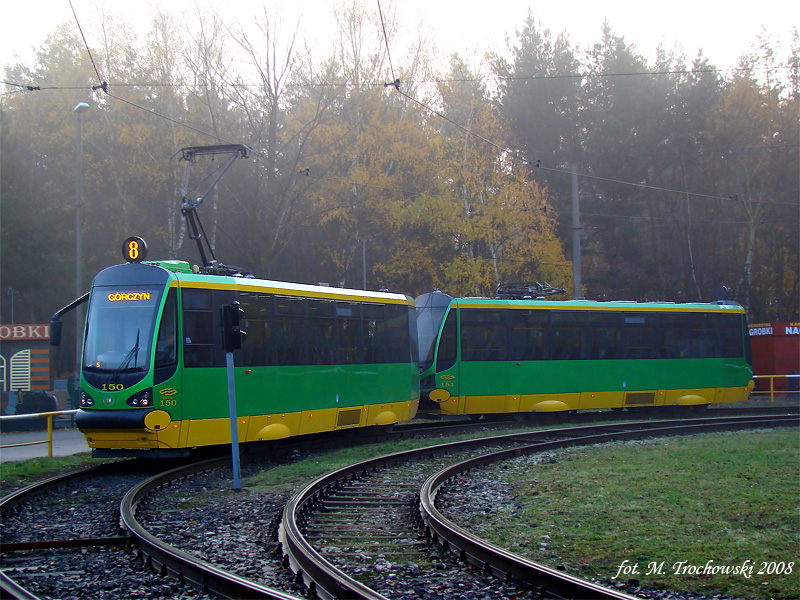
As many as seven companies are active in the tram building market in Poland, suggesting that competition may develop in the coming years. In many ways the market is quite open, as conditions are similar in the various cities.
Thursday, November 20, 2008
Running: NCAA XC Championships on Monday
It's that time of year. The Monday before Thanksgiving is always XC day. My buddy Jake runs for Texas and is going to be in the hunt, below he talks about his chances. He just missed the Olympics in the Steeple by one place and is looking for some redemption. Below, Jake talks about nationals coming up Monday: "It's always nuts, Terra Haute is crazy. It's like a war. Running through this field is like Braveheart."
Visit Flotrack For More Videos
If anyone is into the running thing, the places to be are Flotrack and Letsrun.
Subscribe to:
Posts (Atom)