Wednesday, September 17, 2008

Turn of the Century
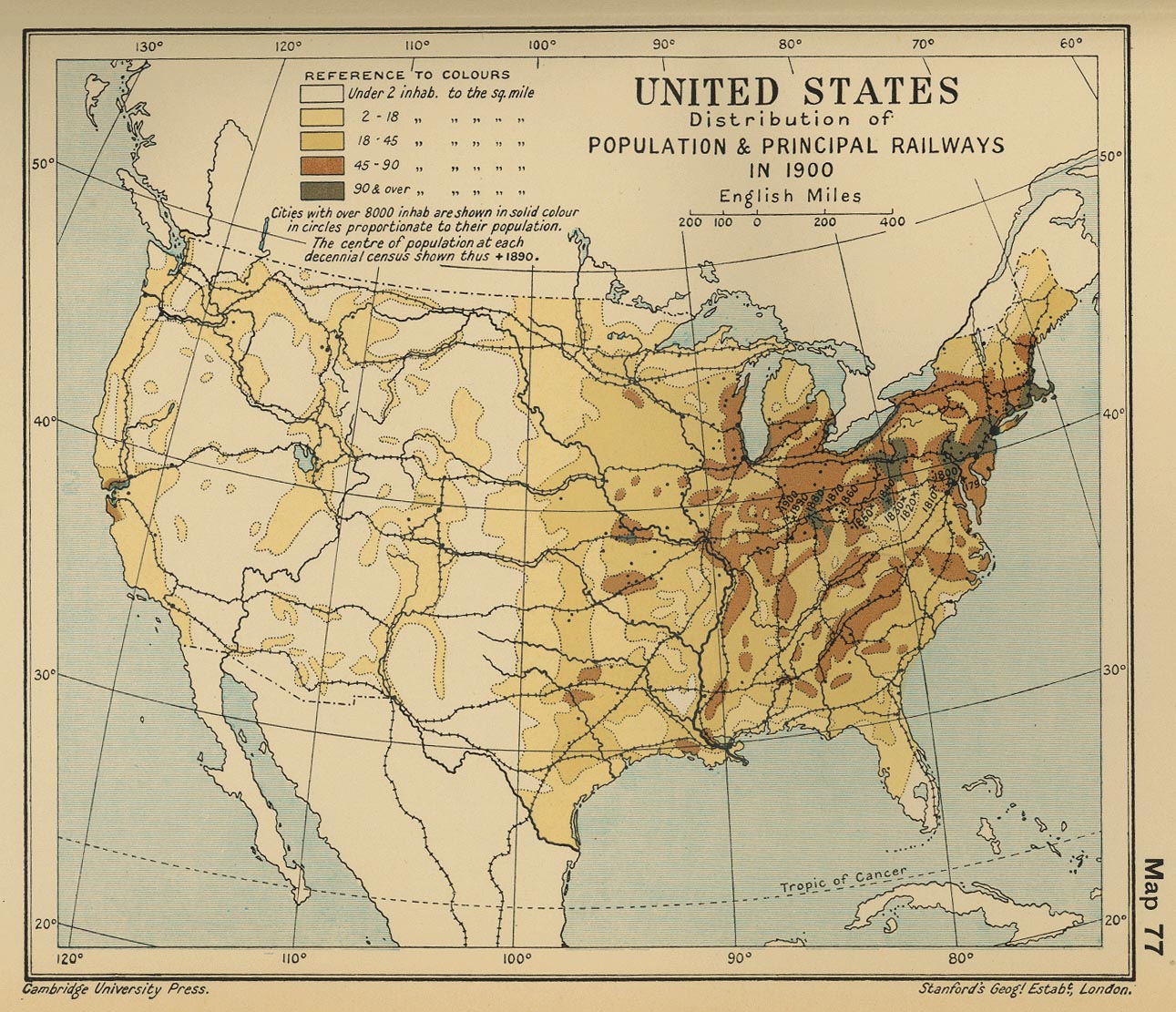 Ever wondered where the population centers were at the turn of the century after the railroads had taken hold? Well here's your map. Very cool.
H/T Mike Lydon
Courtesy of the University of Texas Libraries
Tuesday, September 16, 2008
Super Capacitors in Transit
New technology is gaining ground really fast. A promising development in energy storage is the nanoflower supercapacitor. The reason why its so important is that if perfected, it would be possible for light rail lines to gain more power through regenerative breaking and burst through intersections or short stretches of track without connecting to overhead wires.
Standard Response: X Project is a Black Hole
I've noticed a lot of taxpayer associations popping up talking about black holes. Perhaps they are scared of a certain super collider, but its usually a rail line that will severely hamper their ability to drive. Right? I mean they are freedom destroyers. This one is in response to the Norfolk Light Rail to Virginia Beach:
"This project is nothing but a black hole on the backs of the taxpayers," said Robert Dean of the Virginia Beach Taxpayer Alliance.Project Name - Verb - Black Hole
Those Pie Charts Again
Rob Puentes at Brookings used the pies to talk to congress (Grist has a greater review here, and you can get the speech transcript here). A few commenters on Yglesias' site said well duh, people in the center city are richer. Really? Well let's debunk that right now with a report by CNT on the diversity of housing near transit. Areas around transit stations are more diverse than the region as a whole.
Eighty-six percent of transit zones are either more economically diverse, more racially diverse or more diverse on both points than the average census tract (when the comparison area is either the average of all central city tracts in the region if the given transit zone is in the central city, or the average of all suburban tracts in the region if the given transit zone is in a suburb). This is especially true in regions with extensive transit systems — Boston, Chicago, New York, Philadelphia and San Francisco — but is not limited to these cities. Diverse transit zones are present in all transit regions, including Dallas, Cleveland and Syracuse. Furthermore, 59 percent of residents near transit are people of color.This backs up my point that in order to increase income diversity around transit, we need to have more extensive transit systems. That way, it doesn't become such a niche market. A few other findings from the report:
Diversity is found in central city transit zones and suburban (non-central city) transit zones, suggesting that the low transportation costs and the increased accessibility that transit offers supports diversity in both urban and suburban contexts.I suggest reading it, but those are the basics.
Neighborhoods near transit provide housing to a greater share of the region’s lower-income households than regions overall.
Transit zones support important segments of the population in terms of both housing tenure and household size.
Transit zones have a greater than average proportion of homeowners who spend more than 30 percent of income on housing: 35 percent versus 31 percent.
Transit zones provide important mobility opportunities — and the economic benefits that accrue from it — that allow people to live with fewer cars. In three-quarters of transit zones, households have one car or less. In some small transit systems, fully 100 percent of transit zones house a majority of households with one car or less. This low rate of auto ownership is true for higher-income households in transit zones as well as lower-income ones.
Transit zones provide important environmental benefits given their high rates of non-auto travel to work and low rates of land consumption per household.
Things I Like To Hear
What Joe Biden says:
In the next car, Biden told another passenger that “If we get elected, it will be the most train-friendly administration ever.”Actions are always better than words, but this is the right direction.
Monday, September 15, 2008
Related Cinema
Batman Begins
Bruce Wayne: Did you build this train, Dad?
Thomas Wayne: Gotham's been good to our family, but the city's been suffering. People less fortunate than us have been enduring very hard times. So we built a new, cheap, public transportation system to unite the city. And at the center...Wayne Tower.
Bruce Wayne: Is that where you work?
Thomas Wayne: No, I work at the hospital. I leave the running of our company to much better men.
Bruce Wayne: Better?
Thomas Wayne: Well...more interested men.
Bruce Wayne: Did you build this train, Dad?
Thomas Wayne: Gotham's been good to our family, but the city's been suffering. People less fortunate than us have been enduring very hard times. So we built a new, cheap, public transportation system to unite the city. And at the center...Wayne Tower.
Bruce Wayne: Is that where you work?
Thomas Wayne: No, I work at the hospital. I leave the running of our company to much better men.
Bruce Wayne: Better?
Thomas Wayne: Well...more interested men.
Ma Peters: Get Those Bikes Off My Lawn
Yglesias slams Mary Peters with this gem:
That said, I got to work today by . . . riding my bike. And I got to work Friday by . . . riding my bike. Indeed, I commute to work on my bike most every day. And to buy groceries. I use it, in other words, to transport myself from place to place. That sounds a lot like transportation to me.
Subscribe to:
Posts (Atom)