The boosterism behind the data is a little behind the reality on the ground. As employment drops so will ridership this next year, but APTA says that ridership in 2008 was at a 52 year high. That isn't bad but when you look at the per capita numbers its a bit of a different story.
The total is refreshing though. After some dismal time in the mid 90's when gas was sometimes 75 cents a gallon or less, ridership has been steadily increasing again. I'm sure it helped that a lot more resources could be put into transit which shows that what you invest in will be what people will be able to use, other than the other way around that the opponents would like you to think was true. Mainly, no one uses it because everyone likes to drive. But they never tell you how much we weren't inevesting in transit all those years as much as we are now.
In 1995 7.76 billion people took transit. $17.8 billion was spent on operating costs ($23.40 inflation adjusted to 2006). Fast forward to 2006 where we've spent $32.03 Billion on transit operating and accrued 10.01 billion trips. If we look at the changes in spending, 36.8% operations cost adjusted for inflation and 28.9% ridership increase and 31% increase in passenger miles. The greater we invest, the more we'll see people taking the options that work for them.
Sunday, March 8, 2009

Saturday, March 7, 2009
Saturday Night Quick Links
Had a pretty busy last few days and it's been hard to post. Here are some quick links until I get a bit more time.
Dallas officials might stop the future Orange Line short of the airport.
~~~
Should cyclists pay a registration fee? Personally I think absolutely not!
~~~
The Hawaii Senate wants to take from the rail fund to balance the budget. You know, all this stealing from transit to pay for budgets is not cool. Why not take from the road funding? Too much of a sacred cow for you?
~~~
Apparently there is a locomotive buried in Cincinnati. Who knew there were locomotives buried all over the United States like treasure.
~~~
There are a lot of high speed rail concern trolls out there. This one in the Boston Globe.
~~~
The Beltline is safe for now.
Dallas officials might stop the future Orange Line short of the airport.
~~~
Should cyclists pay a registration fee? Personally I think absolutely not!
~~~
The Hawaii Senate wants to take from the rail fund to balance the budget. You know, all this stealing from transit to pay for budgets is not cool. Why not take from the road funding? Too much of a sacred cow for you?
~~~
Apparently there is a locomotive buried in Cincinnati. Who knew there were locomotives buried all over the United States like treasure.
~~~
There are a lot of high speed rail concern trolls out there. This one in the Boston Globe.
"We have tremendous distances compared with Japan or Europe," said Carlos Schwantes, a professor of transportation studies at the University of Missouri-St. Louis. "We're just much bigger, and in so much of the country it's so low a population density that we'd have to ask the question: Is it worth spending our dollars for the infrastructure in those areas?"How many times do we need to kill this argument. There wasn't enough population density in the Roman Empire for paved roads to the British Isles either.
~~~
The Beltline is safe for now.
Have You Heard of the N Judah Heist?
This was the story back in 1955. Can you imagine a bunch of high school kids hoping on an N and going for a ride, picking up passengers and evading the Muni Managers today?
H/T SF Muni History List
H/T SF Muni History List
Thursday, March 5, 2009
An Honest Question
Seattle voted against roads and transit last year and then turned around and overwhelmingly voted for transit. It was a big fight to get it back on the ballot but now the road warriors know that people didn't want the roads and are dreaming up ways to steal the money as we speak. But it begs the question in other regions, should people have to vote for roads? We see that residents are always asked to build transit, even if the funding exists, but never asked to build roads. They just do it. Do you think if they had a vote that they would approve of their hard earned money being spent on sprawl roads?
Years & Years
It would be a shame if Houston had to ditch its plans for a crosstown line that would connect downtown with two other major job centers. My guess is that it won't happen since its a major connector and an important link. But my first question is why does it take so long to engineer and build a line? I have been blogging about this line for over 4 years now (my previous blog in Austin discussed this line as well) and the FTA still hasn't approved the environmental document?
This is why things are so messed up. It takes so long to get to environmental studies, no wonder nothing has been getting done. This will change because it has to change. No longer can roads that fuel sprawl be built for future capacity. The federal transportation bill allows cities to use flex money for transit projects. However only a few regions take advantage of this and places like Houston need a bit more nudging. The money is out there, we just have our priorities towards an unsustainable method of moving ourselves.Previous projections had put a price tag on the 10-mile University line of about $750 million, roughly in line with the $73 million per mile cost Metro estimated for the North, East, Southeast and Uptown lines.
The Metropolitan Transit Authority will look to the Federal Transit Administration for help funding the University line. The FTA has yet to approve Metro’s environmental impact study for the line, a key element in moving the project forward. “I’m feeling the frustration of a lot of people in this organization who are trying to get through this process,” Metro spokesman George Smalley said Thursday.
New Leasebacks?
Houston Metro signed a $600 million contract to build 4 of its 5 planned light rail lines. The total cost would be almost $1.5 billion and would include a 29 LRV order from Spanish manufacturer CAF which built LRV's for Pittsburgh and Sacramento. Perhaps they got a better price(Probably not at $4 M a vehicle) but wouldn't you want all of your vehicles to be the same so spare parts are easier to come by? Currently Houston uses the Siemens S70 Avanto we've been talking about alot here recently. It's not like they couldn't have hopped on Salt Lake City's order. In fact, at that price, they could have saved $13.6 Million
But the dumbest thing I think I've seen is for a transit agency to do a leaseback deal when many of them have almost lost thier shirts recently because of the AIG collapse. Really guys?
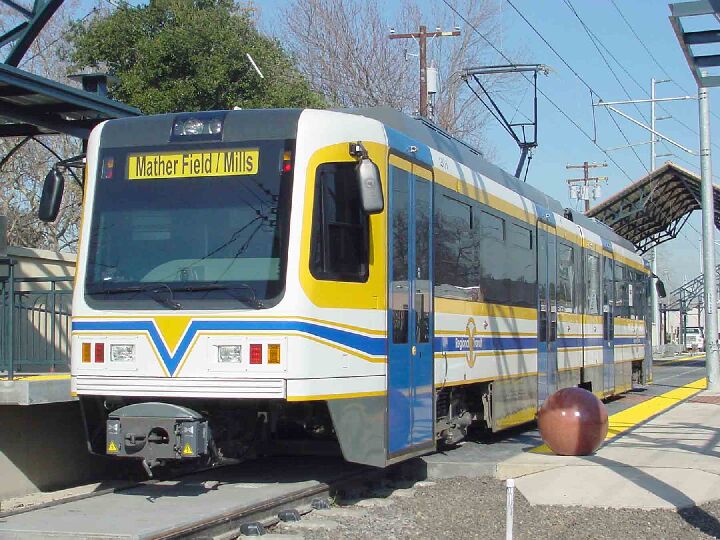
But the dumbest thing I think I've seen is for a transit agency to do a leaseback deal when many of them have almost lost thier shirts recently because of the AIG collapse. Really guys?
The transit agency also will rely on $150 million in lease-back agreements to help get the first phase of the project under way. The lease agreements allow agencies like Metro to sell railcars, buses and other assets to banks and lease them back at a lower cost. The banks then can claim depreciation of the assets in tax deductions.This seems like a whole lot of bad decision making rolled up into this project. More expensive LRVs and possibly bad bank deals during a time when banking isn't exactly healthy.
Sticky Fingers
Legislatures just can't keep their hands out of the honey pot. It's not just Seattle, but places like Austin as well. We really need a metropolitan system that takes power away from states to do things like this. Judy should be ashamed of herself.
Go Ahead, But You Should Pay For It
High Speed NIMBYs on the peninsular should be allowed to advocate for the line to go underground. But if that happens, they should pay for it. I'm not paying for their choice to locate their house near a working railroad track. No one else should have to pay for that when there is a perfectly good surface and elevated alternative. Again, where were these people in the fall? Squeaky wheel always you know...
Wednesday, March 4, 2009
Betterments
Part of the problem with costing complaints for light rail is that everyone wants to throw everything into the project. From repaving the street to urban decor such as special pavers and street lamps. I'm all about these "betterments" but we need to understand that attaching them to the light rail project only makes it more expensive and gives opponents fodder when they go on about cost per mile estimates. In reality, the repaving of a street curb to curb should not penalize a project. If anything it should create a better mobility score for increasing the number of people that can use a street. Where's the transit SYSTEM user benefit for that?
But because such improvements are underfunded in general, cities see FTA funds as a gravy train for getting these important elements done. If we can figure out a way for these pieces of the overall puzzle to be eligible for another funding pot dedicated to pedestrian mobility that would be great. But we shouldn't have to. This is just another reason why the cost effectiveness measure that can kill a project based on a penny over a certain standard is dumb.
But because such improvements are underfunded in general, cities see FTA funds as a gravy train for getting these important elements done. If we can figure out a way for these pieces of the overall puzzle to be eligible for another funding pot dedicated to pedestrian mobility that would be great. But we shouldn't have to. This is just another reason why the cost effectiveness measure that can kill a project based on a penny over a certain standard is dumb.
Indian TOD & FAR
In Pune India, the government is changing the zoning along the BRT line to a level not seen anywhere else. I can only assume that the term FSI is the same as our FAR or floor to area ratio. It's interesting how terms work out in different languages. A FAR of 4 in the US means you can build a 4 story building using the whole plot of land or an 8 story building using half the land.
The proposal states that 4 FSI will be granted to properties upto 200 meter distance on either sides of the BRTS routes and 500 meters on either sides of the Metro routes.
...
"Nearly 30.50 km of Metro and 120 km of BRT routes are to be developed in Pune. For these routes to be successful, enough ridership and high-population density is required. Therefore, additional FSI is necessary. The mandatory reforms under the Jawaharlal Nehru National Urban Renewal Mission (JNNURM) also calls for densification along the Metro and BRT corridors," the proposal states.
Subscribe to:
Comments (Atom)