Well sort of. Today the 2005 dear colleague letter that then FTA Administrator Jennifer Dorn released on the world requiring that all New Starts projects have a medium rating on their cost effectiveness has been rescinded. Many have hailed this as a huge step forward for livability advocates but honestly its only half of the picture. One of the reasons I believe that the medium rating was imposed was to build more cheap BRT projects and cut out subway and lrt projects. But another reason was to cut all the junk projects out of the funding loop. With only about $8 billion dollars available for new starts projects in the last transportation bill, it leaves the need for regions to pick up the hundreds of billions more needed to build out transit networks. One estimate pegged the total at approximately $250 billion dollars. That is a huge gap.
So while some newspapers including the New York Times believe that this is opening up the funding floodgates, they are sorely mistaken. It does however change a few dynamics that have been holding projects back. The Central Corridor in Minneapolis is a curious case. They have been wanting to add a station in St. Paul to serve lower income community however it slowed down the travel time just enough to push the line over the index. This is just one example of how suburban to downtown speedy travel is emphasized over shorter trips in denser communities by the existing cost effectiveness index. Yonah has specifically mentioned another Minneapolis project that I also believe is headed in the wrong direction.
Dropping the medium requirement also takes a step towards making us think harder about what we're really building transit for. Is it for existing population or the future population or both? A common comment about the current cost effectiveness rating is that it would have never funded the DC or New York Subways. But DC and New York would not have gotten to where they are now in terms of density without the investments in the subway. Really this is a chance to start thinking about how to make transformative investments in transit around the country. It's an opportunity we've been waiting for, but as with all big ideas, it needs money.

Wednesday, January 13, 2010

Sunday, January 10, 2010
Sunday Night Notes
I realize there has been much less posting here, but if you still want links you can follow me on twitter which seems to be more regular. @theoverheadwire
There are some interesting links today however:
I don't really think cities should compete to land new jobs. Especially for government funded jobs such as Northrup Grumman.
~~~
Wal Mart doesn't create new jobs. Tell us something we don't know.
~~~
So does this mean Smart Cars are PRT?
What does urban authenticity mean?
There are some interesting links today however:
I don't really think cities should compete to land new jobs. Especially for government funded jobs such as Northrup Grumman.
~~~
Wal Mart doesn't create new jobs. Tell us something we don't know.
~~~
So does this mean Smart Cars are PRT?
“Smart’s not a car in the traditional sense, it’s a high- style alternative to public transportation,”~~~
What does urban authenticity mean?
Wednesday, January 6, 2010
Is It a Wonder How Housing Prices Are So High?
I appreciate environmental regulations and the like, but it seems like a lot of folks in California just take it too far:
Talk of any development along the rail line has raised concern in the environmental community, some of whom believe the system will act as a catalyst for growth, as developers try to build for those who want to live near a train station.and this:
Under proposed air-quality guidelines, for the first time in the U.S., if extra cancer risk meets a specific threshold, the developer would be told to study the potential health effects of the freeway pollution on the people who would live in the homes. That would be in addition to what the developer is already required to do: study the effects of the housing on freeway traffic and the surrounding environment. If the health risk is too great, the developer might need to modify or scrap his development plan, or spend extra time persuading the city or county to approve it.If we can't develop near transit stations or near freeways in existing urban areas, where the heck are people supposed to develop new homes that won't affect the environment? Am I missing something here?
Tuesday, January 5, 2010
Can One Development Catalyze a District?
And is it right to be developing once vital industrial land? It's a question that often comes up that I don't quite know the answer to. Here in Oakland many properties in West Oakland have been deemed off limits to commercial or residential development. Many council members want to preserve the industries that provide much needed jobs and an economic boost.
In Denver, there are developers who are looking to revitalize the South Broadway area around the Evans station that is primarily industrial. Much of the project is a mixed use redevelopment on six acres that was once a superfund site. The developer is a single developer which also begs the question of how a market gets started. Once he proves that the area is changed and continues to build more and more projects, other folks will follow suit. But ultimately the developer is the one who will boom or go bust.
I find this interesting because everyone is always looking for the next big neighborhood or district. In the past improvements have been predicated on good bones. The gridded street network already exists and a light rail station is already near by. But at the moment the market isn't there. Could it be a single developer who creates a market? Or are markets organic and ultimately unpredictable. I guess we'll find out.
In Denver, there are developers who are looking to revitalize the South Broadway area around the Evans station that is primarily industrial. Much of the project is a mixed use redevelopment on six acres that was once a superfund site. The developer is a single developer which also begs the question of how a market gets started. Once he proves that the area is changed and continues to build more and more projects, other folks will follow suit. But ultimately the developer is the one who will boom or go bust.
I find this interesting because everyone is always looking for the next big neighborhood or district. In the past improvements have been predicated on good bones. The gridded street network already exists and a light rail station is already near by. But at the moment the market isn't there. Could it be a single developer who creates a market? Or are markets organic and ultimately unpredictable. I guess we'll find out.
Monday, December 28, 2009
Around the World: Argentina & Hong Kong
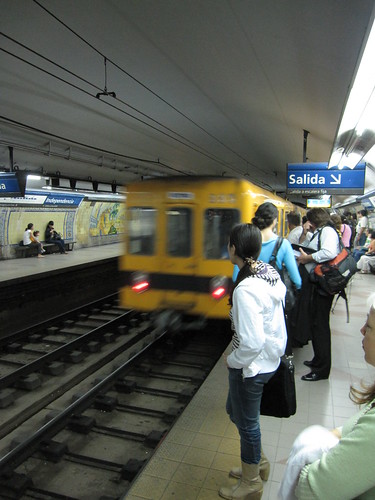
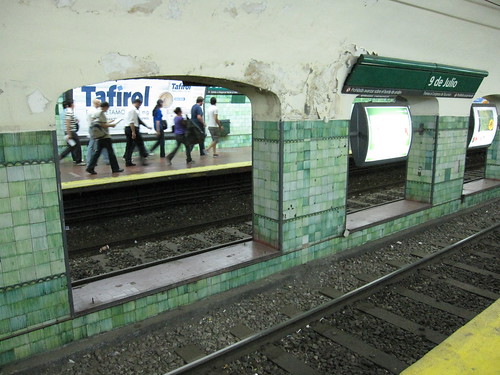
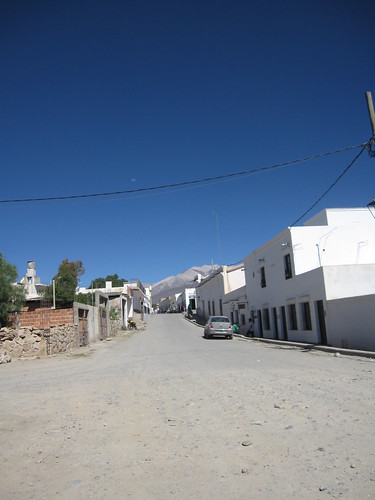
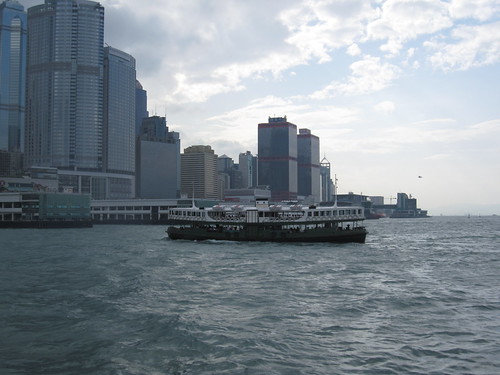
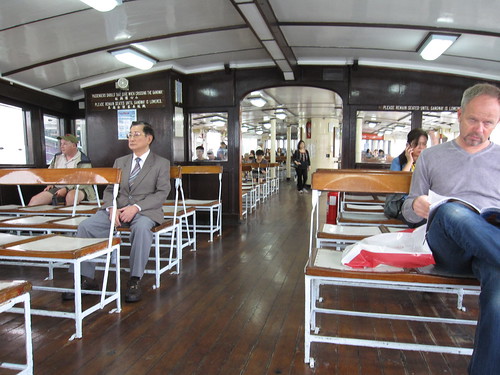
Fearless Overhead Wire correspondent and world traveler @nspicer just got back from his honeymoon in Argentina with @autgoff and took a few transit shots because he knows that I'm a nerd and I appreciate these things. He's also recently been to Hong Kong and rode the Star Ferry. Here are a few shots from his travels. Thanks Spicer and Anna!



Sunday, December 27, 2009
OT: There's More to College Than Football
I like football. I watch a lot of games during the season but as a former athlete in an Olympic sport I got really annoyed at the Football coaches at Texas fairly often. They have always been shortsighted in terms of other sports and academics. Take for example Jamaal Charles who is now the big play maker for Kansas City. The kid was super fast and ran track at Texas in the offseason. The short story of it all was that track in college gave Charles something to do in the offseason to keep his focus on something other than the street.
Speaking for myself, I chafed at the idea of not being able to take classes like Military History to 1900 because others said they would be hard. (One of the most fascinating courses I took in Undergrad outside of my major classes) But this also speaks to the fact that colleges don't see football players as part of the student body. In fact it is evidenced every time we get a good athlete who wants to run track and play football. Usually football wins out:
Back in Port Arthur, track had kept Charles focused. It had given him something to do during football offseason, when cousins found trouble .Now I often defend athletics because I was an athlete who benefited from competing for a division one school. But there were times when I had to fight my guidance councilor to take harder classes. At times she would try to give me easy classes because of catering to the lowest common denominator in the program. People who just needed classes to stay eligible to play.
Speaking for myself, I chafed at the idea of not being able to take classes like Military History to 1900 because others said they would be hard. (One of the most fascinating courses I took in Undergrad outside of my major classes) But this also speaks to the fact that colleges don't see football players as part of the student body. In fact it is evidenced every time we get a good athlete who wants to run track and play football. Usually football wins out:
Charles says he was told that if he wanted to maintain his place as the Longhorns' starting running back, he'd have to abandon track and make football a year-round commitment.There were many guys who liked to run who were told they couldn't. I don't doubt that studying more tape helps. But Football isn't the center of the universe. If they are enrolled in school, let them take the classes they want. And if they want to play another sport that helps their football playing in the offseason why not let them?
Thursday, December 24, 2009
Merry Christmas
Hope everyone is having a good Christmas. Here are some fun links for you:
Census shows slow in sunbelt burst.
~~~
Holland looks at per KM pricing.
~~~
Intercity trains in Germany beating the pants off of planes.
~~~
I WISH buses all had 5 minute headways.
~~~
Is China building HSR too fast? Like Robert, I feel like someone is trying to affect the US debate.
Census shows slow in sunbelt burst.
~~~
Holland looks at per KM pricing.
~~~
Intercity trains in Germany beating the pants off of planes.
~~~
I WISH buses all had 5 minute headways.
~~~
Is China building HSR too fast? Like Robert, I feel like someone is trying to affect the US debate.
Friday, December 18, 2009
Road Building Paradox
Has anyone ever heard of the Downs - Thompson paradox?
“Downs-Thomson paradox, also referred to as the Pigou-Knight-Downs paradox, states that the equilibrium speed of car traffic on the road network is determined by the average door-to-door speed of equivalent journeys by (rail-based or otherwise segregated) public transport. It follows that increasing road capacity can actually make overall congestion on the road worse."Sounds like some sort of variation of induced demand.
Pressure
Some telling comments from the Austin Chronicle:
But even more hidden gold from interim CEO Doug Allen:
Council Member Sheryl Cole sits with Leffingwell on the Transit Working Group; she had heard Allen say there he believed pressure to meet a November 2004 rail referendum deadline had shortchanged the design and engineering work on the Red Line. In Allen's assessment, inadequate early planning, design, and engineering work, combined with a failure to engage sufficient outside expertise, had led to an unrealistic budget and schedule.I wrote about the quick switch from LRT to Commuter Rail in my Master's report. Capital Metro had only been working on the Red Line plan for a few months before they made the decision to put it before voters in the summer. They had been talking about LRT up until January of 2004. Contacts at UT had mentioned that Capital Metro had stopped talking to them cold turkey to pursue this other plan. From my Masters report (Thesis)
According to John Rishling, Vice President for Campus Planning at the University of Texas, light rail planning continued until January of 2004 when talks with John Almond, the lead engineer for the rail project, all of the sudden stopped. Rishling stated that the Pickle Research Center in North Austin between the red line and the Union Pacific line is being planned as a residential campus for students of the University of Texas and transit was needed to connect it to the main campus. Maps in Rishling’s office suggest light rail be built down San Jacinto Street but even by August he had not heard anything from the transit agency except for what he read in the news...In March of 2004 Capital Metro announced their proposed system.From Doug Allen's account it seems as if they didn't have enough time to think this plan through before the election. More than likely they devised the plan for the Red Line in two months based on years of putting the alternatives against each other. In other words it smells of bad push politics from people like Mike Krusee, which we knew all along was spinning away from light rail and pushing for rail towards his district, not in Capital Metro's service area.
But even more hidden gold from interim CEO Doug Allen:
In October's meeting, Allen said the cost of the Red Line commuter rail system "probably could and should have" been $300 million (to build it out properly, with double tracking) to serve the transit ridership potential in that corridor – still a good price for a 32-mile system.I don't think this should be hard for everyone to understand. 38,000 riders for LRT in 2000 versus 2,000 riders for Commuter rail in 2004. It's not rocket science. The politics was messy and Capital Metro allowed themselves to get pushed into it. This didn't start with the current contractor, this started back before 2000 with Krusee who was head of the House Transportation Committee. Again from my Masters Report:
Representative Krusee proposed a starter red line replacing the 1998 consultant’s green line light rail in 2000. Consultants in 1998 believed that the green line was a better route for ridership production however it was turned down by the voters in 2000. It seemed that commuter rail was on Senator Krusee’s mind even before the 2000 election. In a 2000 Austin American Statesman article, he was quoted, “I wish they would be more open-minded to alternatives to light rail”.His fixation on that freight line led to a poorly planned line and here we are seeing the results in 2009. Thanks Mike, glad you had your revelations after you lost your power to do anything about it.
Subscribe to:
Posts (Atom)